

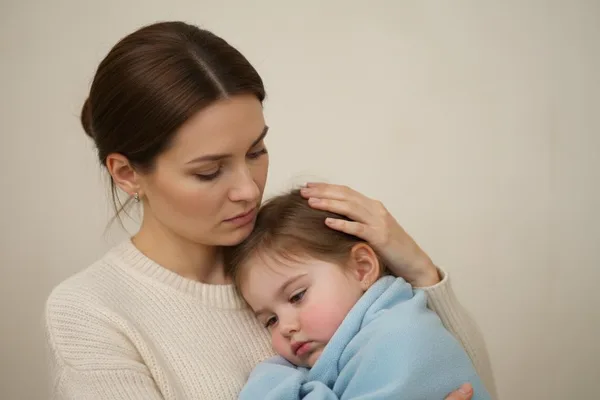
Has your little one suddenly developed a rash on their cheeks that hurts when touched? Is there a slight fever and body aches? It's normal for you as a mother to be a little scared at a time like this. Often, the disease that comes with these symptoms is what we call "mumps." Today, we'll talk about mumps in a simple, straightforward way.
What exactly is mumps?
Simply put, mumps is a contagious viral disease. It is caused by a virus belonging to the paramyxovirus family. The disease usually starts with minor symptoms such as a low fever, headache, and fatigue. But then the characteristic symptom of this disease appears. That is, the salivary glands in our mouth, especially the parotid glands near the ear, swell. We medically call this swelling ``parotitis``. This is why the cheeks are very swollen and the jaw area looks swollen. It looks like a squirrel is stuffing something in its mouth.
In the past, mumps was a very common disease among young children. However, after the introduction of the mumps vaccine in 1967, the number of cases of this disease decreased significantly . However, there are still cases of mumps spreading in epidemics. This situation can be seen especially in places where many people gather together, such as universities.
Although this disease is usually not serious, it can sometimes cause serious complications, so it is best to protect your child by getting the measles-mumps-rubella (MMR) vaccine .
What are the symptoms of mumps?
The incubation period for the mumps virus can range from 7 to 25 days after it enters the body and causes symptoms. Most people initially experience very mild symptoms. Some people may have the disease without any symptoms at all. But they can still spread the disease to others.
Let's see what the common and severe symptoms are in the table below.
| Type of symptom | Symptoms that indicate |
|---|---|
| Minor symptoms at first |
|
| Main feature | After a few days, the salivary glands in the cheeks (Parotitis) develop. This can occur on one or both sides of the face. The cheeks appear swollen and the jaw area appears swollen. |
| Severe symptoms that require immediate medical attention (most common in young and older people) | |
| Symptoms of complications |
|
Remember, other viral and bacterial infections can also cause swollen cheeks. So don't assume that every time your cheek swells, it's mumps. It's important to see a doctor for an accurate diagnosis.
How is this disease transmitted from person to person?
Mumps is a highly contagious disease. It is spread through direct contact with saliva or respiratory droplets (from coughing or sneezing) from an infected person.
- Through droplets released when talking, coughing, or sneezing .
- By others using things like cups, spoons, and toys that have been used by an infected person.
- From close contact activities such as playing games and kissing.
Typically, a person with mumps can spread the disease to others from a few days before their glands start to swell until about 5 days after the swelling starts. Therefore, if a child has mumps, you should avoid sending them to school or daycare centers.
Doctor, how do you know for sure that this is mumps?
When you take your child to the doctor, he or she will ask you about your child's symptoms and examine your child. Often, the swelling on the cheeks will immediately indicate that it may be mumps.
But to confirm the diagnosis, the doctor may recommend several tests.
- PCR test: This involves taking a small swab sample from the inside of the child's cheek or throat and testing it for the mumps virus.
- Blood test: A blood test may be done to check for antibodies that have been produced in the body against the virus or to rule out other medical conditions.
How is mumps treated? What can you do at home?
There is no specific medicine to kill the mumps virus. The disease usually clears up on its own within about two weeks. Treatment involves controlling the symptoms and making the child as comfortable as possible.
You can do these things at home:
- Give them plenty of fluids to drink. Things like water, fruit juice, and soup are great.
- Rinse your mouth with lukewarm salt water. This will help relieve a sore throat.
- Give soft, easy-to-chew foods. Things like rice, porridge, and yogurt are suitable.
- Do not give sour foods and drinks. These can increase the pain by causing more saliva to be produced in the mouth.
- Place an ice pack or hot water bottle on your swollen cheeks. This will reduce pain and swelling.
- Give painkillers recommended by your doctor, such as Paracetamol or Ibuprofen, to reduce fever and pain.
Extremely important: Never give aspirin to a child with a viral fever for any reason. Doing so can cause a dangerous condition called Reye's syndrome, which damages the liver and brain.
Can mumps be dangerous? What are the possible complications?
Most of the time, mumps is not a serious illness. However, in rare cases, serious complications can occur, especially in young and older people who have not been vaccinated.
- Meningitis: Inflammation of the membranes covering the brain and spinal cord.
- Encephalitis: Swelling of the brain.
- Orchitis: Inflammation of the testicles in boys. If this occurs after puberty, it can rarely cause infertility.
- Oophoritis: Inflammation of the ovaries in girls.
- Pancreatitis: Inflammation of the pancreas.
- Deafness: Rarely, permanent hearing loss.
Mumps is usually harmless if you get it during pregnancy, but in rare cases it can cause miscarriage or premature birth. If you are pregnant and have been exposed to someone with mumps, see your doctor immediately.
Is there a way to completely protect yourself from this disease?
Yes, there is! The best and most effective way is to get the MMR (Measles-Mumps-Rubella) vaccine . This vaccine protects against all three diseases: measles, mumps, and rubella.
According to Sri Lanka's National Immunization Program, children are given two doses of this vaccine.
- The first dose is given at 9 months of age (as measles and rubella) and
- The second dose is given at age 3 (as MMR).
(Note: Sometimes schedules may vary slightly. Check with your local family health worker or doctor for the exact schedule.)
This vaccine is very safe and effective. It prevents the disease in about 90% of people who get the vaccine. Some children may experience some soreness, redness, or a slight fever where the vaccine was given. But this is normal.
Take-Home Message
- Mumps is a viral disease that causes swelling of the cheeks.
- The best way to protect yourself from this is to give your child the MMR vaccine on time.
- There is no specific treatment for this. All that is done is to relieve the symptoms. Give the child plenty of rest and fluids.
- Although mumps is not usually a serious illness, serious complications can rarely occur. So be aware of the symptoms.
- Never give aspirin to a child with a viral fever.
- If your child's cheeks are swollen and there is a fever, be sure to see a doctor for a proper diagnosis and advice.




💬 Comments (0)
No comments yet. Be the first to share your thoughts here.
Add Your Comment