

Do you often feel tired for no clear reason? Do you notice unusual bruising or a heavy feeling in the upper left side of your belly? These signs might point to a serious health condition called myelofibrosis. Hearing medical names like this can feel scary, but you do not need to worry.
We will explain what this condition is, why it happens, what signs to look for, and how doctors treat it. Let us break everything down into clear, simple language so you can easily understand.
Key Takeaways.
- Myelofibrosis is a rare condition where scar tissue builds up inside your bone marrow.
- It slows down your body's ability to make normal red and white blood cells.
- Common signs include extreme tiredness, weight loss, and a swollen spleen.
- Doctors use blood tests and bone marrow biopsies to find and diagnose the condition.
- Treatments range from simple observation to targeted medicines and stem cell transplants.
What Is Myelofibrosis?
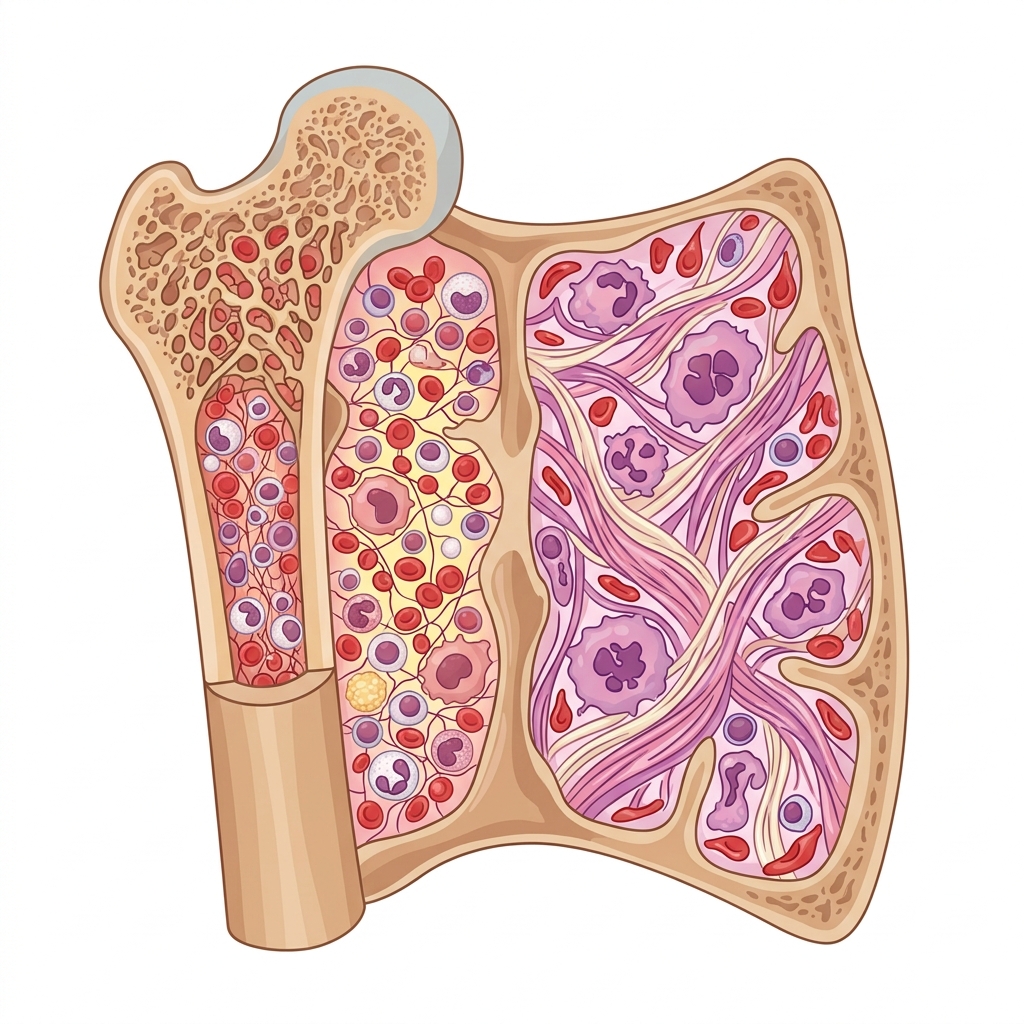
Think of your major bones as large factories that make blood. We call these spongy centers inside your bones the bone marrow. Your bone marrow creates three vital types of blood cells every single day.
Red blood cells carry oxygen all over your body. White blood cells fight off germs and harmful infections. Platelets help your blood stick together to stop bleeding when you get a cut.
Myelofibrosis is a rare type of blood cancer where your bone marrow slowly fills up with scar tissue. Imagine a rich garden slowly choked by weeds until nothing good can grow. Because of this scar tissue, your bone marrow cannot make normal blood cells properly.
Since your marrow cannot make enough blood, your spleen tries to help out. Your spleen sits on the upper left side of your belly. It starts trying to make blood cells, but that is not its main job. This extra work causes your spleen to swell up and grow larger over time. Most patients first notice something is wrong when their spleen swells.
This condition usually develops very slowly over many years. However, it can sometimes grow worse faster. In rare cases, it can turn into a serious form of leukemia. This is why your doctor will watch your health very closely after a diagnosis.
Types of Myelofibrosis.
There are two main types of this condition. Primary myelofibrosis happens on its own without any other known disease causing it. Secondary myelofibrosis develops when another blood condition gets worse over time.
For example, someone with essential thrombocythemia or polycythemia vera might develop myelofibrosis later in life. All these conditions belong to a group of blood cancers called myeloproliferative neoplasms. In simple terms, these conditions happen when your bone marrow makes too many of certain blood cells.
Symptoms of Myelofibrosis.
This condition usually develops very slowly. You might not notice any symptoms at all for several years. When symptoms finally start, severe tiredness is often the very first sign. This tiredness happens because your body lacks enough red blood cells, a condition called anemia.
You may also feel a heavy feeling, discomfort, or quick fullness in your upper left belly due to an enlarged spleen. Other common signs include bone pain, easy bruising, and unexpected weight loss.
| Symptom. | Simple Explanation. |
|---|---|
| Bone and Joint Pain. | A dull ache coming from deep inside your bones due to marrow changes. |
| Easy Bruising or Bleeding. | Low platelet counts make you bruise or bleed easily from minor bumps. |
| Enlarged Liver. | Your liver may also swell up as it tries to help make extra blood cells. |
| Fever. | Feeling unusually warm or running low-grade fevers without a clear infection. |
| Frequent Infections. | Low white blood cell counts make it harder to fight off common germs. |
| Early Fullness. | A swollen spleen presses on your stomach so you feel full after eating very little. |
| Itchy Skin. | A persistent, uncomfortable itching sensation all over your body. |
| Night Sweats. | Heavy sweating during sleep that leaves your sheets and clothes wet. |
| Unexplained Weight Loss. | Losing weight without trying to diet or change your daily routine. |
Causes and Risk Factors.
Doctors do not yet know the exact single cause of primary myelofibrosis. However, they understand the biological process very well. Everything starts inside a single stem cell in your bone marrow when a gene changes or mutates.
This changed stem cell turns into an abnormal cell and makes many copies of itself. These abnormal cells quickly fill up your bone marrow.
These abnormal cells release chemical signals that damage your bone marrow. This damage creates tough scar tissue, which doctors call fibrosis.
Doctors often find specific gene changes in patients with this condition. The most common gene changes involve JAK2, CALR, and MPL. These genetic changes drive the abnormal activity inside your bone marrow.
Anyone can develop this condition, but certain people face a higher risk. Adults over the age of 60 are diagnosed most often. People who already have other blood disorders like essential thrombocythemia face higher risks too. Very rarely, high exposure to radiation or industrial chemicals like benzene can increase your chances.
Complications.
As myelofibrosis progresses, it can lead to several medical complications. Low blood cell counts cause severe anemia and raise bleeding risks. When bone marrow fails, organs like the liver and spleen swell up as they try to make blood cells.
High blood pressure in the portal vein can also occur. This main blood vessel carries blood from your spleen to your liver. A swollen spleen blocks normal blood flow and raises pressure inside this vein, which can cause serious bleeding.
In some patients, myelofibrosis can turn into acute myeloid leukemia. This is a fast-moving and aggressive type of blood cancer that requires prompt medical care.
How Doctors Diagnose Myelofibrosis.
Your doctor will ask about your symptoms and examine you carefully. If they suspect myelofibrosis, they will order several diagnostic tests to confirm it.
Blood tests check your red cell, white cell, and platelet counts. They also reveal abnormal blood cell shapes under a microscope. Imaging tests like CT scans or ultrasounds help measure the exact size of your spleen and liver.
A bone marrow biopsy is the most important test to confirm the diagnosis. A doctor takes a tiny sample of bone marrow, usually from your hipbone, using a special needle under local numbing medicine. A specialist examines this sample in a lab to measure scarring, check for abnormal cells, and look for gene changes like JAK2.
These test results help your doctor understand if the condition is in an early or advanced stage. They will also determine your risk level to plan the right treatment.
Treatments Available.
Your treatment plan depends on your risk level, symptom severity, age, and overall health. Patients with low risk and no symptoms may not need immediate treatment. Doctors often monitor these patients closely through regular checkups without giving medicines right away.
For intermediate and high-risk patients, doctors use treatments aimed at controlling symptoms and managing the condition. Targeted therapies called JAK inhibitors help reduce spleen size and control fatigue and night sweats. Common medicines include ruxolitinib, fedratinib, pacritinib, and momelotinib.
Doctors treat anemia with red blood cell boosters, other medicines, or blood transfusions when necessary. To manage a severely enlarged spleen, doctors may use chemotherapy, radiation therapy, or very rarely, surgery to remove the spleen.
Stem Cell Transplant.
A stem cell transplant is the only treatment that can completely cure myelofibrosis. However, this is a very intense procedure with serious risks and side effects, so it is not right for everyone.
Doctors usually recommend a stem cell transplant for younger patients with high-risk disease who are otherwise healthy. The process involves destroying your diseased bone marrow with strong medicines and then giving you healthy stem cells from a matching donor.
When to Seek Emergency Medical Care.
Contact your doctor or seek emergency care right away if you experience any of the following:
- Sudden, severe pain in your upper left belly.
- Uncontrolled bleeding or large, unexplained bruises appearing rapidly.
- Signs of a severe infection, such as high fever, chills, or trouble breathing.
- Extreme dizziness, confusion, or shortness of breath.
Call 911 (US/Canada) or 999 (UK) or go to the nearest emergency department right away for life-threatening symptoms.
Take-Home Message.
Myelofibrosis is a rare blood condition where scar tissue develops inside your bone marrow. While it sounds frightening, medical care has improved greatly. If you feel extreme tiredness, heavy belly pressure, or bruising, talk to your doctor right away. Proper tests lead to the right diagnosis and treatment plan. Stay positive, keep asking questions, and work closely with your healthcare team.
A Note from Dr. Priya Sammani.
Myelofibrosis is a rare blood condition where fibrous scar tissue inside your bone marrow slows down normal blood cell production. Persistent tiredness and a swollen spleen on your left side are classic signs to watch for. Managing anemia and controlling symptoms requires careful medical supervision and modern targeted therapies tailored to your specific needs.


💬 Comments (0)
No comments yet. Be the first to share your thoughts here.
Add Your Comment