
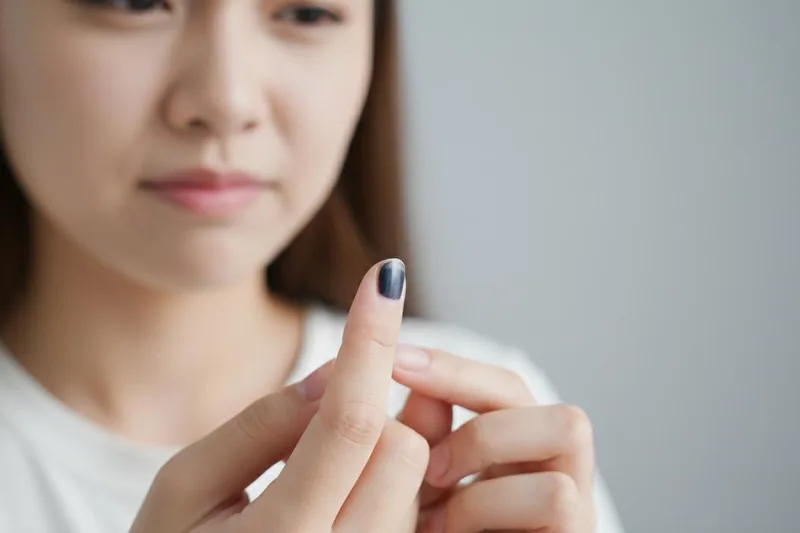
Oops! Your finger got stuck in a door! Or something heavy fell on your big toe! We've all had this experience at least once in our lives, right? Along with the pain that comes with it, after a while you'll notice blue-black blood pooling under your nail. You'll start to feel a sharp throbbing pain. This is what we call `(Subungual Hematoma)` in medicine. So what do you do in a situation like this? Let's talk about it.
What is Nail Trephination?
Simply put, Nail Trephination is a very simple, safe medical procedure to remove blood trapped under your nail. It involves drilling a small hole right above the nail, right where the blood has collected. This is usually done by a doctor in a hospital's Emergency Treatment Unit (ETU) or outpatient department.
The most important thing is, do not try to do this at home for any reason . Using things like pins and needles can lead to serious infections and make the wound worse.
Imagine that you have a hard hit on your finger. The best thing you can do at first is to put some ice cubes wrapped in a towel on the area. Sometimes this will help reduce the pain. However, if the blood stain under the nail is getting bigger and bigger, and the throbbing pain is unbearable, you should definitely see a doctor. The doctor will then decide whether you need this Nail Trephination treatment or not. They will also check if there is any other damage to the finger, such as a bone fracture.
What situations is this treatment suitable for?
This treatment is usually only done for simple subungual hematomas. That is, when the nail is broken, but the hardest part of the nail (the nail plate) is still firmly attached to the delicate tissues underneath (the nail bed). However, in some cases, this treatment alone may not be enough.
| Status | Treatment |
|---|---|
| A simple bruise (The nail hasn't come off, just the pain and blood pooling) | Nail trephination treatment is usually sufficient. |
| Nail separation (Nail plate separation) | More complex treatment, perhaps even removal of the nail, may be required. |
| A split or deep cut in the nail (Splitting or deep cut) | The doctor will examine the wound and determine the most appropriate treatment. |
It is best to seek medical advice as soon as the injury occurs. This treatment is most effective when administered within the first 24 to 48 hours of the injury .
How is this treatment done? Is it something to be afraid of?
Not at all. This is much simpler and quicker than you might think. You don't need any special preparation. The doctor will explain how to do this to you.
1. Cleaning: First, the doctor will thoroughly clean your nail and the surrounding area with soap and water. Then, the wound will be cleaned with an antiseptic solution (e.g., Chlorhexidine).
2. Making a small hole: Next, the doctor uses a very fine needle, a special device with a heated tip (electrocautery device), or a specially designed device to make a tiny hole in the nail above the area where the blood has collected. This only pierces the hard part of the nail, leaving the skin underneath unharmed.
3. Bleeding: As soon as the puncture is made, the blood that was trapped underneath will start to flow out. At the same time, you will feel the pressure and throbbing pain in your finger diminish almost immediately .
4. Bandaging: Finally, the doctor will apply a clean bandage to the area and instruct you on how to care for it at home.
The entire process takes only a few seconds. Although it may feel a little uncomfortable, you will feel a great sense of relief when it is over.
What happens after treatment?
You can go home immediately after the treatment. For the next 24-36 hours, you may see a little blood or fluid oozing from the hole in your nail. This is normal, don't worry. The most important thing is to keep the area clean and dry , changing the bandage as your doctor tells you.
What happens if the blood is not removed?
Not all bruises require this treatment. However, if you have unbearable pain, it means that the blood pressure inside is too high. If that blood is not released, the following can happen:
- The constant throbbing pain.
- Excessive sensitivity when touching the finger.
- Permanent damage to the nail (wrinkles, cracks, changes in shape of the nail).
- Maybe the nail will come off completely.
The nail will appear black for a few weeks after treatment. This is normal. The discolored area will usually fall off as the new nail grows. Usually, if it is a simple bruise, the nail will grow back just fine.
Warning signs that you should see a doctor again
If any of the following signs of infection appear after treatment, see your doctor immediately.
| Signs of Infection | |
|---|---|
| 🔴 | New or increased redness of the skin around the nail. |
| swollen_hand | Increased swelling. |
| pus | Thick, milky pus oozing from the wound. |
| 🌡️ | Fever. |
It's normal to feel a little scared when you hear about getting a hole drilled in your nail. But remember, Nail Trephination is a very safe and effective method that doctors often use to relieve pain. So, if you have a broken nail, don't be afraid to see a doctor without enduring the pain. This little treatment will give you great relief.
Take-Home Message
- A bruised nail that collects blood under it (subungual hematoma) can be extremely painful.
- If the pain is severe and the blood stain is large, it is best to see a doctor within 48 hours.
- Nail Trephination is a very simple, safe procedure performed by a doctor that provides immediate pain and pressure relief.
- Never try to pierce your nails at home using pins, needles, etc. It can lead to serious infections.
- If you experience symptoms such as redness, swelling, pus, or fever after treatment, seek medical advice immediately.




💬 Comments (0)
No comments yet. Be the first to share your thoughts here.
Add Your Comment