
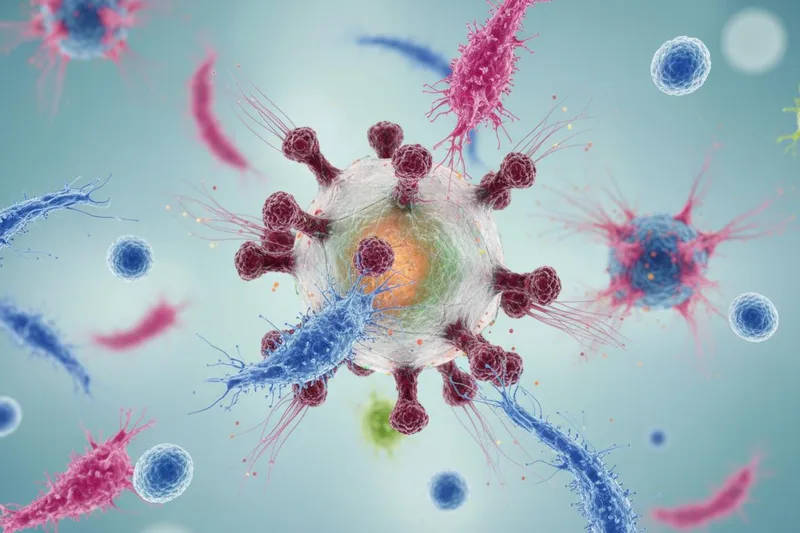
Have you ever felt like you are not easily affected by certain diseases after recovering for a few days? Sometimes, even if you get sick again, you will recover quickly and not as badly as before. The main reason for this is called Natural Immunity . Today, we will simply talk about what this is and how it works inside our bodies.
What is Natural Immunity? Simply...
Simply put, natural immunity is the defense that our body develops against a disease after we have recovered from it. Imagine, when you get sick, your immune system suddenly wakes up. What it does is fight hard to get rid of the invader – whether it’s a virus or bacteria – that has entered your body.
In this fight, our bodies make special proteins called antibodies . These antibodies are like little soldiers that seek out the invader and destroy it. When the antibodies control the infection in this way, you get better. But the story doesn't end there.
After you recover, inside your body, small cells of the immune system – called memory cells – remember that previous infection. That's because, when they fight that infection, they learn to recognize the invader's special marker, called an antigen .
These memory cells live on even after the infection is over. Their only job is to patrol the area to see if the antigen from the previous invader comes back. If the invader does come back, these memory cells will quickly activate, alert other immune cells, and quickly eliminate it – sometimes without you even realizing it.
Imagine a nasty weed growing in your garden. After you pull it out, you remember its shape. If the weed grows back somewhere else, you can quickly identify it and remove it before it harms other plants. That's how it is with this.
These memory cells are a key part of natural immunity. But, for your body to make these memory cells, it first has to encounter the invader. That means natural immunity only develops after you've been sick and recovered.
To understand what role this natural immunity plays in our entire immune system, it's good to know a little about the different types of immunity.
There are two main types of immunity!
These are like two main lines of defense in our body.
1. Innate Immunity: This is the first line of defense that our bodies have when an invader tries to enter. It includes things like our skin, the mucus membranes in our nose and throat, and various types of cells (for example, natural killer cells). These cells recognize invaders and attack them immediately. However, these cells do not remember the invader after the fight is over. They attack all invaders in the same way. Sometimes this alone can control the infection. If it fails, these innate immune cells ask for help – that is, from adaptive immune cells.
2. Adaptive Immunity: This is the line of defense that recognizes, targets, remembers, and attacks specific invaders. Specialized cells – such as T-cells and B-cells – work together to recognize and destroy antigens that are not our own. Memory cells in particular are the heroes here , because they have survived previous infections and are able to respond quickly to subsequent infections.
When most people talk about "innate immunity," they're really referring to a form of adaptive immunity. Your immune system naturally makes certain proteins and antibodies that target specific invaders and "remember" those invaders. This process prepares your body to recognize and fight off those invaders in the future.
So what is this Natural Active Immunity?
Natural active immunity is the protection you get from antibodies that your immune system makes in response to an infection. This is slightly different from vaccine-induced active immunity , which is the protection your immune system makes in response to substances (such as viruses or bacterial particles) in some vaccines.
What is Natural Passive Immunity?
Natural passive immunity is the protection that a child receives from their parents during pregnancy or through breastfeeding. For example, if you are pregnant, you pass various types of antibodies to your baby through the placenta. After your baby is born, if you breastfeed, you pass some types of antibodies to your baby through your milk. This transfer of antibodies protects your baby from harmful germs until your baby's own immune system is ready to make these antibodies.
Passive immunity can also be obtained artificially. This means that antibodies are given as a vaccine for a medical condition. For example, monoclonal antibodies and polyclonal antibodies are used to treat various medical conditions. In these cases, scientists either make these antibodies in a laboratory or obtain them from animal sources.
How long does natural immunity last?
The length of time you are protected from a particular infectious disease varies depending on the disease and your overall health, especially whether your immune system is weak.
Sometimes, a single infection with a disease provides lifelong natural immunity. Examples of such "once-through" diseases are measles and hepatitis A.
Other times, the natural immunity your body builds only protects you for a limited time. That's why you can get some infections – like the common cold, COVID-19, and the flu – multiple times in your lifetime. Your natural immunity is only to a specific strain of the virus. But viruses are constantly changing (changing) to evade our defenses.
Natural immunity and vaccination – what's the difference?
Both natural immunity and vaccine-induced immunity are forms of active immunization. In both cases, your immune system makes antibodies and T-cells. However, they make these in response to different triggers, which are different substances that activate your immune cells.
- It is the microbes from an infection that trigger your body to build natural immunity.
- The substances in vaccines – such as weakened germs, proteins, or mRNA – are what create the immunity that the vaccine provides.
When a large number of people become naturally and/or vaccinated against a particular infectious disease, we can reach what researchers call herd immunity . This means that the infection stops spreading because so many people are immune to that disease. Vaccination is the safest way to achieve herd immunity.
How can I strengthen my immune system naturally?
There are many things you can do to strengthen your immune system and help it work at its best. From getting enough sleep to eating foods rich in immune-boosting nutrients, you can help your immune system defend itself against viruses and other germs that can make you sick. (We'll talk about this in a separate article!)
Let's learn about natural immunity to COVID-19
Natural immunity to COVID-19 is the protection your body builds against future infections after you recover from a COVID-19 infection. This infection trains your immune system to recognize and destroy the virus that causes COVID-19 if it re-enters your body.
However, infectious disease specialists are emphasizing that you should not rely solely on your natural immunity to protect yourself and your family. Instead, get the COVID-19 vaccination as advised by your doctor. There are several reasons for this:
- COVID-19 is an unpredictable infection. You can't always tell how the virus will affect your body, how sick you will be, or what long-term effects, such as long COVID, will occur. Some research has shown that a COVID-19 infection can cause your body to produce autoantibodies . These are antibodies that attack your own healthy cells. This can also lead to autoimmune diseases .
- On the other hand, vaccination gives you predictable, safe, and reliable protection. Any side effects are temporary and do not cause long-term harm. Research has not shown a link between vaccination and the development of autoantibodies.
- Natural immunity to COVID-19 changes as the virus mutates. When a virus mutates, it creates a variant , a new form of the virus. That's why natural immunity from one COVID variant cannot be guaranteed to protect against all other variants.
- Research has shown that previous strains – up to and including Delta – gave people strong, long-lasting natural immunity for months after infection. You still get natural immunity from Omicron and its variants, but it may not be as strong or as long-lasting. That's because these new strains have "high immune escape." That means they're very clever, and they can easily bypass your body's natural immune defenses. Vaccines are updated every year to combat the current Covid strain.
So, instead of relying solely on natural immunity, talk to your doctor about getting a COVID-19 vaccine. Vaccination gives your body a strong, active immunity, without the risk of severe illness, hospitalization, or death that an actual infection can cause. Doctors advise getting the vaccine even if you have had COVID-19.
How long does natural immunity to Covid-19 last?
It depends on a number of factors. Most people are protected from reinfection for a few months. But this natural immunity decreases over time. If you have a weak immune system, your body may not be able to produce enough effective natural immunity after an infection. So, you may get sick again more quickly than others.
Typically, natural immunity from COVID-19 infection can provide strong protection against severe illness and hospitalization. During that time, you can get COVID-19 again, but the infection is likely to be less severe. We will learn more as researchers study new variants and trends in reinfection.
The important thing is that having COVID-19 does not protect you from other common viruses, such as the flu or RSV, or common bacterial infections like strep throat. Each infection is caused by a different microbe. So, even if you have short-term natural immunity to COVID-19, it’s still a good idea to take steps to protect yourself and your family from all kinds of harmful germs. This includes washing your hands frequently, wearing a mask in social situations, and avoiding people who are sick.
To get advice that's right for you, it's best to talk to a doctor who knows you and your medical history. They can give you advice on what to expect after a COVID-19 infection and how to protect yourself.
Take-Home Message
When you're sick, you might not think of the little cells inside your body fighting each other. But that's exactly what happens. When your immune system defeats the invading germ, you're left with a natural defense that can last for months, years, or even a lifetime.
However, natural immunity alone cannot do everything. In most cases, it does not last forever. Also, some viruses or bacteria can make you very sick – so it is best to build immunity through vaccination in such cases. Your doctor can tell you more about how natural immunity can help protect you from some common infections, and what you can do to stay healthy. Always remember, it is very important to seek medical advice when making decisions about your health!
` Natural immunity, immune system, antibodies, memory cells, vaccination, Covid-19, infections


💬 Comments (0)
No comments yet. Be the first to share your thoughts here.
Add Your Comment