
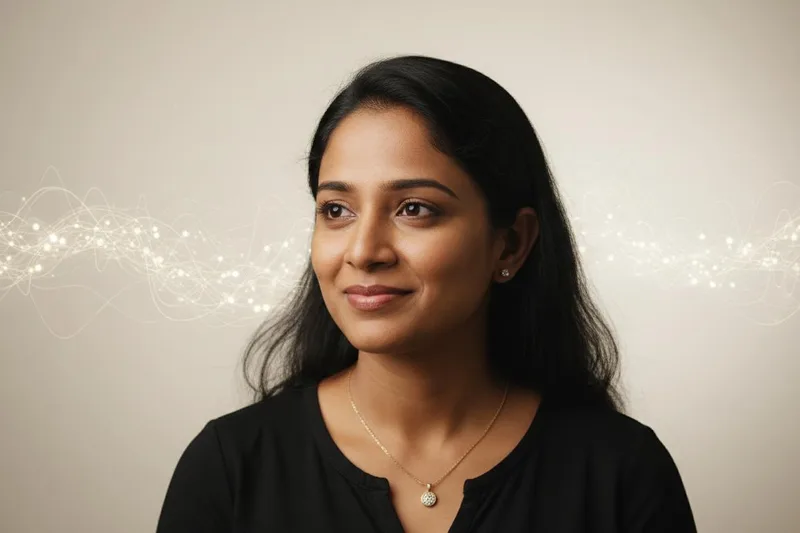
You've probably heard the terms 'Neurotypical' or 'Neurodivergent' lately. We hear these terms all the time now, whether on social media or when talking to a friend. Maybe these are new words to you. Quite simply, they refer to certain differences in the way our brains develop and work. This is not a good or bad, right or wrong story. So today, let's talk about what exactly 'Neurotypical' is, and how it differs from 'Neurodivergent'.
What does 'Neurotypical' really mean?
Simply put, 'Neurotypical' is not a medical term. It's a socially constructed term. It describes the way the brains of the majority of people in the world develop and function. That is, if someone's brain works in the way that is generally expected, like the majority, then we call that person 'Neurotypical'.
Think about it this way. Most people in the world are right-handed, right? That's the most common thing you see. Also, between 80% and 85% of the world's population is classified as Neurotypical.
A neurotypical person's brain generally functions at the same level across a variety of abilities. For example, their brains show similar levels of functioning in areas such as memory, mathematical abilities, and spoken or written language.
The most important thing is this. There is no good or bad, superiority or inferiority in being Neurotypical or Neurodivergent. It is just a characteristic, like your hair color or skin color.
Why doesn't the word 'normal' fit here?
Here we have a big question: "If it's like the majority, isn't it 'normal'?" But the truth is, there is no such thing as 'normal' when it comes to the brain.
Think about how complex our brain is. The average human brain has about 86 billion neurons. These are cells that communicate with each other through electrical and chemical signals. When two neurons make a connection, we call it a synapse. There are trillions of these synapses in your brain. This network of synapses is what makes you you.
That means that no brain is 100% identical to another. Just like our fingerprints. Everyone's brain is unique. So, we can't really define what a 'normal' brain is. Instead, we look at the patterns of how the brain works. Neurotypical is just the name given to the most common pattern.
The difference between being Neurotypical and being Neurodivergent
As a Neurotypical, you don't have to face some of the challenges that a Neurodivergent person faces. This is because many things in the world, such as schools, workplaces, and social norms, are designed to suit the Neurotypical brain. To understand this difference, see the chart below.
| Section | How you feel as a Neurotypical |
|---|---|
| Adapting to society | You don't have to pretend to be like everyone else in society. This is called ``masking.'' When you are who you are, you don't have to worry about people ostracizing you or questioning you. |
| School and education | The school's classrooms, curriculum, and activities are designed to suit Neurotypical children. So you won't find it too difficult to focus on one thing, follow instructions, and complete tasks on time. |
| Sensory processing | You don't feel much discomfort from the information you receive from your senses (eyes, ears, nose, tongue, skin). For example, you can tolerate loud noises, different smells, and people bumping into you in a crowded market. You don't become overstimulated and lost in such an environment. |
| Social connections | When people talk to each other, there are many unspoken rules and expectations that we set. For example, how long we should look someone in the eye, where we should enter the conversation, etc. Neurotypicals understand these things almost automatically, making social interactions relatively easy. |
Can a Neurotypical person later become Neurodivergent?
Yes, it is definitely possible. Even if you are born Neurotypical, you may become Neurodivergent for some reason during your lifetime. We call this "Acquired Neurodivergence" .
This means that the way your brain works has changed because of something that happened to it at some point in your life. This doesn't have to be seen as a bad thing. It's just a change.
There are several things that can cause "Acquired Neurodivergence." Some of these can be temporary, while others can be permanent.
- Brain diseases that occur with aging: Diseases like Alzheimer's disease permanently change brain function.
- Traumatic brain injuries (TBIs): Imagine someone has a serious accident and hits their head hard. After that accident, they may experience temporary or permanent memory problems. This is also a neurodivergence caused by traumatic brain injuries (TBIs).
- Mental health conditions: Mental health conditions like depression and anxiety can change the way the brain works. Also, post-traumatic stress disorder (PTSD), a condition in which the brain develops a protective response after experiencing a severe traumatic event, is one such condition.
In addition to these, there have been reports of people suddenly starting to show neurodivergent symptoms for no apparent reason. However, such cases are very rare.
Can Neurotypical Parents Have Neurodivergent Children?
Yes. Neurotypical parents can have Neurodivergent children. Likewise, Neurodivergent parents can have Neurotypical children.
There is a genetic component to this. Conditions such as attention-deficit/hyperactivity disorder (ADHD) and autism can run in families. However, experts still do not fully understand how these conditions develop or why only some people develop them. Many factors, not just genes, can play a role. Therefore, it is not certain that children will inherit the condition just because their parents had it.
Finally, the most important thing we need to understand is that Neurotypical and Neurodivergent are not typical and atypical, or good and bad. They are simply differences. Whatever you are, it is only a part of who you are, it does not define you completely.
If you are a Neurotypical, your brain may work differently than a Neurodivergent. But you both have a lot in common. You are both human, and you both want to live a happy and healthy life. By building a society that supports and understands Neurodivergents, we all benefit, regardless of whether we are Neurotypical or Neurodivergent.
Take-Home Message
- 'Neurotypical' means that your brain developed and functions like the brains of the majority of people in the world. It doesn't mean 'normal' or 'better'.
- 'Neurodivergent' is just a different way the brain works. Neither is good or bad.
- Even if someone is born Neurotypical, they can develop 'Acquired Neurodivergence' due to an accident, illness, or trauma during their lifetime.
- By understanding these differences, respecting each other, and working together, we can create a better, more accepting society for all.




💬 Comments (0)
No comments yet. Be the first to share your thoughts here.
Add Your Comment