
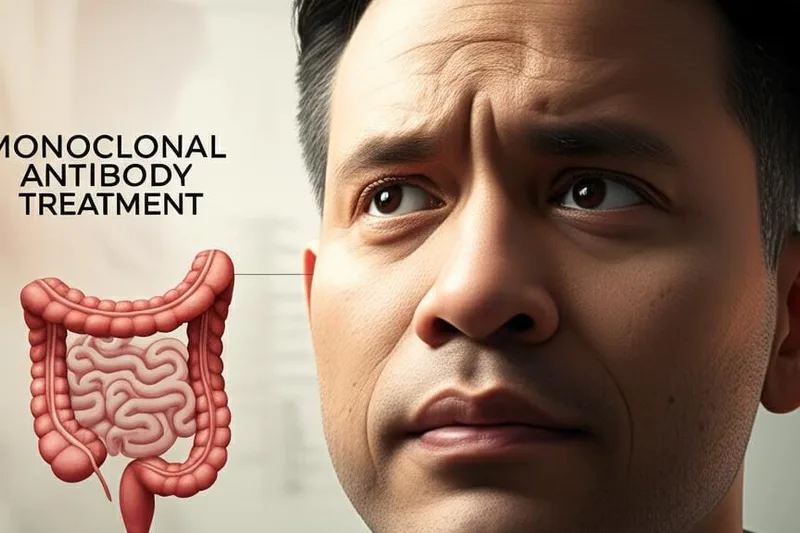
It is difficult to put into words the fear and anxiety that one feels when diagnosed with cancer. But with the advancement of medical science, today there are very advanced and successful methods to treat cancer. Unlike in the past, now there are specific treatments that target and attack only cancer cells. Today, we are talking about a very important treatment method used for colorectal cancer. That is Monoclonal Antibody Therapy.
What are these Monoclonal Antibodies?
Before we understand this, let's take a look at our own body's natural defense system. When an outside invader, such as a germ or a virus, enters our body, our immune system makes special proteins to find and destroy them. We call these antibodies. It's like an army protecting a country.
Now imagine that this army has a "special forces team" that is specially trained and knows how to attack only one target. Monoclonal Antibodies are something like that. These are specific antibodies that are artificially created in a laboratory. They are designed to find a single target, attach to it, and destroy it. In this case, that target is a cancer cell.
The biggest advantage of this treatment is its precision . Traditional chemotherapy is like a bomb. While it kills cancer cells, it can also damage healthy cells in our body. That's why chemotherapy causes side effects like hair loss and fatigue. But Monoclonal Antibody treatment is like a "guided missile." It goes straight to the cancer cell. Therefore, you can expect fewer side effects.
Drugs that stop the "lifeline" of cancer
A cancer is not just a bunch of cells. It is like a little factory. It needs nourishment to grow, to get bigger. To get this nourishment, cancer cells create new blood vessels for themselves. In medicine, we call this process angiogenesis . It is through these blood vessels that the cancer gets the nourishment it needs to survive.
So, what some monoclonal antibodies do is stop the formation of those blood vessels. It's like cutting off the "supply" of fuel to the cancer. A major drug in this class is Bevacizumab (Avastin) .
How does Avastin work?
Cancer cells release a special signal called Vascular Endothelial Growth Factor (VEGF) . When this signal is received, the body starts to make new blood vessels. The drug Avastin works by blocking that VEGF signal. This prevents the cancer from making new blood vessels. Then, without nourishment, the cancer's growth slows down or stops.
Avastin is an approved treatment for colon cancer that has spread (metastasized) to other parts of the body. Although it does not cure the cancer completely, studies have shown that Avastin, when given with chemotherapy, increased the survival time of patients by about five months.
Some of the newer drugs in this class include `Fruquintinib (Fruzaqla), `ramucirumab (Cyramza)` and `ziv-aflibercept (Zaltrap).` These also work by interfering with the VEGF signaling system.
How Avastin is given and its side effects
Avastin is a drug given intravenously or IV. It is usually given every two to three weeks along with chemotherapy. The important thing to remember is that this drug enhances the effects of chemotherapy, but has not been shown to be as effective when given alone in patients with colon cancer.
It is very important to talk openly with your doctor about any discomfort you may experience before starting this treatment and during it.
| Possible side effects of Bevacizumab (Avastin) | |
|---|---|
| Common side effects that are commonly seen | |
| Feeling tired and lifeless | Headache |
| High blood pressure | Appetite |
| Diarrhea (stomach ache) | |
| Serious side effects that should be reported to the doctor immediately | |
| Perforation of the colon (may require surgery) | Kidney damage and increased protein in the urine |
| Heart attack or chest pain | Reduced wound healing (so it should not be used immediately after surgery) |
| Excessive bleeding or blood clotting problems | |
Drugs that turn off the "growth switch" in cancer cells
Let's talk about another type of monoclonal antibody. These don't work the way we mentioned before. These drugs directly target a specific protein on the surface of cancer cells. It's called the Epidermal Growth Factor Receptor (EGFR) .
Simply put, this EGFR is like a "switch" that tells the cancer cell to "grow, grow." About 75% of colon cancers have this EGFR protein.
The drugs cetuximab (Erbitux) and panitumumab (Vectibix) work by attaching to that "switch" called EGFR and turning it off. This prevents the natural signal that tells cells to grow from coming into contact with the switch. As a result, the cancer cells stop growing.
Who is Erbitux and Vectibix used for?
Both of these drugs are approved for colon cancer that has spread (metastasized) to other parts of the body. But there is one very important thing . Before starting this treatment, you need to have a special genetic test (`genetic mutation test`) of your cancer cells. That test is what determines whether these drugs will work for your cancer or not. This is not suitable for everyone.
Erbitux is given intravenously once a week. It is given alone or with the chemotherapy drug irinotecan (Camptosar). Vectibix is given every two weeks, usually in combination with several other chemotherapy drugs.
| Possible side effects of Erbitux and Vectibix | |
|---|---|
| Skin problems: acne-like blisters, skin rashes, dry skin. (Remember, sometimes these skin reactions can be a sign that the drug is working against the cancer!) | Fever |
| Feeling tired and lifeless | Constipation |
| Stomach pain | Allergic reactions such as difficulty breathing and low blood pressure |
| Reactions that occur when the drug is administered to the body | |
All of these treatments are very specific. Only your doctor can determine the best treatment for you based on the type of cancer and your health. Don't make decisions based on what you read on the internet or what someone else has said.
Take-Home Message
- Monoclonal Antibody is a specialized treatment developed in a laboratory that targets and attacks only cancer cells.
- There are different ways these work. Some drugs block the blood supply to the cancer, while others stop the signals that cancer cells give off to grow.
- These treatments are not the same for everyone. Before some drugs are given, you may need to do special genetic tests to see if the drug will work for your cancer.
- Like all medications, this one has side effects. Don't be afraid of them, but talk to your doctor about them clearly before starting treatment.
- Only your treating doctor can give you the best advice and guidance regarding your cancer treatment, so it is very important to follow their instructions.


💬 Comments (0)
No comments yet. Be the first to share your thoughts here.
Add Your Comment