
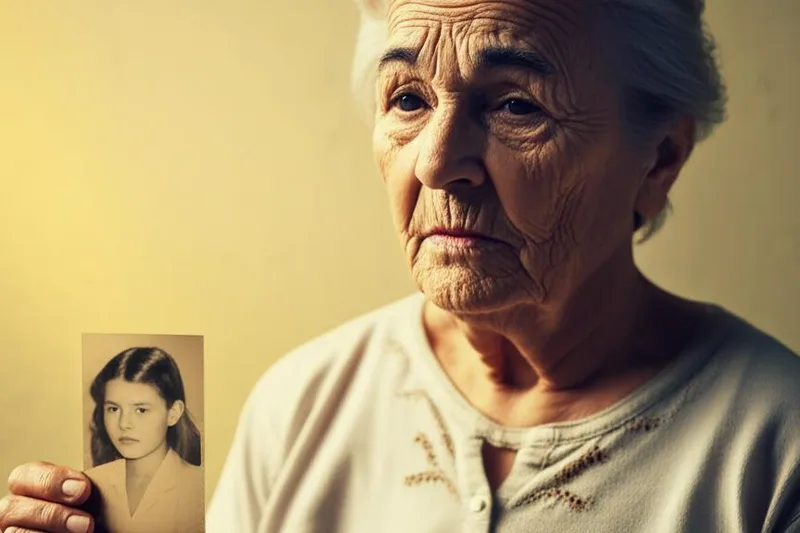
Does your grandmother, grandfather, mother or father suddenly forget small things from the past? Do they suddenly forget where their keys were, someone's name, or the task they were supposed to do? It's normal to forget things a little as we age. But if this forgetfulness affects us to the point where we can't do our daily tasks, it may be an early sign of Alzheimer's disease. A recent study in the United States has found some very important information about this. Today, we'll talk about that, as well as the facts you need to know about Alzheimer's disease.
Simply put, what is Alzheimer's disease?
Alzheimer's is a disease that affects the brain. It is a disease that develops gradually over time. Specifically, the brain cells that control our memory, thinking ability, and behavior gradually die. This is the main cause of the disease called dementia . Dementia is a general name for a number of diseases related to memory and intelligence. The most common of these is Alzheimer's disease.
Think of it this way. Our brain is like a vast library of information. Alzheimer's disease is like the library losing its books. The first to be lost are the newly added books (recent memories). Then, over time, even the oldest books (remote memories) start to disappear.
The most important thing is that normal forgetfulness that comes with aging, and Alzheimer's disease, are two of them. It's normal to be unable to find where you put a key. But if you forget what you use a key for, that's a serious situation.
What are the risk factors for Alzheimer's disease?
A recent study showed that this disease is more common in some parts of the United States. They saw that the main reason for this is the increase in the population over the age of 85 in those areas. In other words, aging is the main risk factor for Alzheimer's disease. But not everyone who gets older develops this disease. There are several other factors that contribute to it.
| Risk factor | A simple explanation |
|---|---|
| Age | The risk increases significantly after the age of 65. This is because the brain changes as we age. |
| Family History | If a close relative, such as your mother, father, or sibling, has Alzheimer's disease, you may also be at risk. There is a genetic influence. |
| Lifestyle | An unhealthy diet, lack of exercise, smoking, and excessive alcohol consumption can negatively affect brain health. |
| Other medical conditions | Uncontrolled conditions such as high blood pressure, diabetes, high cholesterol, and heart disease can increase the risk of Alzheimer's. |
| Head injuries | If you have had a serious head injury, your risk of developing Alzheimer's in the future may be slightly increased. |
Is it important to keep your brain active?
Yes, absolutely. Some studies have shown that people with a low level of education and those who engage in less brain-intensive activities (e.g. reading books, solving puzzles, learning something new) are at slightly higher risk. So, even as you get older, it's important to keep your brain challenged.
How to recognize the symptoms?
The symptoms of Alzheimer's disease don't appear all at once. They appear gradually. In the early stages, these symptoms are very subtle.
Early stage symptoms:
- Forgetting recently learned information: forgetting something you talked about yesterday, an episode of a TV show you watched, or what you had for dinner.
- Difficulty performing daily tasks: Not being able to make the tea you always make, forgetting the way home.
- Forgetting words: Suddenly stumbling over words while speaking. Forgetting the name of a common object (e.g., comb, cup).
- Difficulty making decisions: Mistakes when using money, difficulty choosing an outfit, etc.
- Mood changes: You become more irritable, anxious, or worried than before.
- Getting lost in familiar places: Going to the shop in your hometown and not being able to find your way back home.
When the disease is escalating:
As the disease progresses, these symptoms become more severe. You may not be able to recognize family members or close friends. You may be unable to do things like dress yourself, eat, or bathe yourself.
What do you do if you see symptoms like these?
If you suspect that someone in your family has these symptoms, the best thing to do is to see a qualified doctor as soon as possible. Don't be ashamed, afraid, or dismiss it as "just the way things are when you get older."
The doctor will talk to the patient, ask questions about the family, and perform some simple tests to check memory. Sometimes, they may also recommend a brain scan (a `CT` or `MRI scan`) to determine if other conditions are causing the symptoms.
There is no cure for Alzheimer's disease yet. However, there are treatments that can help control symptoms, slow the progression of the disease, and improve the patient's quality of life by detecting the disease in its early stages .
Also, early identification is a great help for the patient and the family caring for him to plan how to live with this condition and how to get the necessary support.
Take-Home Message
- Alzheimer's disease is not a normal part of aging. It is a disease that affects the brain.
- Don't ignore symptoms like memory loss, difficulty performing daily tasks, and forgetting words. These may be early symptoms.
- If an adult in your family is showing these symptoms, don't panic and seek medical advice as soon as possible.
- A heart-healthy lifestyle (good diet, exercise) is also good for the brain. Controlling diseases like high blood pressure and diabetes is also very important.
- Even if the disease is diagnosed, proper treatment and loving care can help the patient live a comfortable life.


💬 Comments (0)
No comments yet. Be the first to share your thoughts here.
Add Your Comment