
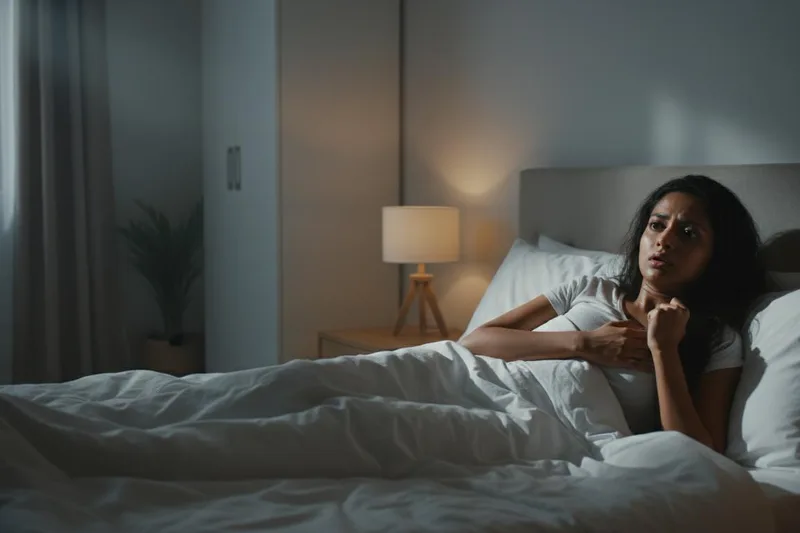
Do you sometimes wake up from a deep sleep feeling dizzy, sweaty, and short of breath? If you wake up with a start, as if you were in a panic, you may be experiencing a condition called a 'night terror'. Today, we'll talk about what it really is, why it happens, and what we can do about it. Don't worry, this is a problem that many people have.
What is a Nocturnal Panic Attack?
Simply put, a nocturnal panic attack is a sudden, intense fear that wakes you up while you are sleeping. You wake up suddenly with a feeling of panic and fear. At the same time, you start to feel different things in your body. For example, your heart may beat faster, you may sweat profusely, you may have difficulty breathing , and you may feel like you are suffocating. This can be a very unpleasant experience.
How common is this condition?
This is more common than you might think. According to surveys, even in a country like America, a significant number of people experience a panic attack at least once every year. And, it is said that about seven out of ten people with a condition called panic disorder , which causes these panic attacks to occur frequently, also experience these panic attacks at night. So, if this is happening to you, remember that you are not alone.
What is the difference between night terrors and sleep terrors?
Now some people might be thinking, 'Oh, is this about those little kids screaming in fear at night?' There's a big difference between that and this. What we call 'night terrors' in those little kids. That's also a sleep-related problem, and medically speaking, it falls under the category of 'parasomnias.'
Night terrors can also show symptoms similar to those of a panic attack. However, the main difference is awareness .
- A person who has night terrors is actually asleep. He or she is not aware of what is happening to him or her. He or she may appear to have open eyes, scream, or run out of bed. But he or she is asleep. It is difficult to wake him or her, and it is not advisable to wake him or her. When the event is over, he or she goes back to sleep. When he or she wakes up in the morning, he or she may have no memory of it. Night terrors are most common in young children, but they can also occur in adults.
- However, in a nocturnal panic attack (`Nocturnal Panic Attack`), you are awakened from sleep. You are very aware of your fear and other symptoms. It can take a long time to fall asleep again. These `Nocturnal Panic Attacks` mainly affect young people and the elderly.
Why does this happen at night? What are the reasons?
The exact reason why some people have night terrors is still unknown . Scientists think that in some way our brain and nervous system are affected by the way we perceive and respond to things like fear and anxiety. Often, daytime panic attacks occur when there is nothing to be afraid of, but the brain has sent the wrong signal. Similarly, these night terrors are not caused by any external cause at the time. They just happen all of a sudden.
Who is more at risk?
If you have panic attacks during the day, you're more likely to have them at night. In addition, people with the following conditions have been found to be at higher risk:
- If you have problems with frequent anger and aggressive behavior.
- Anxiety disorder, that is , anxiety-related conditions .
- Depression is a mental condition.
- Sleep problems (insomnia) or sleep apnea, a condition that causes breathing problems during sleep.
- Obsessive-Compulsive Disorder (OCD) is a condition in which you constantly think about unwanted things and feel the need to do them.
- Drug addiction, alcohol abuse (including `Substance use disorders`, `alcohol use disorder`).
What are the symptoms of this?
Night terrors are similar to daytime terrors in that they cause the same symptoms. However, research suggests that people who experience them at night may experience more shortness of breath . They may have difficulty breathing, feel like they are suffocating, or feel like they are having a heart attack.
Here are some common symptoms of night terrors:
- Chest pain or tightness, tightness.
- Feeling cold and shivering.
- Feeling an unbearable fear or terror .
- Feeling nauseous, stomach discomfort.
- Excessive sweating (sometimes doctors call this `hyperhidrosis`).
- Heart pounding (as if it's going to jump out of your chest).
- The tips of the fingers and toes feel numb, or as if they are completely numb.
- My whole body is shaking and throbbing.
How long will this situation last?
The good news is that this is not always the case. These symptoms usually peak in less than 10 minutes and then gradually subside. However, it can take a while to fall asleep again. Because it is not easy to fall asleep quickly with the fear that arose at that time.
How do you recognize this exactly?
When you see a doctor, they will first check to see if there are other physical conditions that are causing these symptoms. For example, heart disease or thyroid disease can also cause these symptoms. They may do some tests to rule them out. If no physical cause is found, your doctor will likely diagnose you with a 'nocturnal panic attack' based on your symptoms and any risk factors you may have.
Can you stop a panic attack when it comes?
The truth is, once a panic attack starts, it's hard to stop it completely. Most of the time, all you have to do is wait until the symptoms subside. However, some people can reduce the severity of the condition by doing things like deep, controlled breathing or muscle relaxation exercises. Also, a doctor can prescribe some medications to help reduce your symptoms.
How is this treated? How is it managed?
When considering how to treat and manage this condition, your doctor may recommend a combination of medication and therapy . These are the same treatments used for daytime panic attacks.
- Antidepressants and anti-anxiety medications : These medications can reduce the frequency and severity of panic attacks. They can even help eliminate the condition completely. However, these medications can take six to eight weeks to work properly. You need to be patient.
- Benzodiazepines : This class of drugs (e.g., alprazolam (Xanax™), clonazepam (Klonopin™)) can quickly relieve severe symptoms. However, since these drugs can be addictive , they should only be used for a short period of time, under medical supervision. Over time, the body can develop a physical tolerance to the drug, which can make it difficult to stop taking.
- Beta-blockers : For example, medications like propranolol (Inderal™). These can reduce the physical symptoms of panic attacks (such as heart palpitations and trembling). Your doctor may prescribe these medications when you feel like you're having a panic attack.
- Cognitive Behavioral Therapy (CBT) : This is a type of psychotherapy (also known as talk therapy). You meet with a qualified counselor or psychiatrist, who will help you identify the thoughts and behaviors (triggers) that trigger your phobias. Through CBT, you learn to change those thoughts and behaviors and cope better with the problem. Over time, your phobias may become less frequent, or even go away completely.
What other problems can this cause?
Waking up in the middle of the night like this can be a big obstacle to your good sleep . The fear of 'Will it happen again tonight?' can make you stay up late or even cause insomnia.
Not getting enough sleep can affect your health in many ways. For example:
- Anxiety and depression may increase.
- It can be difficult to focus on and remember things.
- Stress and irritability may increase.
- The frequency of panic attacks may also increase during the day.
- There may be weaknesses in work or school performance .
- There is also a possibility of weight gain .
Can't this be prevented?
Although it cannot be completely prevented, there are several things we can do to reduce the risk:
- Eat a healthy diet . Limit caffeine-containing beverages (such as coffee and strong tea) , especially in the evening. Exercise regularly .
- Find ways to manage stress, such as meditation , tai chi , breathing exercises, or talking to a friend.
- If you are taking herbal supplements or over-the-counter medications, talk to your doctor first, as some of these can increase anxiety.
So, can this be cured?
Yes, this is the best news! This phobia is treatable . Many people find significant relief from their symptoms through counseling and medication. Once you can control your daytime panic attacks, the frequency and severity of your nighttime panic attacks should decrease.
When should I see a doctor?
If you have any of these things, definitely don't delay seeing a doctor:
- If you frequently experience difficulty breathing .
- If you have chest pain (this could be a symptom of another heart condition, so you should see a doctor right away).
- If it's very difficult to focus .
- If you have an unbearable irritability .
- If insomnia persists.
- If a panic attack lasts more than 15 minutes .
- If you have persistent anxiety that interferes with daily activities and sleep.
- If you have symptoms such as loud snoring and shortness of breath during sleep (these may be symptoms of `Sleep Apnea`).
What questions should you ask the doctor?
When you go to see the doctor, don't be afraid to ask any questions you have. For example:
- 'Why, Doctor/Miss, do I have these nightmares at night?'
- 'What is the best treatment for these night terrors?'
- 'How long will I have to undergo therapy?'
- 'How long will I have to take the medication? What are the side effects?'
- 'Do I need to be aware of other complications that may arise from this condition?'
If you're not sure whether you have these night terrors, don't be shy about talking to your doctor about them. They can help you find the cause and provide you with treatments that may help. Remember, if you can prevent daytime terrors, you'll be in a better position to avoid night terrors.
So, what are the most important things we need to remember?
A nocturnal panic attack is a frightening experience, but it is not something you should experience alone . It is a condition that can affect many people.
The most important thing is to seek proper medical advice if you have these symptoms. Don't be ashamed or afraid. With proper treatment and counseling, this condition can be well controlled, and perhaps even completely cured. Your mental health is just as important as your physical health. So take care of it. Wishing you a speedy recovery!
` Nocturnal Panic Attack, panic attack, sleep, anxiety, fear, night terrors, treatment, symptoms, mental health, breathing difficulty,


💬 Comments (0)
No comments yet. Be the first to share your thoughts here.
Add Your Comment