

Are you dealing with unpredictable monthly periods, heavy bleeding, or severe pelvic pain from a condition like endometriosis? If you have visited your doctor recently, you might have received a prescription for a hormone medicine called norethindrone acetate. Starting a new hormone treatment can feel confusing, so let us break down everything you need to know in simple, clear everyday language.
This complete patient guide explains what norethindrone acetate is, how it works in your body, how to take it safely, and what warning signs to watch out for. Whether you are prescribed this medicine to balance your cycle or manage painful symptoms, understanding your treatment helps you feel more confident and in control of your health.
Key Takeaways
- Norethindrone acetate is a synthetic progesterone hormone used to regulate irregular menstrual cycles and ease pain from endometriosis.
- Always take your medicine at the exact same time every day with a glass of water, exactly as your doctor instructed.
- Tell your doctor about all your medical history, current medicines, vitamins, and herbal products before starting treatment.
- Never share your prescription medicine with friends or family members, as hormone treatments affect everyone differently.
- Seek medical help right away if you notice warning signs of blood clots, severe chest pain, or sudden breathing trouble.
Know the most suitable date for you to expect a child
What Is Norethindrone Acetate?
Put simply, norethindrone acetate is a lab-made hormone that mimics progesterone, a natural female hormone your body produces. Doctors prescribe this medicine primarily for two common health concerns related to your monthly cycle.
First, it helps control and regulate irregular menstrual cycles. Some people go months without a period. This others experience unpredictable or overly frequent bleeding. This medicine helps balance your hormone levels to bring regularity back to your monthly cycle.
Second, it helps reduce pain caused by endometriosis. This condition happens when tissue similar to the lining of your uterus grows outside of it, causing painful cramps. Norethindrone acetate calms this tissue growth and helps soothe that painful monthly discomfort.
Things to Tell Your Doctor Before Starting This Medicine
Before you take your first dose, sharing a complete picture of your medical history with your doctor is essential. Certain health conditions do not mix well with hormone medicines. Make sure to mention any past or current medical issues.
| Health Condition | What to Tell Your Doctor |
|---|---|
| Blood Vessel Issues or Blood Clots | If you have ever had a blood clot in your legs, lungs, or brain. |
| Cancer History | If you have a history of breast, cervical, or uterine cancer. |
| Mental Health Conditions | If you currently take treatment for depression or anxiety disorders. |
| Major Chronic Illnesses | Mention diabetes, heart disease, kidney issues, liver problems, migraines, or strokes. |
| Unexplained Bleeding | If you have any abnormal vaginal bleeding with no known cause. |
| Allergies | If you are allergic to this medicine, dyes, or specific foods. |
| Pregnancy and Nursing | If you are pregnant, planning to become pregnant, or breastfeeding your baby. |
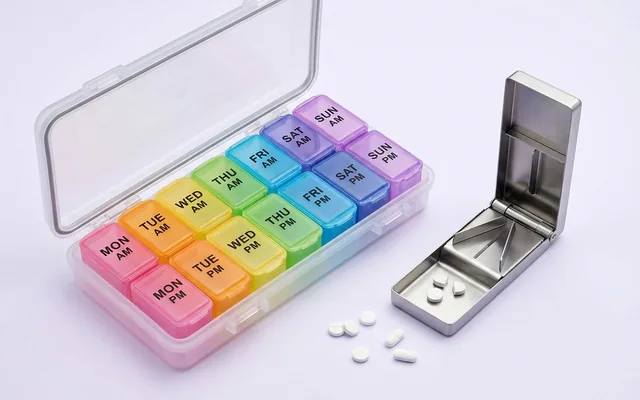
Airtight double-lock weekly medication organizer with removable day pods and a surgical stainless-steel tablet cutter for accurate half-tablet splitting and adherence.
View Clinical Details →How to Take This Medicine Correctly
Taking your medicine correctly ensures you get the best results with minimal side effects. Follow these simple daily routines for your prescription.
- Swallow your pill whole with a full glass of water.
- You can take this tablet with food or on an empty stomach.
- Take your medicine at the exact same time every day to keep hormone levels steady. Pick a routine time that is easy to remember, like right after brushing your teeth or after dinner.
- Never take more medicine than your doctor prescribed.
- Always read the patient information leaflet that comes with your prescription pack.
What to Do in Case of an Overdose
If you think you or someone else took too many pills by accident, do not panic. Call your local poison control center right away or head straight to the nearest emergency department (ER) / A&E for quick evaluation.
What to Do If You Miss a Dose
If you forget to take your pill at your usual time, take it as soon as you remember. However, if it is almost time for your next scheduled dose, skip the missed pill entirely and continue with your normal routine.
Never take a double dose to make up for a missed pill. Taking two pills at once can upset your hormone balance and increase your risk of unwanted side effects.
Other Medicines That May Interact With This Tablet
Certain medicines can interact with norethindrone acetate, making it less effective or increasing your risk of side effects. Always share a complete list of everything you take with your doctor.
- Certain antibiotics and antifungal medicines, such as rifampin or griseofulvin.
- Seizure control medicines, such as carbamazepine, phenytoin, or topiramate.
- Specific antiviral medicines used for treating HIV infections.
- Herbal supplements like St. John's Wort.
- Specialized medicines including bosentan, barbiturates, or modafinil.
This list does not include every possible interaction. Remember to tell your doctor about every prescription drug, over-the-counter medicine, vitamin supplement, or herbal remedy you take.
Things to Watch Out For While Taking This Medicine
While taking your medicine, staying proactive about your health ensures your treatment stays on track and effective.
- Keep Your Doctor Appointments: Attend all scheduled checkups so your doctor can monitor your progress. You may need routine breast exams or pelvic checkups during treatment.
- Watch for Pregnancy: If you suspect you might be pregnant while taking this medicine, stop taking the pills right away and call your doctor right away.
- Give It Time to Work: Balancing your hormones and easing symptoms takes time. It can take several menstrual cycles before you notice full improvements, so stay patient.
Possible Side Effects to Know About
Like any medicine, norethindrone acetate can cause side effects. Most side effects are mild, but some require prompt medical attention.
| Serious Side Effects (Call Your Doctor Right Away) | What to Look For |
|---|---|
| Allergic Reactions | Skin rashes, itching, swelling of your face, lips, tongue, or throat. |
| Blood Clot Signs | Pain, swelling, or warmth in your leg, sudden shortness of breath, or sharp chest pain. |
| Stroke Symptoms | Sudden numbness in your face or arm, trouble speaking, confusion, or vision changes. |
| Liver Issues | Pain in your upper right belly, loss of appetite, nausea, dark urine, or yellowing skin and eyes. |
| Other Severe Signs | High blood pressure, worsening migraines, severe mood drops, or unusual vaginal discharge. |
| Common Mild Side Effects (Report If Persistent) | What to Expect |
|---|---|
| Breast Tenderness | Mild soreness or tenderness in your breasts. |
| Skin Pigmentation | Dark patches on your face or skin areas exposed to sunlight. |
| Other Mild Symptoms | Mild hair shedding, light spotting between periods, mild nausea, or mild stomach cramps. |
When to Call Emergency Services
Call 911 (US/Canada), 999 (UK), or go to your nearest hospital Emergency Department right away if you experience crushing chest pain, sudden trouble breathing, coughing up blood, or signs of a severe allergic reaction with facial swelling.
How to Store Your Medicine Safely
Proper storage keeps your medicine effective and safe. Keep your tablets stored at room temperature, ideally between 15°C and 30°C (59°F to 86°F), away from excess moisture and heat.
Always store your prescription in a secure cabinet well out of reach of young children and household pets. Safely dispose of any expired medicines through local pharmacy take-back programs.
💡 Take-Home Message
Managing irregular cycles and pelvic pain takes patience and consistency. Always take your norethindrone acetate exactly as prescribed at the same time every day. Keep an open line of communication with your doctor, share your complete health history, and report any worrying side effects right away. You have got this!


No comments yet. Be the first to share your question or experience below.