

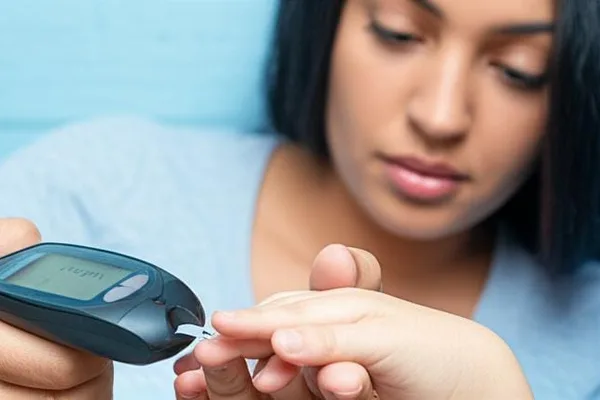
Ever since the doctor told you that your child has Diabetes Mellitus, you've been feeling a lot of pressure. "What will my child's future be like?" and "Will this not be possible to control?" questions like this must have crossed your mind a hundred thousand times. When you prick your little finger several times a day, take a blood sample, and check your blood sugar level, your heart skips a beat when the readings fluctuate a little, right? We understand that feeling very well. But don't worry, you're not alone. We're here to help you on this journey and to explain it simply.
Why is it important to properly control a child's blood sugar levels?
It's very simple. If a child with diabetes' blood sugar levels are properly controlled, that child will grow up just like any other healthy child. This proper control will provide great strength to learn, play, grow, and enjoy life normally.
Your doctor will give you a target range for your child. This is not the same for every child. These targets change with the child's age. This is not the target range for a small baby, but for a school-age child. These targets also change when they reach adolescence. Therefore, it is essential to check your child's blood sugar levels several times a day. Only then can we make the necessary changes and bring it to the target level.
Remember, the value shown on the glucometer is not "good" or "bad." It's like a meter on the dashboard of a car. It only gives us information. We use that information to decide what to do to keep our child healthy.
What are the causes of this increase or decrease in sugar levels?
No one expects a child's blood sugar level to stay the same all the time. It's like the waves of the ocean, it goes up and down a little. Our goal is to control these highs and lows as much as possible and keep them within the target range. There are several main factors that affect this.
| Factor | How It Affects |
|---|---|
| Food | The foods we eat that contain carbohydrates - things like rice, bread, potatoes, noodles, potatoes, fruits, and sweetened beverages - are digested and converted into glucose (sugar) and added to the blood. This causes blood sugar levels to rise after eating. This rise varies depending on the type and amount of food eaten. |
| Exercise | When a child plays, runs, jumps, or plays sports, the body uses the sugar in the blood to fuel its muscles. This is why exercise usually lowers blood sugar levels. However, sometimes, during intense exercise, blood sugar levels can temporarily rise. |
| Growth and Hormones | During periods of rapid growth in children, and especially during puberty, there are major changes in the body's hormones. These hormones interfere with the action of insulin, causing blood sugar levels to rise and fall unpredictably for no apparent reason. This is very common. |
| Illness | Any illness, whether it's a cold, a fever, or a stomach ache, puts the body under stress. The hormones released due to this stress raise blood sugar levels. Therefore, controlling blood sugar levels can be a bit difficult during sick days. |
| Stress | Emotional emotions such as the pressure of an upcoming exam, the sadness of a fight with a friend, and fear can also cause the body to release stress hormones and increase blood sugar levels. |
| Medication | The amount of insulin, the time of day it is taken, or certain medications (e.g. steroids) taken for other conditions also directly affect blood sugar levels. |
The threshold of puberty
Adolescence is a challenging time for both parents and children. Hormonal changes in the body can cause blood sugar levels to go on a roller coaster. One day, blood sugar levels can be well-controlled, but the next day, they can spike for no apparent reason.
Don't panic or blame your child at this time. Don't hurt your child by asking questions like, "Did you sneak something in?" This is not your fault or your child's fault. This is completely a function of hormones . The best thing to do is to talk to your doctor regularly until this time passes and adjust your insulin and diet as needed.
How can you help your child navigate this journey alone?
Our ultimate goal is to empower your child to manage their diabetes on their own. This is not something that can be done overnight. But it can start with small steps from a young age.
- Develop good habits: Encourage your child to check their blood sugar levels on time, take insulin, and eat.
- Praise the effort: After your child checks their blood sugar levels, no matter what the result is, praise them for checking. Say, "Thank you, my son/daughter, for checking your blood sugar on time."
- Don't blame: Don't blame or scold your child when their blood sugar levels are out of range. Doing so may make them afraid to check their blood sugar levels, or you may be tempted to hide it if you get an incorrect reading. This is very dangerous.
- Support: When your child's blood sugar levels are out of whack, support them by saying, "It's okay, let's figure out why this happened. Let's get this back together." Make them feel like they're not alone.
Sometimes, neither you nor your child can recognize the symptoms of hypoglycemia or hyperglycemia. Therefore, checking your blood sugar levels regularly, even if you don't have any symptoms, is the best and only way to prevent dangerous situations. Stay in touch with your doctor and ask if you have any concerns.
Take-Home Message
- Properly controlling the blood sugar levels of a child with diabetes is essential for that child's healthy development.
- Target blood sugar levels vary depending on the child's age and lifestyle, so talk to your doctor about it.
- Diet, exercise, illness, stress, and hormonal changes (especially during puberty) directly affect sugar levels.
- Do not label the value shown on the glucometer as "good" or "bad." It is only information needed to manage your child's health.
- When your child's blood sugar levels go out of range, don't blame them, but help them understand the reason and get back on track. Always praise your child's efforts.
- Even if you don't have symptoms, it's important to check your blood sugar regularly. Consult your doctor if you have any concerns.




💬 Comments (0)
No comments yet. Be the first to share your thoughts here.
Add Your Comment