
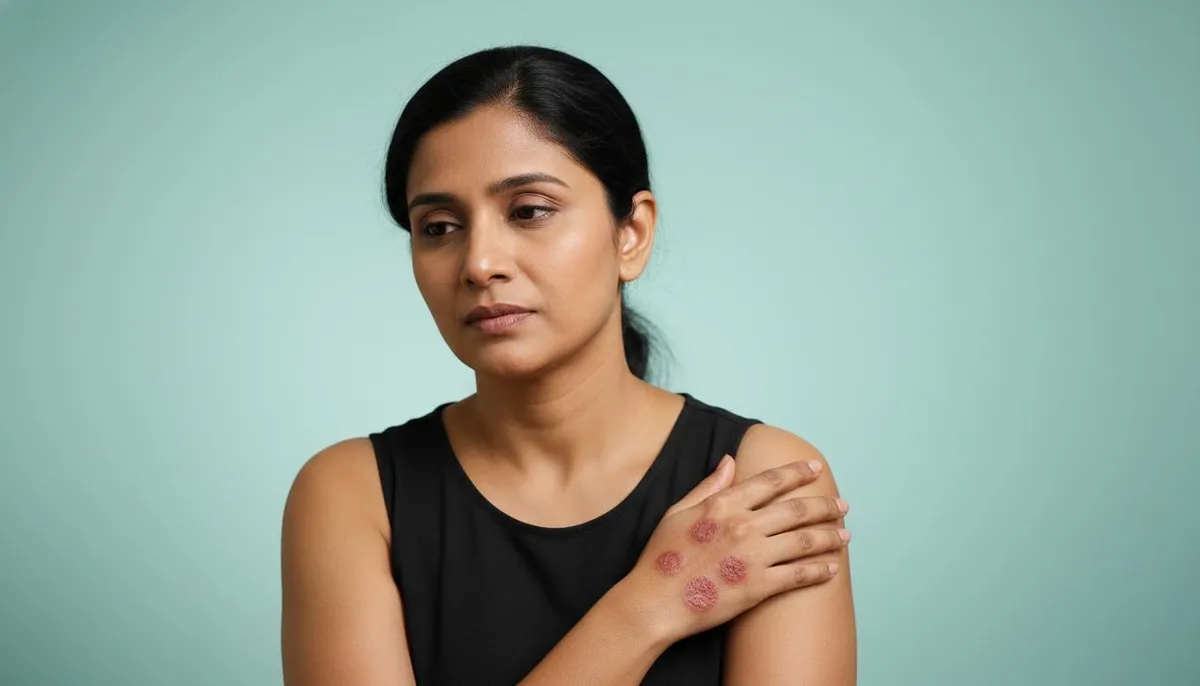
Have you suddenly noticed round, slightly raised spots on your skin that look remarkably like coins and itch intensely? Sometimes these spots may leak a clear fluid, and as they dry, they form crusty scabs over the surface. Do not worry. This is a common skin condition that affects many people worldwide. Today, let us explore nummular eczema, also often referred to in medical terms as discoid eczema.
Living with persistent skin rashes can feel frustrating and overwhelming. Whether you are trying to understand your first flare-up or seeking better ways to calm chronic itching, having clear, reliable medical information makes a tremendous difference. Let us walk through everything you need to know about this condition in simple, supportive language.
Key Takeaways.
- Nummular eczema causes distinct coin-shaped patches that itch intensely and can weep clear fluid.
- It is an inflammatory skin condition, not a fungal infection, meaning it is completely non-contagious.
- Triggers include severely dry skin, skin injuries, hot showers, and high stress levels.
- Treatment focuses on restoring skin moisture barriers, reducing inflammation with topical creams, and avoiding known triggers.
Typical coin-shaped inflammatory skin lesions typical of nummular eczema.
What Is Nummular Eczema?
Put simply, nummular eczema is a type of skin rash that creates coin-shaped patches. The word nummular stems from a Latin term meaning coin. These patches often itch intensely, may weep clear fluid during active phases, and can develop crusty scabs as they dry out.
This condition tends to be chronic. That means the patches can persist for weeks or even months at a time. Many people experience clear periods followed by unexpected flare-ups. Think of it as a recurring skin annoyance that requires gentle, consistent daily management.
Nummular Eczema Versus Ringworm.
You might wonder if these round spots represent a common fungal infection like ringworm. While both conditions produce circular skin lesions, their underlying causes and treatments are completely different.
- Ringworm: This is caused by a fungal infection and is strictly contagious. It typically presents as one or two expanding rings with clear centers.
- Nummular Eczema: This belongs to the eczema family, which means it is not caused by fungus and is never contagious. People often develop multiple coin-shaped patches simultaneously.
Never assume a round rash is automatically ringworm. Always consult a qualified doctor or dermatologist for an accurate diagnosis before applying over-the-counter anti-fungal creams.
Is Nummular Eczema a Fungus?
No, nummular eczema is not caused by a fungus. also, it is not a contagious disease. You cannot catch it from another person, nor can you spread it from one person to someone else. It also will not spread across your own body from a single spot, though new patches can develop independently in different areas over time.
Nummular Eczema Versus Psoriasis.
People sometimes confuse eczema and psoriasis because both conditions create prominent skin plaques. However, distinct clinical differences help separate them:
- Psoriasis: This condition typically produces thick, silvery-white scales layered over red, inflamed skin plaques.
- Nummular Eczema: This condition starts with tiny blisters that merge, weep fluid, and form crusts rather than thick silvery scales.
- Eczema conditions generally tend to cause much more severe itching compared to typical plaque psoriasis.
To determine your exact diagnosis, consulting a board-certified dermatologist remains the safest and most accurate path forward.
Who Is Most Likely to Get Nummular Eczema?
While nummular eczema can affect people of any age or background, clinical research indicates that certain age groups and sexes experience higher susceptibility:
- Young adult women aged 15 to 25.
- Older adult men aged 50 to 65.
What Causes Nummular Eczema?
Medical researchers have not identified a single direct cause for nummular eczema. However, several specific factors are known to trigger or worsen the condition:
- Allergies: Contact allergies to certain metals, fragrances, or topical agents can provoke flare-ups.
- Bacterial Infections: Secondary bacterial colonization, such as Staphylococcus bacteria, can trigger or aggravate lesions.
- Rough Fabrics: Wearing scratchy clothing materials like wool can irritate sensitive skin.
- Dry Skin: Severely dry skin or living in low-humidity environments increases susceptibility.
- Hot Showers: Taking long, very hot baths strips natural skin oils and worsens dryness.
- Skin Injuries: Minor cuts, scrapes, burns, or insect bites can prompt lesions to form at the injury site.
- Harsh Soaps: Using strong, heavily scented soaps strips the protective skin barrier.
Does Stress Cause Nummular Eczema?
Psychological stress does not directly cause nummular eczema. However, clinical studies show that emotional stress often triggers severe flare-ups. When you feel overwhelmed or anxious, your immune system reacts, which can worsen underlying inflammatory skin conditions.
What Are the Symptoms of Nummular Eczema?
Nummular eczema spots most commonly appear on the arms, legs, hands, and torso. The earliest signs often begin as clusters of tiny bumps or blisters. These tiny bumps merge to form distinct coin-shaped patches that often weep clear fluid and form crusts.
The intense itching associated with nummular eczema can disrupt daily activities and sleep. Skin over these patches may also feel hot, burning, or stinging.
The color of these patches depends heavily on your natural skin tone. They can appear pink, bright red, or dark brown.
Is Nummular Eczema Contagious?
No, nummular eczema is completely non-contagious. You cannot transmit it to family members, friends, or coworkers. It stays strictly confined to your own skin.
How Is Nummular Eczema Diagnosed?
To receive an accurate diagnosis, schedule an appointment with a dermatologist. A specialist can easily distinguish nummular eczema from ringworm, psoriasis, and other contact dermatitides.
Doctors usually diagnose nummular eczema through a careful visual physical examination of your skin. Specialized laboratory tests are rarely required. In rare instances, your doctor may take a gentle skin scraping to rule out fungal infections under a microscope.
Is There a Complete Cure for Nummular Eczema?
Unfortunately, no permanent cure currently exists for nummular eczema. Treatment goals focus instead on:
- Treating or preventing secondary skin infections.
- Relieving uncomfortable symptoms like intense itching and burning.
- Restoring the natural skin barrier to protect against irritants.
- Establishing healthy skincare routines to prevent future flare-ups.
How Do You Treat Nummular Eczema?
During active flare-ups, your doctor may prescribe topical medical treatments applied directly to the affected spots:
- Corticosteroids: Topical steroid creams or ointments reduce inflammation and calm intense itching.
- Antibiotics: Prescription antibiotic creams or oral medicines treat any bacterial infections.
- Calcineurin Inhibitors: medicines like tacrolimus ointment modulate immune activity in the skin without steroids.
If lesions cover large areas of your body, your doctor may recommend ultraviolet light therapy or oral corticosteroids.
How Can You Prevent Future Nummular Eczema Flare-Ups?
Minimizing future flare-ups requires adopting consistent, gentle skincare habits:
- Avoid skincare products, cosmetics, and laundry detergents containing artificial fragrances or dyes.
- Wear soft, breathable clothing made from cotton rather than scratchy wool or synthetic fabrics.
- Practice stress management techniques like regular exercise, mindfulness, or deep breathing.
- Moisturize your skin right away after bathing while your skin remains slightly damp using thick creams or petroleum jelly.
- Protect your skin from cuts, scrapes, and insect bites.
- Take short, lukewarm showers rather than long, hot baths.
- Use gentle, fragrance-free cleansers that contain added moisturizers.
- Avoid rubbing your skin vigorously with rough towels or loofahs.
What to Expect When Managing Nummular Eczema.
With an accurate diagnosis, appropriate medical treatment, and diligent daily skincare, nummular eczema patches generally heal successfully.
The healing process typically takes anywhere from one to several weeks. Lesions gradually flatten, fade in the center, and eventually fade away entirely.
Will Nummular Eczema Return After Treatment?
Nummular eczema is a chronic condition. Even after successful treatment clears your skin, you may experience future flare-ups months or years later. Maintaining a proactive daily skincare routine helps keep your skin healthy and minimizes recurrence.
How Can You Care for Yourself at Home?
You can manage symptoms effectively at home by following your doctor's advice alongside these self-care steps:
- Never scratch the lesions. Scratching increases the risk of bacterial infections and permanent scarring. Keep your fingernails trimmed short.
- Cover itchy patches with clean, moist bandages or petroleum jelly dressings to protect the skin barrier.
- Take oral antihistamines if recommended by your doctor to reduce nighttime itching and help you sleep.
When Should You See a Doctor?
Always consult a doctor if you notice persistent, unexplained skin rashes. Early medical evaluation prevents unnecessary discomfort and speeds up recovery.
When to Seek Urgent Medical Attention.
Contact your doctor right away if you notice signs of a secondary skin infection:
- Increasing pain, tenderness, or warmth around the rash spots.
- Spreading red or brownish streaks extending outward from the lesions.
- Noticeable swelling of the surrounding skin.
- Yellow or golden fluid drainage, thick crusts, or visible pus.
If you experience severe systemic symptoms such as high fever or chills, call emergency services right away (911 in the US/Canada, 999 in the UK) or visit your nearest Emergency Department.
| Condition. | Appearance. / Contagious? / Primary Treatment. |
|---|---|
| Nummular Eczema. | Appearance.: Coin-shaped, weeping, crusting patches. Contagious?: No. Primary Treatment.: Emollients, topical steroids. |
| Ringworm. | Appearance.: Ring-like red rings with clear centers. Contagious?: Yes (Fungal). Primary Treatment.: Antifungal creams. |
| Psoriasis. | Appearance.: Thick plaques with silvery-white scales. Contagious?: No. Primary Treatment.: Medicated topicals, light therapy. |
💡 Take-Home Message.
To summarize our guide on nummular eczema, remember these essential points:
- Nummular eczema causes itchy, coin-shaped patches that can weep fluid and form crusts.
- It is non-contagious but tends to be a chronic condition with periodic flare-ups.
- It is completely distinct from fungal ringworm and scaling psoriasis.
- Triggers include skin dryness, rough fabrics, hot water, harsh soaps, and emotional stress.
- Management relies on topical treatments, diligent moisturizing, and avoiding personal triggers.
- Always consult a dermatologist if you notice unusual skin lesions or signs of infection.





No comments yet. Be the first to share your question or experience below.