

Have you ever picked up your little one or played a fun game, only for them to suddenly stop using their arm and start crying? Maybe they are holding their arm limp by their side and seem uncomfortable. This common childhood injury happens around the elbow joint and can catch any parent off guard. Let us explore what nursemaid's elbow is and how to handle it safely.
As a parent or caregiver, seeing your child in sudden pain is scary. The good news is that this condition is very common, completely treatable, and leaves no lasting damage when handled properly by a medical professional. Knowing what to look for helps you act quickly and calmly.
Know your body mass index (BMI) and weight classification
What is Nursemaid Elbow?
Simply put, nursemaid's elbow is a common injury in children under five years old where the elbow joint slips out of place due to a sudden pull. Some people also call this a pulled elbow. It happens because a child's joints and the strong bands holding their bones together, known as ligaments, are still growing. When someone pulls on the arm a bit too hard, a small bone near the elbow called the radial bone slips out of its normal position and gets trapped between those ligaments.
Think of it like closing a drawer when something inside gets slightly caught and stuck. That is very similar to what happens in the elbow joint.
This condition is not a full dislocated elbow in the traditional sense. Doctors medically term this condition a radial head subluxation. The name nursemaid's elbow comes from the past when hired nannies were often seen pulling children by the arms, which often caused this specific slip.
How Common Is This Condition?
Nursemaid's elbow makes up about twenty percent of all upper arm injuries seen in young children. Girls experience this condition slightly more often than boys. also, the injury happens more often to the left arm than the right arm.
Please do not worry too much because this is not a dangerous emergency. However, once a child experiences this slip, they have about a twenty percent chance of it happening again in the future.
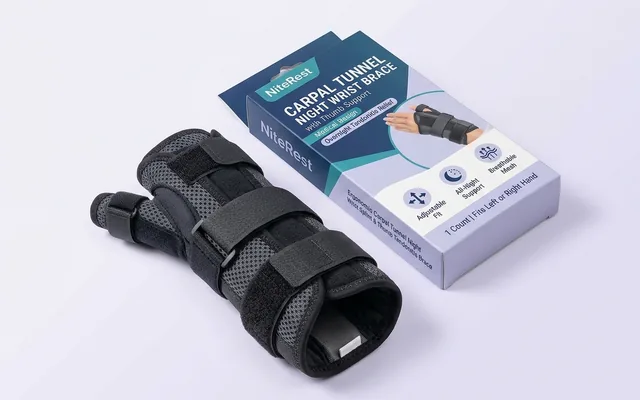
Lightweight cushioned aluminum-stay wrist splint that maintains neutral wrist alignment during sleep and typing to relieve carpal tunnel tingling, ganglion cysts, and tendonitis.
View Clinical Details →Why Does Nursemaid Elbow Happen?
It does not take a huge amount of force for the radius bone to slip out of place in a young child's elbow joint. Even a gentle tug can cause it. Here are the most common ways this injury happens:
- Swinging a child around by their hands or arms during play.
- Lifting a child up by both arms or hands suddenly.
- Pulling a child's arm while trying to push it through a tight jacket sleeve.
- Catching a child by the arm just as they are about to fall down.
- Pulling a child's arm quickly to get them out of harm's way while crossing a street.
These everyday actions are usually harmless, but the wrong angle or sudden force can trigger nursemaid's elbow.
Key Takeaways for Parents.
- Nursemaid's elbow happens when a small bone near the elbow slips out of place.
- It is very common in children under the age of five years old.
- Swinging a child by the arms or pulling them up quickly can trigger the slip.
- Children will usually hold their arm still and refuse to use it.
- A doctor can fix this in seconds with a quick, simple manual adjustment.
What Are the Symptoms?
If you were not present when the injury happened, spotting the signs can feel tricky at first. The child might cry hard right when it happens, but then calm down and stop talking about the pain. You typically will not see any swelling or bruising with nursemaid's elbow. Watch closely for these key signs:
- Sudden crying or signs of discomfort right after an arm pull.
- Complaints of pain near the wrist or the shoulder area.
- Refusing to move the arm down from the shoulder or keeping it completely still.
- Guarding the injured arm by holding it with the healthy hand.
- Keeping the arm straight or slightly bent close to the body.
- Inability or refusal to rotate the palm facing up or down.
Seeing any of these signs means you should pay close attention and prepare to seek medical care.
How Do Doctors Diagnose Nursemaid Elbow?
When you bring your child to a clinic or emergency department, the doctor will start with a gentle physical exam. They will ask you questions about how the injury happened. The doctor will carefully move your child's arm and check the elbow area to see where the pain occurs.
In most cases, an X-ray is not necessary for nursemaid's elbow. The slipped bone usually does not show up clearly on standard X-rays anyway. However, a doctor might order an X-ray if they need to rule out a bone fracture or other serious injuries.
How Is Nursemaid Elbow Treated?
Treatment for this condition is very simple and gives parents great relief. A doctor performs a quick maneuver called a reduction to guide the bone back into its proper place. This entire process takes only a few seconds.
The doctor gently bends and rotates the child's arm to reset the joint. You might even hear a soft click sound when it slips back. The child may feel a brief second of discomfort during the maneuver, but the intense pain disappears almost instantly. That is all it takes, and standard cases are fixed in a single try.
Can You Treat This At Home?
You can help soothe your child by applying a cool compress or giving an over-the-counter pain medicine recommended by your pediatrician. However, you must take your child to see a doctor afterward. The dislocated joint needs professional alignment by a trained medical expert.
Some people try to fix this at home themselves, but that is never a good idea. Until a doctor confirms the exact diagnosis and rules out a bone fracture, attempting to manipulate the arm is dangerous and can cause further injury.
How Can You Prevent Nursemaid Elbow?
Preventing this condition requires extra care and mindfulness during daily interactions with young children.
- Talk to your child to get their attention instead of pulling their arm.
- Take your time when dressing toddlers in tight jackets or fastening car seats.
- Never swing a child around by their arms or hands during playtime.
- Lift your child safely by placing your hands under their arms or around their torso.
Practicing these simple safety habits helps protect your child from repeat injuries.
How Long Does Recovery Take?
The best part about nursemaid's elbow is how fast recovery happens. Although the reduction maneuver causes a quick second of pain, relief follows right away afterward.
Within just a few minutes, your child will likely act like nothing ever happened and go right back to playing happily!
Can This Happen Again?
Once a doctor corrects the injury properly, that specific event will not linger. However, children who experience nursemaid's elbow once have a higher chance of it happening again later.
This happens because the initial slip stretches the elbow ligaments slightly, making it harder for them to hold the bone firmly in place. Some children also naturally have looser ligaments.
The good news is that as children grow older, their bones and ligaments become much stronger and tighter together. Because of this natural development, nursemaid's elbow rarely happens after a child turns five years old.
Is This a Medical Emergency?
Yes, you should treat this situation promptly. Even if your child does not cry continuously, using their arm causes them discomfort, and the joint will remain out of place until a doctor resets it. Seeking prompt medical advice is essential.
A doctor must examine your child first to ensure there is no bone fracture before attempting to adjust the arm. Trying to fix an arm with a broken bone causes severe damage. Once the doctor diagnoses the condition correctly, a trained professional can fix it easily.
Never wait and hope it fixes itself. Waiting too long allows the slipped bone to stretch the ligaments further, making the reduction harder and leaving your child in pain. Prompt medical care ensures a quick and safe recovery.
⚠️ When to Seek Emergency Medical Care.
Call 911 (US/Canada), 999 (UK), or visit your nearest Emergency Department (ER / A&E) right away if your child experiences severe swelling, visible bone deformity, intense bruising, an inability to move fingers, or signs of severe trauma from a fall.
Comparison of Common Child Arm Injuries.
| Injury Type. | Common Cause. / Visible Swelling. / Medical Treatment. |
|---|---|
| Nursemaid's Elbow. | Common Cause.: Gentle pull or swing by the arm. Visible Swelling.: None. Medical Treatment.: Quick manual reduction by a doctor. |
| Elbow Fracture. | Common Cause.: Hard fall onto an outstretched hand. Visible Swelling.: Often present and noticeable. Medical Treatment.: X-ray, cast, or specialized orthopedic care. |
| Soft Tissue Sprain. | Common Cause.: Twisting or minor sports impact. Visible Swelling.: Mild. Medical Treatment.: Rest, ice, and time to heal. |
💡 Take-Home Message.
Nursemaid's elbow is a very common condition among young children because their joints and ligaments are still developing. Loving parents, grandparents, and caregivers often cause this accidentally during normal play or routine activities. Therefore, please do not blame yourself if this happens to your little one.
Sometimes adults do not notice the injury right away, especially if they were not present when it happened. If you notice your child refusing to use an arm or holding it limply, pay close attention. If you suspect this injury, visit a doctor right away. A trained medical professional can fix this in seconds, giving your child instant relief so they can return to play. Seek medical advice with confidence and peace of mind.


No comments yet. Be the first to share your question or experience below.