
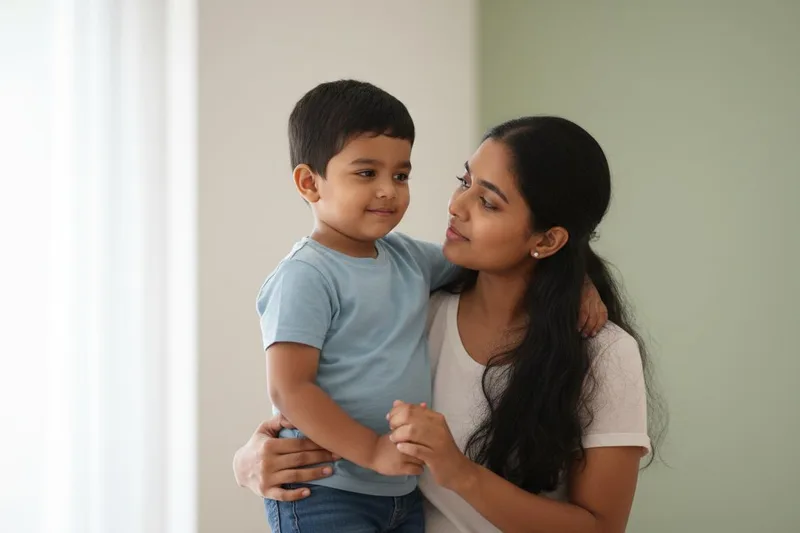
Do you sometimes feel that your little one is a little too fat? Or does he look bigger than before? Perhaps a friend of yours has said something like that. In fact, childhood obesity is a common occurrence in the world and in our country. Therefore, it is very important to be aware of this.
What is Childhood Obesity? Simply put...
Childhood obesity is when your child is overweight or obese for their age, height, and gender (i.e., whether they are a boy or a girl). It is a chronic condition that can have long-term effects .
Doctors use a method to accurately measure this. It's called the Body Mass Index (BMI) . After two years of age, if a child's ``BMI'' is equal to or greater than the ``95th Percentile'' for their age and sex, doctors consider that child obese.
The way to calculate a child's BMI is a little different than calculating an adult's BMI. This is because as children grow, their body shape and fat content naturally change. Therefore, doctors use special growth charts to calculate a child's BMI.
How common is this condition?
In fact, childhood obesity is the most common chronic disease among children today. For example, a survey conducted by a major health organization in the United States, the Centers for Disease Control and Prevention (CDC), shows that from 2017 to 2020, about 14.7 million children and young people between the ages of 2 and 19, or about 19.7 percent, suffered from obesity.
Looking at age groups:
- 12.7% of children aged 2-5 years
- 20.7% of children aged 6-11
- 22.2% of young people between the ages of 12-19
This situation is even more severe among some ethnic groups. It has also been found that children living in poverty, living in underserved areas, from immigrant families, and children who are discriminated against and marginalized are at higher risk. It is evident that this situation is gradually increasing in our country as well.
Why does this happen to young children? What are the reasons?
Childhood obesity is not caused by a single cause. It is caused by a combination of factors .
Simply put, your child's body needs a certain amount of calories for their growth and development. However, if the amount of calories they consume exceeds the amount of calories they burn in a day, those extra calories will be stored as body fat (adipose tissue).
The amount of food we eat, the type of food we eat, and the way our bodies use that energy are all affected by several factors. Every child's body and their environment are different. Some children are more likely to gain weight than others. It is important to understand that this is not due to laziness or lack of willpower.
Genetics and Epigenetics
Some genetic factors can increase a child's risk of becoming obese. If a child's parents or siblings are obese, that child may also be more likely to become obese. Studies have shown that various genes contribute to weight gain. However, not all children with a family history of obesity will become obese.
Epigenetics is the study of how your behavior and environment affect the way your genes work. Children who experience negative experiences like racism and violence may have changes in their genes. These changes can affect their immune system and metabolism , altering the way the body uses energy and increasing the risk of obesity.
Here are some other `(Epigenetic)` factors:
- One or both parents being obese before the child is born.
- Gestational Diabetes.
- Excessive weight gain during pregnancy.
The influence of family and home environment
Things that families do together and certain things in the home environment can affect childhood obesity.
- The types of food parents give their children and how often.
- Frequent consumption of sugary drinks.
- Increasing the amount of food served at one meal.
- Frequent consumption of processed foods with a lot of artificial ingredients.
- Instead of cooking at home, I often eat out.
- Increased screen time (TV, phone, tablet).
- Not doing things that give the body exercise (Sedentary Behavior).
- Not getting enough sleep.
- Inhaling smoke when someone else is smoking is called ``Secondhand Smoke Exposure''.
- Adverse Childhood Experiences (ACEs). Think about it, if there are constant fights at home, if the child is afraid, those things can also have an impact.
Social Determinants of Health (`SDoHs`)
The conditions in the environment where we are born, live, learn, work, and play affect our health. This is called the Social Determinants of Health (SDoHs) .
The area where your family lives can also directly affect your child's risk of obesity. The food and drinks provided to your child at school and daycare can affect their eating habits. They can also contribute to how much exercise your child gets each day.
Other influencing socio-economic factors:
- The affordability and ease of finding good, nutritious food.
- Having fast food shops close to homes.
- Transportation facilities.
- People who are there to help you, social connections.
- Lack of facilities (such as playgrounds and parks) for playing sports and getting exercise, or lack of safety in accessing them.
Cultural influences
Advertisements for unhealthy foods and drinks in fast food outlets contribute to childhood obesity. Children see these advertisements on TV, on the Internet, and in stores.
Studies have shown that even short periods of exposure to unhealthy food advertisements targeted at children increase the amount of food they eat, both during and after that period.
Other diseases and medications
Although rare, some medical conditions can cause childhood obesity.
Hormonal imbalances, for example:
- Decreased function of the thyroid gland (Hypothyroidism).
- Hypothalamic tumor.
- Growth Hormone Deficiency.
- Cushing's syndrome.
Rare genetic conditions:
- Prader-Willi Syndrome.
- Bardet-Biedl Syndrome.
- Alstrom Syndrome.
- Congenital Leptin or PCSK1 Deficiencies.
Some medications, such as second-generation antipsychotics and corticosteroids, can also increase a child's risk of weight gain and obesity.
What other health problems can obesity cause?
Obese children are more likely to develop various diseases.
Physical problems
The most common complications are:
- High blood pressure.
- Increased cholesterol levels in the blood (High Cholesterol - `Dyslipidemia`).
- Insulin Resistance, Prediabetes, and Type 2 Diabetes.
- Non-alcoholic fatty liver disease (NAFLD).
Other complications:
- Asthma.
- Obstructive Sleep Apnea (Irregular breathing during sleep)
- Polycystic Ovarian Syndrome (PCOS).
- Depression.
- Joint pain.
- Blount's Disease (leg twitching).
- Heart disease.
Mental and social problems
In addition, obese children are more likely to experience:
- Bullying from other children.
- Social isolation.
- Low self-esteem.
Most importantly, children who are obese in childhood are more likely to continue to be obese as adults.
Your child's pediatrician will recommend tests to check for these complications and, if necessary, plan treatment.
How does a doctor find out if this is the case?
Pediatricians usually diagnose overweight and obesity during routine well-child checkups. They use special growth charts (BMI-for-age growth charts) to see if a child's BMI is appropriate for their age.
A high BMI can be a sign of excess body fat. BMI does not directly measure body fat. However, it can give your doctor a clue as to whether your child needs further testing to determine if they have excess body fat.
Your child's doctor will perform a physical examination and ask you questions about your child's health history, behavior, and home environment. They may also order blood tests and scans to look for underlying causes of the obesity or to check for other medical conditions that may be contributing to the obesity.
What are the treatments for an obese child?
Your doctor will determine if your child's weight poses a health risk. If so, you may need to consider a formal treatment program.
The role of the medical team
A good obesity treatment program should include a variety of health professionals. The best programs may include:
- Pediatricians.
- Registered dietitians.
- Exercise Physiologists or Physical Therapists.
- Family doctors.
- Nursing professionals.
- Child psychologists.
- Psychiatrists.
Things to pay attention to during treatment
Comprehensive obesity treatment typically includes:
- Providing intensive, long-term treatment .
- Regularly evaluate and monitor the child for medical and psychological complications that may arise due to obesity.
- Identify and address social factors that affect health (e.g., access to clean, healthy food).
- Using non-demeaning treatment methods for the child and family, taking into account their unique circumstances .
- Using Motivational Interviewing methods regarding nutrition, physical activity, and health behavior changes.
- Having holistic goals, such as improving or resolving health complications, improving quality of life, and improving self-esteem.
- If necessary, combining intensive health behavior and lifestyle treatment (IHBLT) with weight loss medications and/or metabolic and bariatric surgery .
- Tailoring treatment to the changing needs of the child and family.
A special treatment method called `(IHBLT)`
Childhood obesity experts highly recommend Intensive Health Behavioral and Lifestyle Therapy (IHBLT) . This therapy provides families with education and support to make changes in nutrition and physical activity that promote long-term health.
`(IHBLT)` treatment is most effective if done in this way:
- When we meet face to face.
- When the whole family is involved.
- Includes a minimum of 26 hours of lessons on nutrition, physical activity, and behavior modification over a period of three to twelve months.
Can childhood obesity be prevented?
There is no single, simple way to prevent childhood obesity. It is also important to remember that preventing it is not just your responsibility and that of your family. Governments, local authorities, schools, communities, and large companies also have a collective responsibility. In addition, several genetic and drug-related factors contribute to obesity. These are things that are beyond your control.
One step you can take is to establish healthy eating and physical activity habits at a young age. Eating habits that a child develops at a young age will help them maintain a healthy lifestyle as they grow older. If you're not sure how to choose and prepare a variety of foods for your family, ask your child's doctor. He or she can refer you to a registered dietitian for nutrition counseling . He or she can also tell you about places in your community that offer healthy food options.
Some more recommendations to prevent childhood obesity:
- Breastfeed your baby exclusively until they are about 6 months old.
- Engage in a fun physical activity every day.
- Reduce screen time to no more than one to two hours a day.
- Avoid sugary drinks and limit servings of 100% fruit juice.
Ask your pediatrician for more information about other health promotion recommendations like these.
How can I help my child who is obese?
The most important thing you can do to help your child is to focus on their health, not their weight. It’s important to support your child on their journey to better health. The way your child feels about themselves is often based on how you feel about them. If you accept your child at any weight, they’re more likely to feel good about themselves. Avoid blaming your child, yourself, or anyone else.
It's also important to talk to your child about their weight without judgment. You should let your child share what's on their mind with you. You can help your child by gradually changing your family's physical activity and eating habits. Then your whole family can benefit from new healthy habits.
The most important thing: health over weight!
Remember, our goal should not be to make the child thin, but to make the child a healthy, happy child.
Let's get active as a family!
There are many things you can do as a family, but increasing physical activity is especially important. Set a goal for your child to get at least an hour of regular physical activity a day. Here are some ways to do this:
- Be a role model yourself: If you see yourself being active and having fun, your child is more likely to become active and stay active throughout their lives.
- Plan family activities: Plan activities that get everyone in the family exercising. Things like going for walks, biking, or swimming.
- Be sensitive to your child's needs: It's important to help your child find physical activities that they enjoy and that aren't too difficult for them.
- Get away from the screen for a while: Try to reduce the amount of time your family spends in one place (like watching TV, playing video games). Don't let your child spend more than two hours a day on the screen.
- Establishing good sleep habits: Going to bed at a set time and keeping electronic devices out of your child's bedroom will help them sleep better.
Let's also take care of food and drink!
Other ways you can help your child:
- Guide family choices instead of deciding meals: Try to keep a variety of healthy foods in your home. This habit will help your child learn to make healthy food choices on their own.
- Involve your child in shopping and preparing meals: These activities can teach your child about nutrition and give them a sense of accomplishment. In addition, your child may be more likely to eat a meal they helped prepare or try a new food.
- Teach your child to eat regularly: When a child eats regularly, he or she feels better about being hungry and full.
- Eat meals together as a family whenever possible: Try to make mealtimes a time for conversation and sharing, not a time for arguing or fighting. If mealtimes are unpleasant, your child will try to eat and leave the table as quickly as possible. Then he may associate eating with stress.
- Try to eat only in designated areas of the house (like the dining room or kitchen).
- Don't give your child food as a gift: When you give your child something sweet as a gift, your child may think that it's better than other foods. For example, saying, "If you eat all the vegetables, I'll give you dessert" sends the wrong message about vegetables.
- Consider what your child eats outside of your home: Find out if your child's school meal program offers a balanced diet. If possible, pack a variety of foods in your child's lunchbox. When eating out, choose healthy options and be mindful of portion sizes.
When should I see a doctor?
It is important to keep your child's regular well-child appointments and attend all appointments related to obesity treatment. Your child's doctor can support you and your child on their journey to a healthy future.
With all the misconceptions and social stigma surrounding this complex condition, it's easy to feel guilty or responsible for your child's obesity. But remember, childhood obesity is influenced by countless factors – many of which may be beyond your control. The good news is, there are things you and your family can do to support your child's health. If you're concerned that your child is overweight, talk to their doctor. They can help you come up with a plan to limit or reverse the complications that obesity can cause.
The most important thing you have to say
Childhood obesity is a serious issue, but it doesn't mean you're a failure or that your child has no future. The important thing is to address it early and act on the right advice.
- Speak to your child in a loving and understanding manner. Avoid blaming or making fun of the child's weight.
- Adopt a healthy lifestyle as a family. Start with small changes.
- Follow your doctor's instructions exactly. If necessary, seek help from a dietitian or psychologist.
- Never give up hope. Your efforts and love will be a great source of strength for your child.
I hope this information is helpful to you. If you have any further questions, be sure to talk to a doctor.
` Childhood obesity, child obesity, child health, BMI, healthy eating, exercise, child weight


💬 Comments (0)
No comments yet. Be the first to share your thoughts here.
Add Your Comment