
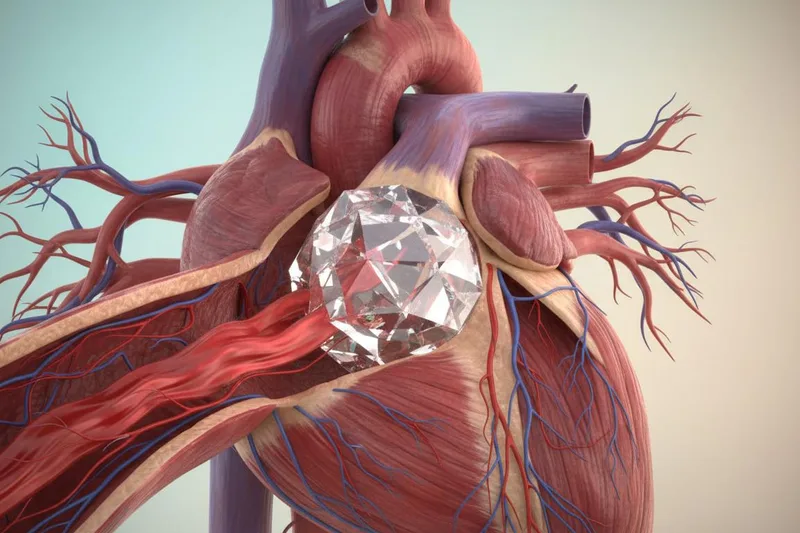
When blood does not circulate properly throughout our body, meaning our organs do not receive the required amount of oxygen, we usually call it 'shock'. This happens suddenly. Today we are going to talk about a special, but somewhat rare type of 'shock'. It is called `(Obstructive Shock)'. Simply put, what happens in this case is that something blocks the blood flow to our heart and the blood pumping out of the heart, that is, an `obstruction' occurs. Due to this obstruction, the heart cannot work properly, blood pressure can suddenly drop, and the body can lack oxygen. This is a very urgent situation , so it is very important to get treatment quickly.
So what is this `(Obstructive Shock)`? Shall we explain it a little more?
Imagine, our heart is like a water pump. This pump is what sends blood throughout the body. Now, what happens if the water entering this pump gets blocked in the pipe, or if the pipe leaving the pump gets blocked? The water doesn't flow properly, right? That's what happens in `(Obstructive Shock)`.
Something blocks the flow of blood through the large blood vessels (called the `great vessels`) that connect the heart. This prevents the heart from getting enough blood, and it can't pump it out as well. The result is that the most important organs in our body, the brain, kidneys, and lungs, don't get enough oxygen. This is a life-threatening emergency.
What is the difference between `(Cardiogenic Shock)` and `(Obstructive Shock)`?
Both of these are medical emergencies, but they occur for two reasons.
Cardiogenic shock occurs when the heart muscle is damaged, such as a heart attack, and the heart is unable to pump enough blood to the body. The heart becomes weak.
But in `(Obstructive Shock),` the heart muscle can often be fine. The problem is not with the heart, but with something else that is interfering with the heart's function. Consider these things:
- If you have a large blood clot in a major blood vessel (pulmonary artery) leading to your lungs.
- If the heart is squeezed by a fluid-filled sac around the heart (pericardial tamponade).
- If there is an injury to the lungs and the pressure inside the chest cavity increases significantly, for example, in a condition called ``Tension pneumothorax''.
Obstructive Shock is when the heart is unable to function properly due to an external cause like this.
How common is this condition called ``Obstructive Shock''? How does it affect the body?
Obstructive Shock is actually a relatively rare condition compared to other types of shock. It usually affects only 1% or 2% of shock patients. The good news is that it is more likely to be cured than other types of shock, but only if treated promptly.
If not treated quickly, Obstructive Shock deprives the body's vital organs of oxygen and nutrients. This can lead to organ damage and sometimes even death. That's why it's important to seek treatment without delay.
What are the symptoms of `(Obstructive Shock)`?
The symptoms of this may be somewhat similar to those of ``Cardiogenic Shock.'' See if these sound familiar to you:
- The breathing rate increases abnormally.
- Blood pressure drops too low (hypotension).
- Heart rate increases significantly (`Tachycardia`). As if you have just run away.
- Mood changes, perhaps a melancholy or anxiety may occur.
- The amount of urine produced is greatly reduced, or completely absent.
- The skin feels cold and sweaty.
- Sometimes air can accumulate under the skin (`Subcutaneous emphysema`). This means that it feels like small bubbles under the skin.
- You may experience chest or stomach pain.
If you have one or more of these symptoms, it is very important to seek medical advice immediately.
What are the causes of `(Obstructive Shock)`?
There are several causes of `(Obstructive Shock)`. Let's see what the main ones are:
- `(Tension pneumothorax)` (collapse of the lung): This occurs when air enters the lung and cannot escape, causing it to become trapped inside the lung. The lung then collapses, creating a lot of pressure inside the chest and causing the heart to start pounding.
- Vena cava compression syndrome: Compression of the largest vein in our body (the vena cava). This can often occur towards the end of pregnancy, when the weight of the baby compresses this blood vessel.
- Pulmonary (lung) compression syndrome: Pulmonary compression syndrome.
- `(High-PEEP ventilation)`: A condition in which the pressure in the lungs is too high for someone connected to a ventilator.
- Tumors: Some types of tumors that develop inside the chest cavity can also obstruct the heart or large blood vessels.
- Thromboembolism in the pulmonary artery: This is very dangerous. If a blood clot that forms in a place like the leg breaks loose and gets stuck in a blood vessel in the lungs, it stops the blood from flowing from the heart to the lungs.
- Pericardial tamponade: The thin sac around the heart (the pericardium) fills with fluid, compressing the heart. This prevents the heart from contracting and expanding properly.
- Aortic dissection: A tear in the aorta, the largest blood vessel that exits the heart.
- Aortic stenosis: Narrowing of the aortic valve in the heart. This makes it difficult for blood to flow out of the heart.
- Hypertrophic cardiomyopathy: Blockage of blood flow due to excessive thickening of the heart muscle.
- Constrictive pericarditis: The sac around the heart becomes thickened, making it difficult for the heart to function freely.
Important: All of these causes are emergencies, so see a doctor immediately if you have symptoms.
How to recognize `(Obstructive Shock)`?
Your doctor will first examine you. They will listen to your heart and lungs with a stethoscope. Obstructive shock is a condition that can get worse quickly, so it is important to get a diagnosis quickly.
To accurately diagnose the disease, the following tests can be performed:
- Ultrasound: This can look at things like the heart, large blood vessels, and whether there is fluid around the lungs.
- Echocardiogram (Echo): This is like an ultrasound of the heart. It can very clearly see the function of the heart, the condition of the valves, and whether there is fluid around the heart.
- Computed tomography (CT) scan: This can take detailed pictures of the chest cavity. It can help detect things like blood clots, tumors, and aortic dissection.
- Electrocardiogram (ECG or EKG): This tests the electrical activity of the heart. It can help determine if there is something wrong with your heart.
How is Obstructive Shock treated?
First, you will be given IV fluids (like saline - IV crystalloid fluids) and your blood pressure and oxygen levels will be checked regularly. Then, the most important thing is to find the cause of the Obstructive Shock and treat that cause.
Treatment methods vary depending on the cause. Let's look at a few examples:
- If there is a blood clot (embolism), it is removed either surgically or by inserting a cannula (catheter).
- If it's a severely narrowed aortic valve, it will be replaced.
- In cases of thickened heart muscle (hypertrophic cardiomyopathy), the thickness can be reduced either through surgery or a special method using alcohol (catheter-based alcohol ablation).
- They give you medicine to dissolve blood clots.
- If there is fluid around the heart (pericardial tamponade) or a tension pneumothorax, the fluid or air will be removed (perhaps using a small tube).
- If you are on a ventilator, you can change its settings.
- In a condition like ``Vena cava compression syndrome'', the body position is changed.
- If the pressure in the lungs is high, the pressure is reduced with a needle or tube.
What medications are used?
While the cause is being treated, you may be given medications such as these to stabilize your condition:
- Fluids like `IV` saline (`IV crystalloid fluids`).
- Medicines to increase blood pressure: `(Norepinephrine (Levophed®))`, `(Vasopressin (Vasostrict®))`, `(Phenylephrine (Vazculep® or Biorphen®))`.
- If you have low blood count, you will be given blood or blood products (such as red blood cells and plasma).
How quickly will I recover after treatment?
Many of the causes of Obstructive Shock need to be treated quickly , as this is when the chances of survival are greatest. Fortunately, these treatments are quick to work. However, even after treating the cause, it takes time for the body to recover from the effects of Obstructive Shock. You can't just run around and do your job.
What is the outlook for `(Obstructive Shock)`?
If left untreated, ``Obstructive Shock`` is a condition that can be fatal for many people. Your recovery after treatment depends on several factors, including:
- What is the cause of `(Obstructive Shock)`?
- How long did it take to get treatment?
- What other illnesses do you have?
- How successful was the treatment for you?
However, as mentioned earlier, the chances of recovery from ``Obstructive Shock`` are higher than from common types of ``Shock`` like ``Septic Shock``. Therefore, there is hope.
How do I take care of myself?
After the doctor discharges you from the hospital, you need to follow their instructions exactly.
- You will need to rest at home for a while before going back to work.
- You should take the medicine prescribed by your doctor exactly on time . Do not stop taking any medicine at will.
- Go to follow-up appointments regularly .
When should I see the doctor again? What should I do in an emergency?
Now you know what caused your `(Obstructive Shock)`. Be careful if the symptoms related to that problem reappear. If you have such symptoms again, or if someone in your family notices this change in you, immediately call the 1990 (Wind) Ambulance Service, or go to the emergency room of the nearest hospital. Time is of the essence.
What questions should I ask my doctor?
You can ask questions like these:
- How long do I need to take the medication you prescribed?
- What are the chances of me having this condition again?
- Will this have a long-term impact on my quality of life?
- What changes should I make to my diet and exercise?
Finally, what to remember (Take-Home Message)
Obstructive Shock is a rare but very serious condition that requires emergency treatment. Therefore, it is important to be aware of the symptoms and seek treatment quickly. Once doctors find the cause of Obstructive Shock, they will begin appropriate treatment.
Remember, most people can recover from Obstructive Shock, but it takes time. Be patient, follow your doctor's instructions, and take care of yourself. You are not alone, and there are doctors, nurses, and your loved ones who can help you.
` Obstructive Shock, shock, heart disease, blood pressure, oxygen, obstruction, emergency treatment, lungs, heart


💬 Comments (0)
No comments yet. Be the first to share your thoughts here.
Add Your Comment