Who are Orthotists and Prosthetists? (Orthotist & Prosthetist) - Let's learn about these people who can help your life!

Who are Orthotists and Prosthetists? (Orthotist & Prosthetist) - Let's learn about these people who can help your life!

Imagine that you have a broken arm or leg in an accident, or that the doctor has recommended a special brace for someone you know because of a back problem. Perhaps you have heard of someone who had to have a leg amputated due to a disease like diabetes. In such cases, there is a group of specialists who provide great relief and help in our lives, but we do not talk about them much in society, and we do not hear their names much. Today we will talk about two such professionals who can bring new hope to your life. They are the Orthotist and the Prosthetist.

Who is this Orthotist?

Simply put, an Orthotist is a specialist who designs and fits medical devices that are designed to support your body, correct a part of your body, or make a certain activity easier. We commonly call these devices ``Orthotics`` or ``Orthoses``.

You may not have heard these words before. But chances are you have seen these devices. Think of the knee brace you wear when playing cricket, the special belt you wear for back pain, or the special shoe insert you wear for flat feet. These are all types of `(Orthotics)`.

An orthotist will take your measurements and create these devices specifically for you. This is not like buying something from a store, it's like tailoring a suit.

The main types of devices an orthotist creates are:

  • Braces: These are used to stabilize and support joints or parts of the body. For example, a scoliosis brace or a knee brace.
  • Splints: These are usually used to immobilize a body part. Splints are sometimes used instead of a cast for a broken arm or leg. They also help protect joints in conditions like arthritis.
  • Shoe inserts: These are also called ``Orthotic insoles''. These are very useful for people with ``Flat Feet'', those who have pain in the bottom of their feet, and those who have trouble walking. When inserted into shoes, these make walking easier and less painful.

When is the help of an orthotist needed?

You will only see an Orthotist if your doctor, especially an Orthopedic Surgeon, refers you to one. Their services are usually needed in the following situations:

The nature of the situation Simple explanation and examples
Injuries These devices help keep the injured area immobile and protected until it heals after a fracture, dislocation, or sprain. They are often used in sports injuries.
Skeletal issues These are conditions that affect the shape of our body. Examples: (Scoliosis) (curvature of the spine), (Hip Dysplasia) (deformity of the hip bone), (Flat Feet) (flat feet), and (Clubfoot) (a congenital deformity of the foot).
Neuromuscular conditions These devices are used to help control the body and walk in conditions such as cerebral palsy and stroke .
Chronic pain Long-term pain. For example, joint pain caused by arthritis , carpal tunnel syndrome (a pinched nerve in the wrist), or a chronic wound can help control pain and provide rest to the area.

Simply put, if a part of your body needs extra strength, support, or correction, an Orthotist can help you.

So who is a Prosthetist?

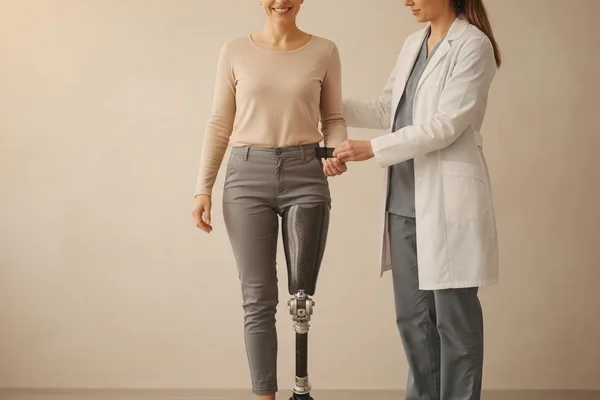
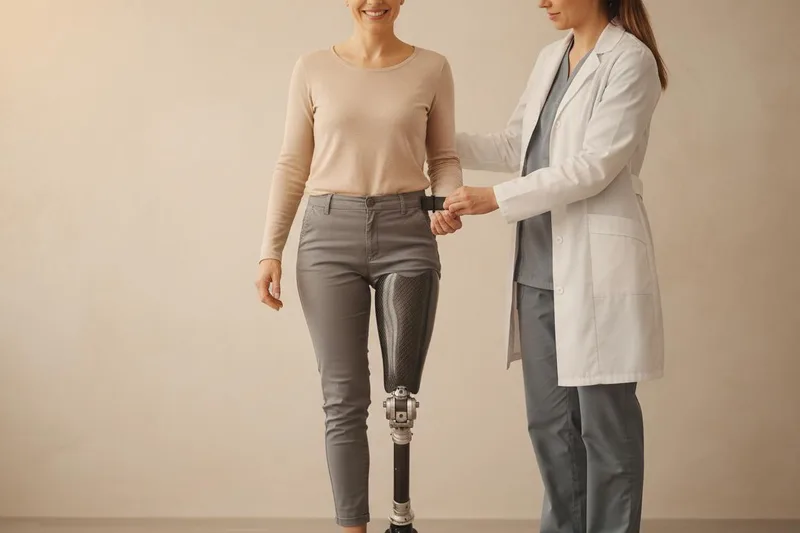
Now let's talk about a Prosthetist. A Prosthetist is a specialist who creates and fits an artificial body part to replace a body part that has been lost due to an accident, illness, or congenital problem. We call these artificial body parts `(Prosthetics)` or `(Prostheses)`.

When you hear this, you might think of a prosthetic arm or leg. Yes, that's what they mainly do. But it doesn't stop there. Some of the devices they create include:

  • Artificial arms
  • Artificial legs (Legs)
  • Artificial hands and fingers
  • Artificial feet and toes

A prosthetist will work with you to create a prosthetic limb that fits your lifestyle and your needs. For example, a prosthetic arm for a farmer might be needed, while another might be needed for an office worker. They can also make the device to match your skin tone or a style you prefer. They not only make the device, but they can also make any necessary repairs or adjustments over time.

Who needs the services of a prosthetist?

The help of a prosthetist is mainly needed by those who have lost a limb and those who have congenital limb differences.

  • After amputation: The most common causes in Sri Lanka are severe road accidents, workplace accidents, and wounds caused by reduced blood supply to the feet due to uncontrolled diabetes mellitus. In such cases, a limb or foot may need to be surgically removed to save life. After that, a prosthetic limb can be obtained with the help of a prosthetist to help you get back to normal life.
  • Congenital Limb Differences: Some children are born with developmental differences in an arm, leg, or finger. A prosthetist can help these children perform their daily tasks more easily.

What's the difference between these two? It's very simple!

Now that you have some idea about these two, you may be thinking that their work is somewhat similar. Yes, some professionals specialize in both fields and work as both Orthotists and Prosthetists.

But the main and simplest difference between the two is this:

An orthotist provides support to an existing part of your body.

A prosthetist replaces a missing part of your body.

Imagine a splint that is put on when a leg is sprained. It provides support to the existing leg. That is the job of an Orthotist. Now imagine that in an accident a leg is lost below the knee. Instead, it is the job of a Prosthetist to make an artificial leg. Now the difference is clear, right?

Are these people doctors? (Do they go to medical school?)

No. This is a problem that many people have. Orthotists and Prosthetists are not medical doctors. They do not go to medical school.

They are called allied health professionals, like physiotherapists and occupational therapists. This means that they provide specialized services to patients as part of the medical team.

Orthotists and Prosthetists require special educational qualifications and training. They study up to a Master's Degree in Orthotics and/or Prosthetics. Their education is very broad.

  • They study subjects like anatomy and pathology , just like doctors.
  • They also have in-depth knowledge of the engineering and design required to create these devices.

Their profession is a combination of science, medicine, and engineering. That's why they can create a functional, comfortable device that fits your body perfectly.

Can we call them clinicians?

Yes, definitely. `Clinician` is simply another name for any professional who provides healthcare to patients. So Orthotist and Prosthetist are definitely `Clinicians`.

Here's exactly what they do when you need a device like this:

1. Assessment: First, they examine you and thoroughly understand your needs, physical condition, and lifestyle.

2. Measurements: Next, accurate measurements are taken of the body part that will be used to make the device. Sometimes, an impression or cast is taken using a material such as plaster.

3. Design & Fabrication: Using the measurements and template taken, they create your unique device in their workshop.

4. Fitting & Adjustment: The device is fitted to you, any flaws or discomforts are identified, and it is adjusted repeatedly until you are comfortable.

5. Training: Finally, you will be taught how to use this device properly, how to keep it clean, and how to get the most out of it.

You may only see an Orthotist for a short period of time, like while an injury heals. But if you have a long-term condition like scoliosis, you may need to see them periodically throughout your life. For someone who uses a Prosthetist, you have a lifelong relationship with them because they live with the device.

Take-Home Message

  • An orthotist is a specialist who makes orthotics ( support devices) to help support a part of your body (e.g., back braces, knee supports, special shoe inserts).
  • A prosthetist is a specialist who makes prosthetics to replace a missing body part (e.g., artificial arms, artificial legs).
  • These two are not doctors, but they are highly trained allied health professionals who are part of the medical team.
  • If your doctor recommends a device like this, you will be referred to a specialist who will fit you with the device and teach you how to use it.
  • The support these devices and the services of these specialists provide in making the lives of many people easier, more comfortable, less painful, and more active again is invaluable.

Orthotist, Prosthetist, Prosthetics, Orthotics, Prosthetics, Assistive Devices, Sri Lanka

Frequently Asked Questions (FAQ)

Who needs the services of a prosthetist?

The help of a prosthetist is mainly needed by those who have lost a limb and those who have congenital limb differences.

Can we call them clinicians?

Yes, definitely. `Clinician` is simply another name for any professional who provides healthcare to patients. So Orthotist and Prosthetist are definitely `Clinicians`.

⚠️ Important: The medical articles and information on Nirogi Lanka are for general awareness only, and are by no means a substitute for professional medical advice, diagnosis, or treatment. For any medical problem you have, consult a qualified physician immediately.

💬 Comments (0)

No comments yet. Be the first to share your thoughts here.

Add Your Comment

Please calculate: 7 + 8 =
Who are Orthotists and Prosthetists? (Orthotist & Prosthetist) - Let's learn about these people who can help your life!

Who are Orthotists and Prosthetists? (Orthotist & Prosthetist) - Let's learn about these people who can help your life!

Imagine that you have a broken arm or leg in an accident, or that the doctor has recommended a special brace for someone you know because of a back problem. Perhaps you have heard of someone who had to have a leg amputated due to a disease like diabetes. In such cases, there is a group of specialists who provide great relief and help in our lives, but we do not talk about them much in society, and we do not hear their names much. Today we will talk about two such professionals who can bring new hope to your life. They are the Orthotist and the Prosthetist.

Who is this Orthotist?

Simply put, an Orthotist is a specialist who designs and fits medical devices that are designed to support your body, correct a part of your body, or make a certain activity easier. We commonly call these devices ``Orthotics`` or ``Orthoses``.

You may not have heard these words before. But chances are you have seen these devices. Think of the knee brace you wear when playing cricket, the special belt you wear for back pain, or the special shoe insert you wear for flat feet. These are all types of `(Orthotics)`.

An orthotist will take your measurements and create these devices specifically for you. This is not like buying something from a store, it's like tailoring a suit.

The main types of devices an orthotist creates are:

  • Braces: These are used to stabilize and support joints or parts of the body. For example, a scoliosis brace or a knee brace.
  • Splints: These are usually used to immobilize a body part. Splints are sometimes used instead of a cast for a broken arm or leg. They also help protect joints in conditions like arthritis.
  • Shoe inserts: These are also called ``Orthotic insoles''. These are very useful for people with ``Flat Feet'', those who have pain in the bottom of their feet, and those who have trouble walking. When inserted into shoes, these make walking easier and less painful.

When is the help of an orthotist needed?

You will only see an Orthotist if your doctor, especially an Orthopedic Surgeon, refers you to one. Their services are usually needed in the following situations:

The nature of the situation Simple explanation and examples
Injuries These devices help keep the injured area immobile and protected until it heals after a fracture, dislocation, or sprain. They are often used in sports injuries.
Skeletal issues These are conditions that affect the shape of our body. Examples: (Scoliosis) (curvature of the spine), (Hip Dysplasia) (deformity of the hip bone), (Flat Feet) (flat feet), and (Clubfoot) (a congenital deformity of the foot).
Neuromuscular conditions These devices are used to help control the body and walk in conditions such as cerebral palsy and stroke .
Chronic pain Long-term pain. For example, joint pain caused by arthritis , carpal tunnel syndrome (a pinched nerve in the wrist), or a chronic wound can help control pain and provide rest to the area.

Simply put, if a part of your body needs extra strength, support, or correction, an Orthotist can help you.

So who is a Prosthetist?

Now let's talk about a Prosthetist. A Prosthetist is a specialist who creates and fits an artificial body part to replace a body part that has been lost due to an accident, illness, or congenital problem. We call these artificial body parts `(Prosthetics)` or `(Prostheses)`.

When you hear this, you might think of a prosthetic arm or leg. Yes, that's what they mainly do. But it doesn't stop there. Some of the devices they create include:

  • Artificial arms
  • Artificial legs (Legs)
  • Artificial hands and fingers
  • Artificial feet and toes

A prosthetist will work with you to create a prosthetic limb that fits your lifestyle and your needs. For example, a prosthetic arm for a farmer might be needed, while another might be needed for an office worker. They can also make the device to match your skin tone or a style you prefer. They not only make the device, but they can also make any necessary repairs or adjustments over time.

Who needs the services of a prosthetist?

The help of a prosthetist is mainly needed by those who have lost a limb and those who have congenital limb differences.

  • After amputation: The most common causes in Sri Lanka are severe road accidents, workplace accidents, and wounds caused by reduced blood supply to the feet due to uncontrolled diabetes mellitus. In such cases, a limb or foot may need to be surgically removed to save life. After that, a prosthetic limb can be obtained with the help of a prosthetist to help you get back to normal life.
  • Congenital Limb Differences: Some children are born with developmental differences in an arm, leg, or finger. A prosthetist can help these children perform their daily tasks more easily.

What's the difference between these two? It's very simple!

Now that you have some idea about these two, you may be thinking that their work is somewhat similar. Yes, some professionals specialize in both fields and work as both Orthotists and Prosthetists.

But the main and simplest difference between the two is this:

An orthotist provides support to an existing part of your body.

A prosthetist replaces a missing part of your body.

Imagine a splint that is put on when a leg is sprained. It provides support to the existing leg. That is the job of an Orthotist. Now imagine that in an accident a leg is lost below the knee. Instead, it is the job of a Prosthetist to make an artificial leg. Now the difference is clear, right?

Are these people doctors? (Do they go to medical school?)

No. This is a problem that many people have. Orthotists and Prosthetists are not medical doctors. They do not go to medical school.

They are called allied health professionals, like physiotherapists and occupational therapists. This means that they provide specialized services to patients as part of the medical team.

Orthotists and Prosthetists require special educational qualifications and training. They study up to a Master's Degree in Orthotics and/or Prosthetics. Their education is very broad.

  • They study subjects like anatomy and pathology , just like doctors.
  • They also have in-depth knowledge of the engineering and design required to create these devices.

Their profession is a combination of science, medicine, and engineering. That's why they can create a functional, comfortable device that fits your body perfectly.

Can we call them clinicians?

Yes, definitely. `Clinician` is simply another name for any professional who provides healthcare to patients. So Orthotist and Prosthetist are definitely `Clinicians`.

Here's exactly what they do when you need a device like this:

1. Assessment: First, they examine you and thoroughly understand your needs, physical condition, and lifestyle.

2. Measurements: Next, accurate measurements are taken of the body part that will be used to make the device. Sometimes, an impression or cast is taken using a material such as plaster.

3. Design & Fabrication: Using the measurements and template taken, they create your unique device in their workshop.

4. Fitting & Adjustment: The device is fitted to you, any flaws or discomforts are identified, and it is adjusted repeatedly until you are comfortable.

5. Training: Finally, you will be taught how to use this device properly, how to keep it clean, and how to get the most out of it.

You may only see an Orthotist for a short period of time, like while an injury heals. But if you have a long-term condition like scoliosis, you may need to see them periodically throughout your life. For someone who uses a Prosthetist, you have a lifelong relationship with them because they live with the device.

Take-Home Message

  • An orthotist is a specialist who makes orthotics ( support devices) to help support a part of your body (e.g., back braces, knee supports, special shoe inserts).
  • A prosthetist is a specialist who makes prosthetics to replace a missing body part (e.g., artificial arms, artificial legs).
  • These two are not doctors, but they are highly trained allied health professionals who are part of the medical team.
  • If your doctor recommends a device like this, you will be referred to a specialist who will fit you with the device and teach you how to use it.
  • The support these devices and the services of these specialists provide in making the lives of many people easier, more comfortable, less painful, and more active again is invaluable.

Orthotist, Prosthetist, Prosthetics, Orthotics, Prosthetics, Assistive Devices, Sri Lanka

Frequently Asked Questions (FAQ)

Who needs the services of a prosthetist?

The help of a prosthetist is mainly needed by those who have lost a limb and those who have congenital limb differences.

Can we call them clinicians?

Yes, definitely. `Clinician` is simply another name for any professional who provides healthcare to patients. So Orthotist and Prosthetist are definitely `Clinicians`.

⚠️ Important: The medical articles and information on Nirogi Lanka are for general awareness only, and are by no means a substitute for professional medical advice, diagnosis, or treatment. For any medical problem you have, consult a qualified physician immediately.

💬 Comments (0)

No comments yet. Be the first to share your thoughts here.

Add Your Comment

Please calculate: 7 + 8 =