

Today we are going to talk about two very important people in our healthcare field, but perhaps we have not heard much about them. They are called Orthotists and Prosthetists. You may be wondering who these people are and what they do. Let's talk about this simply, in a way that you can understand.
Who is an Orthotist?
Imagine that your arm, leg, or some other part of your body is not working properly, or that it needs support. That's when we need the help of this person called an orthotist. Simply put, an orthotist is a healthcare provider who makes and fits special devices, or orthotics, that help support and protect our musculoskeletal system and muscles. These orthoses include things like braces , splints , and special orthotic shoe inserts . These can stabilize various parts of our body, adjust them, change the way weight is distributed, or limit unnecessary movements. If you have a physical disability or injury, an orthotist can assess it and create a custom orthosis to fit it.
What conditions does an orthotist treat?
Now let's look at when you should see an orthotist. You can seek help from an orthotist if you have any of the following:
- Musculoskeletal system injury: Think of a broken bone or a sprain. In such cases, orthotics can help immobilize, stabilize, and protect the injured area while it heals. They can also help reduce pressure on the injury.
- A deformity of the musculoskeletal system: For example, conditions such as scoliosis ( curvature of the spine), hip dysplasia (deformity of the hip bone), or foot deformities such as flat feet or clubfoot (deformed feet). These orthoses can help correct these deformities or prevent them from getting worse.
- A neuromuscular disorder that causes muscle weakness and/or stiffness (spasticity): Similar to conditions such as cerebral palsy or stroke , these orthotic devices can provide support to weakened areas and reduce the effects of muscle stiffness.
- A chronic pain condition that affects your musculoskeletal system: For example , arthritis , carpal tunnel syndrome , or a chronic injury. These orthoses can help take the weight off the painful area and redirect it to another area.
So who is a prosthetist?
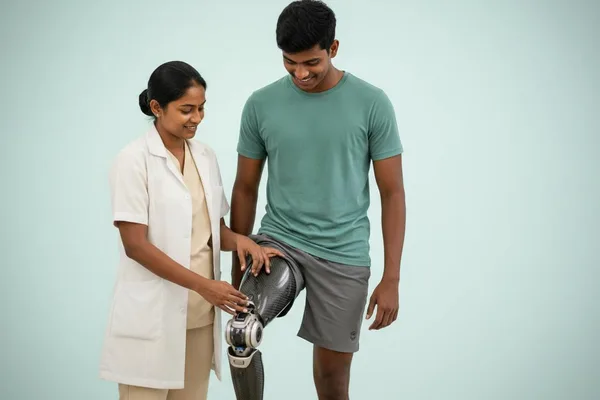
Okay, now let's see who a prosthetist is. A prosthetist is a specialist who makes and fits prosthetic parts (prostheses) to replace missing parts of our body. Imagine that someone has no arm, leg, hand, foot, or finger. In such a case, a prosthetist can create a prosthetic arm or leg that fits you, fits your needs, and looks good. Not only that, he also helps you get used to it, adjust it, and repair it as needed.
What conditions does a prosthetist treat?
A prosthetist mainly helps people with limb loss and limb deformities. You may see a prosthetist if you have:
- You have a congenital difference (birth defect) in one of your arms or legs.
- If an arm or leg has been amputated .
What is the difference between an orthotist and a prosthetist?
There is a strong connection between orthotists and prosthetists. Sometimes the same person does both. Others specialize in just one area. However, both work with technologies that work with our musculoskeletal system . This means that the devices they make help to change or improve the way our bodies function. Whether they are making a knee brace or a prosthetic knee, they use the same biomechanical principles .
Simply put, prosthetists create prosthetic parts to replace missing or malformed parts of our skeletal system. If you were born without a functional limb, or if you had a limb amputated, you will likely need to see a prosthetist.
On the other hand, orthotists treat a wide range of people with musculoskeletal pain or disorders. They help people by creating solutions that allow them to sit, stand, and walk more comfortably and safely.
Do orthotists and prosthetists go to medical schools?
No. Orthotists and prosthetists are part of a group called allied health professionals . They are like doctors and nurses, providing specialized health care services that complement their medical care. They don't go to medical school, but they have specialized education and residency training in their field. They earn a Master's degree in Orthotics and Prosthetics.
What do orthotists and prosthetists study?
An orthotist or prosthetist must have extensive knowledge of many scientific subjects. Some of them are:
- Anatomy: The study of how all parts of our musculoskeletal system are connected to each other.
- Biomechanics: The study of how mechanical forces operate within our musculoskeletal system.
- Kinesiology: The science of movement and how it affects our bodies.
- Pathology: The study of how the conditions they treat arise and develop.
- Engineering: The art of making devices that can harness power in complex ways.
- Design and fabrication: The process of making these devices, whether using hand tools or computers.
What skills should an orthotist and prosthetist have?
To be a good orthotist or prosthetist, you need to have these skills:
- Clinical assessment: They need to be able to accurately assess the body mechanics of each person they treat, what is causing their discomfort, and what can be done about it.
- Interpersonal skills: They must be skilled clinical professionals who can communicate well with those they treat, work collaboratively with their caregivers, and work with other healthcare providers.
- Manual dexterity: Orthotists and prosthetists work with their hands. This means they need to have good manual dexterity to create precision-made devices that fit your body perfectly. They also need to be able to adjust and repair them.
- Problem-solving skills: Finding the right orthotic or prosthetic solution for you can sometimes be a process. If there is a complication, an orthotist or prosthetist will adjust it and try again.
Are orthotists and prosthetists clinical professionals?
Yes, absolutely. Both orthotists and prosthetists work directly with the people they treat in a clinical setting. They personally assess your condition, discuss your needs and goals, and take measurements and possibly molds of your body when designing your orthosis or prosthesis. They oversee the fabrication and fitting of your device, and they teach you how to use it. They also evaluate how it works.
While some people may only need the help of an orthotist temporarily, many people with chronic conditions may need orthotic care for the rest of their lives. Similarly, people who live with a prosthesis may need the care of a prosthetist for the rest of their lives. This allows orthotists and prosthetists to build long-term relationships with the people they treat. They can get to know your physical problems and needs on a very personal level.
Orthotists and prosthetists are allied health professionals who specialize in making wearable devices to treat conditions of the musculoskeletal system. By understanding the mechanics of the body, they can work with your body to create personalized solutions that help it function better for you. Whether you need to wear an orthosis or prosthesis, a good design and fit can make a big difference to your quality of life.
The most important things we need to remember
Okay, so let's simply go over some of the most important things you need to remember from what we've talked about:
- An orthotist is someone who makes orthotic devices, such as braces and splints, that help support, stabilize, or control movement of a part of your body.
- A prosthetist is someone who makes artificial parts (prostheses) to replace a missing body part, such as an arm or leg.
- These two are not doctors, but they are very important allied health professionals in the health sector. They have specialized education in this field.
- If you have a broken bone, a back problem, arthritis pain, a congenital deformity, or the loss of a limb, these people's help is invaluable to you.
- A properly fitted, well-made orthotic or prosthesis can bring great comfort and convenience to your life. So, if the need arises, don't be afraid to see a specialist like this. They are there to help you.
` Orthotist, Prosthetist, Artificial Limbs, Assistive Devices, Skeletal System, Allied Health Professionals, Physical Rehabilitation




💬 Comments (0)
No comments yet. Be the first to share your thoughts here.
Add Your Comment