
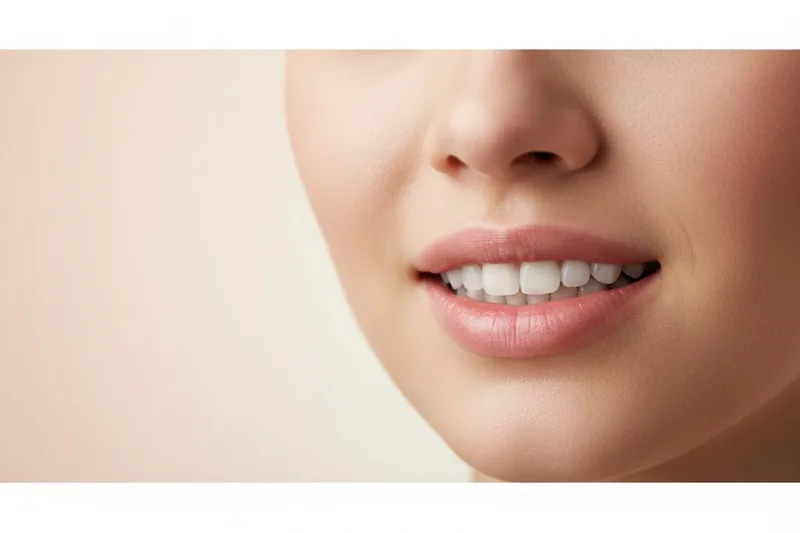
When you look in the mirror, do your top teeth seem to be much further forward than your bottom teeth? Do your bottom teeth sometimes overlap completely? This condition, which many people have, is called 'Overbite'. Today, we'll find out exactly whether this is normal, or whether we should be concerned about it, and whether there is a treatment for it.
What exactly is overbite?
Simply put, an overbite is when your top teeth protrude too far forward over your bottom teeth, covering them. Doctors call this a ``malocclusion''.
Actually, it is normal for the upper teeth to protrude slightly. It is necessary for the functioning of our teeth, such as when eating. But if this gap is more than 2-4 millimeters, we consider it an overbite. That is when problems like jaw pain and tooth loss can occur.
What is the difference between Overjet and Overbite?
These two words are often confused. Although both are dental malpositions, there is a clear difference between them. Think about it, it's very simple.
| Condition | Simply put... |
|---|---|
| Overbite (Deep Bite) | The upper set of teeth overlaps the lower set of teeth vertically . That is, there is more overlap from top to bottom. |
| Overjet (Buck Teeth) | The upper set of teeth protrudes far forward horizontally . Some people also call this 'rabbit teeth'. |
What are the symptoms of an overbite?
The main symptom is that the upper teeth overlap the lower teeth too much. But this is not just a cosmetic problem. An overbite can also cause problems such as:
- Tooth erosion
- Difficulty breathing
- Feeling pain when eating
- Increased risk of developing gum disease
- Pain in the jaw area
- Temporomandibular disorders (TMD)
- Increased risk of developing cavities
- Difficulty pronouncing certain words (problems with speaking)
What are the causes of overbite?
Sometimes it can be hereditary . That means if your mother, father, or someone in your family had it, you're more likely to get it too. This can happen because things like the shape of our jaw are determined by genes.
In addition, overbite can also be caused by certain habits.
- Frequent nail biting: If this habit continues, it can affect the position of the teeth.
- Grinding your teeth while you sleep: This is medically known as ``bruxism.'' This also puts pressure on your teeth and jaw.
- Tongue-thrusting: The habit of pushing the tongue forward excessively while speaking or swallowing food.
- Childhood habits: especially thumb sucking or pacifier use for more than 3 years .
Complications if left untreated
If you don't treat an overbite, it can lead to various health problems later on. Therefore, it is very important to be aware of this.
An untreated overbite can cause problems such as:
- Jaw pain and a feeling of tightness in the jaw
- Frequent headaches
- Earache
- Difficulty chewing food
- Tooth decay and gum disease
- Neck pain
How do you treat an overbite?
Anyone with an overbite can be treated. However, the type of treatment you need will depend on several factors, such as your age and the severity of your overbite. There are slight differences in the treatment methods for children and adults.
How to treat children
Because children's bones are still growing, they are softer. So it is easier to move teeth than adults. In most cases, this can be corrected without surgery.
| Treatment Method | What is being done? (What is done?) |
|---|---|
| Palate expanders | A palate expander. This is used to widen the upper jaw and make room for the teeth. |
| Headgear | An external device used to correct the position of the jaw. |
| Braces | The main method used to straighten teeth. |
| Retainers | A device worn to prevent teeth from moving back into their old positions after braces are removed. |
How to treat adults
For adults, these types of treatments can be used. In some severe cases, in addition to braces, jaw surgery may be required.
- Braces: Teeth can be moved into the right position using traditional wires or the now-popular 'clear braces'.
- Tooth extractions: Sometimes, if there is not enough room for the other teeth to fit properly, one or two teeth may need to be extracted.
- Orthognathic surgery: If the overbite is very severe and there is a significant change in the position of the jaw, doctors recommend this surgery.
- Retainers: These are essential to keep your teeth in their new position after treatment.
Can overbite be prevented?
For some people, this is something they are born with, so we cannot prevent it. However, parents can reduce the risk of this condition through certain habits they develop in childhood.
1. Be careful with sippy cups: Using sippy cups with a leak-proof mouth for a long time is not good for teeth development. Instead, you can use something like a 360-degree sippy cup.
2. Be careful about thumb sucking and using pacifiers: While these are natural for children, if these habits continue after the age of 3, they can affect the alignment of the teeth. Consult your doctor for help in stopping this habit.
3. Take your child to the dentist on time: Taking your child to the dentist when their first tooth comes in or when they are one year old can help identify problems like these early.
When should I see the doctor?
It's usually a good idea to see your dentist at least once every 6 months . That way, they can keep an eye on your oral health. If your overbite is causing other problems, your dentist will recommend treatment.
Also, if you develop new symptoms such as tooth pain, infection, or loose teeth, see a doctor immediately, without waiting until your next check-up.
Take-Home Message
- An overbite is when the top set of teeth overlaps the bottom set of teeth by a large amount.
- This is not only unsightly, but can also cause problems like jaw pain, tooth decay, and difficulty speaking.
- Among the reasons are things that are passed down through generations, as well as certain habits formed during childhood.
- Treatment methods are different for children and adults. Your doctor will determine the treatment that is best for you.
- If you have any doubts about the position of your teeth, it's best to talk to a dentist.




💬 Comments (0)
No comments yet. Be the first to share your thoughts here.
Add Your Comment