

Sometimes when we walk or run, we get various pains in our legs and soles, right? Maybe one side of your shoes is wearing out more. The reason for this could be the shape of your soles, or a slight difference in the way you walk (gait). That's one of the conditions that we're going to talk about today, and that's something to be careful about. Overpronation.
What is overpronation?
Simply put, overpronation is when the arch on the inside of your foot flattens out more than normal when you walk or run (we call this your gait) or rolls inward. Think about it, when you stand and your foot hits the ground, that pressure should be evenly distributed. But in this case, because the foot rolls inward too much, unnecessary pressure is put on the muscles, tendons, and ligaments that support the arch of the foot. This increases the risk of various injuries to your feet, knees, hips, and sometimes even your back. But the good news is that this condition can be largely controlled with the right exercises and special supportive soles (orthotic insoles) placed in shoes .
Who is more likely to develop overpronation?
This condition can actually happen to anyone, but some people are at a slightly higher risk.
- Flat Feet: If your feet have low arches, meaning they are flat, you are more likely to develop overpronation.
- Pregnancy: This condition can occur due to the increased weight gain and hormonal changes during pregnancy, which can cause the ligaments in the feet to loosen.
- Obesity: Excess body weight also puts additional pressure on the soles of the feet, increasing the risk of overpronation.
- Running or walking on hard surfaces for a long time: Think of someone who regularly exercises on hard surfaces like concrete. They are also at risk because of the high impact on their feet.
- Some sports: People who engage in sports such as long-distance running are also prone to this condition.
Are overpronation and flat feet the same thing?
Yes, there is a small but important difference between the two.
Overpronation refers to your gait . It refers to the way your foot strikes the ground and rolls inward when you walk or run.
Flat feet are a medical condition in which the arch of your foot is very low, or absent altogether.
Simply put, a walking pattern called overpronation can cause flat feet, or make existing flat feet worse. For some people, the arches of their feet are not formed properly from birth. In other cases, the arches suddenly drop or collapse after an injury to the main tendon that supports the arch of the foot. This is called 'fallen arches' or 'adult-acquired flat feet'.
So what is the difference between overpronation and underpronation?
Both of these refer to the way your foot strikes the ground, or 'pronate'. It's important to understand this correctly.
Normally, when we walk, we first strike the ground with the back of our heel. Then, the weight of our body moves forward along the sole of our foot, lifting the foot off the ground with the ball of our foot. During this process, the sole of our foot naturally rolls inward slightly. This is called normal pronation . This is what happens when we walk, and it helps to control the shock absorption from the ground.
- Overpronation: This is when the sole of your foot rolls inward more than necessary. This means that when you walk, your foot bends too much inward.
- Underpronation: Also called supination, this is the opposite. That is, the sole of the foot does not roll inward enough. Instead , the weight is directed more toward the outside of the foot .
Both of these can be really problematic.
What are the symptoms of overpronation?
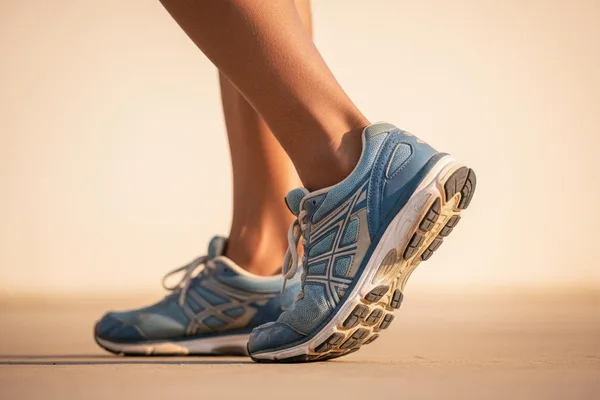
Your shoes can be a good first clue as to whether you have overpronation. If the inside of your shoe soles is worn out more than the outside , that could be a sign of this condition. Take a pair of your old shoes and take a close look. Also, if you place the shoe on a table, it may look like it's tilted inward.
In addition, there are other conditions and symptoms that you can develop due to overpronation. These are the most common:
- Achilles tendinitis: This happens when too much pressure is put on the Achilles tendon, a large tendon located above your heel and below your shin. It becomes swollen, painful to touch, and painful to walk.
- Bunions: These are painful bony bumps that develop on the inside (and sometimes the outside) of your big toe, at the base of your foot. They can be so painful that it can be difficult to put on shoes.
- Heel pain: Severe pain can occur under the heel, especially when you first step out of bed in the morning. This is often caused by plantar fasciitis .
- Plantar fasciitis: There is a band of tissue (plantar fascia) on the bottom of your foot that runs from your heel to your toes. When this becomes inflamed, it can cause pain that makes it difficult to walk in the morning.
- Shin splints: This is also a pain along the bone on the inside of the shin. It is most common in people who exercise excessively (overuse), especially those who run on hard surfaces.
- Iliotibial band syndrome: This is an inflammation of the iliotibial band, a long band of tissue that runs from the outside of the knee to the hip. It is common in runners and cyclists. The pain occurs when the knee is bent or extended.
- Knee pain: Overpronation can cause pain on the inside of the knee (such as patellofemoral pain syndrome).
- Hip pain: Improper foot positioning can put additional pressure on the hip bones and cause pain.
- Back pain: Don't be surprised, sometimes overpronation can also cause back problems, as it affects the alignment of the entire body.
How do doctors diagnose overpronation?
When you go to see a doctor, perhaps a physiotherapist or a podiatrist, they will first ask about your symptoms. Then they will examine your feet, ankles, and knees.
- Arch examination: This will look at how the arch behaves when you stand and bear weight.
- Gait analysis: You can have your gait, running, or running on a special device examined. This is how you can determine the exact level of overpronation.
- Checking your shoes: The wear and tear of the shoes you wear also provides an important clue.
What are the treatments for overpronation?
The best thing is that there is treatment for this. Treatment usually involves the following:
- Choosing the right shoes: This is the first and most important thing. You need to choose shoes that suit your foot type, with good support and cushioning . 'Stability' or 'motion control' shoes are especially good for those with overpronation.
- Orthotics inserts: These are special inserts that are placed inside your shoes. Some are available over-the-counter, but sometimes you may need custom-made orthotics. These provide good support for the arch of your foot and help keep your foot in the correct position.
- Exercises: Strengthening and stretching exercises for the muscles of the foot and ankle can be done under the guidance of a physiotherapist. This will increase the stability of the foot.
- Icing: Applying ice to areas of pain and swelling for 15-20 minutes several times a day can provide relief.
- Nonsteroidal anti-inflammatory medications (NSAIDs): These medications (e.g., ibuprofen) can be taken short-term to reduce pain and swelling as directed by a doctor.
- Supportive taping or bracing: In some cases, special tapes (like kinesiology tape) or braces can be used to support the ankle.
- Rest and activity modification: It is important to stay away from activities that increase pain for a while. For example, instead of running, you can switch to an exercise that puts less pressure on your feet, such as swimming.
Can overpronation be prevented?
Although it cannot be completely prevented, there are things you can do to reduce the risk:
- Use the right footwear from a young age: Wear shoes that provide good support for your children's feet.
- Controlling body weight.
- Gradually increase the amount of exercise: Don't start running a lot all at once, but gradually increase the distance and speed.
- Maintaining good running form.
- Keeping the muscles in the soles and hips strong.
What if I have overpronation? How can I take care of myself?
Many people with overpronation can make small changes to their daily lives and manage their symptoms well. Here are some things you can do:
- Follow your doctor or physical therapist's instructions exactly. Especially if you use orthotics inserts, keep them in place.
- Wear shoes that support your arch and are comfortable for you. Think about comfort and support, not just looks.
- If you run or walk frequently, choose soft surfaces (grass, dirt roads) as much as possible. Minimize running on hard concrete surfaces.
- Don't ignore the pain when it comes. Get some rest. Apply ice if necessary.
- Do the recommended exercises exactly.
The most important thing is to listen to your body. If you feel pain, don't ignore it. It could be your body's signal to you that something is wrong.
When should I see a doctor?
On your feet, ankles, knees, or legs:
- If you have pain that doesn't go away with rest and lasts for several days,
- If there is swelling, redness, or a feeling of warmth when touched,
- If you have pain that makes it difficult to walk, stand, or do normal tasks,
- If you notice something strange or different about the way you walk,
Definitely see a doctor. Don't delay.
What questions should I ask the doctor?
When you visit your doctor, you can ask questions like these to help you get a better understanding of the condition:
- Do I really have overpronation? Or is there something else going on?
- What is the reason for this? Is it because I have flat feet?
- What are the best treatments for this? Do I need orthotics inserts?
- What kind of shoes should I wear?
- Are there any special exercises I should do?
- What changes should I make in my daily activities?
- Will this condition be completely cured? How long will it take?
- Do I have to stop running and exercising? Or can I change it?
Final Take-Home Message
Okay, so now you have a good idea about what we've been talking about, overpronation. Simply put, this condition, caused by a small change in your walking pattern, can lead to various pains and long-term problems in the feet, ankles, knees, hips, and back if left untreated.
- Always pay attention to the way your shoes are worn. That can give you a clue.
- Be aware of unusual pain in the soles of the feet, heels, ankles, and knees.
- Choosing the right footwear is the key to managing this condition.
- Relief and correction can be achieved with things like ``Orthotic inserts'', as prescribed by a doctor.
- Strengthen your feet with exercises recommended by a physical therapist.
- If there is a problem, if there is pain, don't ignore it. Don't delay in seeking medical advice.
Your feet carry you everywhere, carrying the weight of your entire body. So it's your responsibility to keep them healthy and comfortable. Right? So take care of your feet!
` Overpronation, Sole, Arch of the foot, Flat feet, Flat Foot, Gait, Heel pain, Plantar Fasciitis, Achilles Tendinitis, Orthotics, Shoes, Foot pain, Leg pain, Supination




💬 Comments (0)
No comments yet. Be the first to share your thoughts here.
Add Your Comment