

Inside your body, tiny chemical messengers work quietly every single day to keep you healthy and strong. These messengers are called hormones. One special hormone that does an amazing job for your health is called parathyroid hormone, or PTH for short.
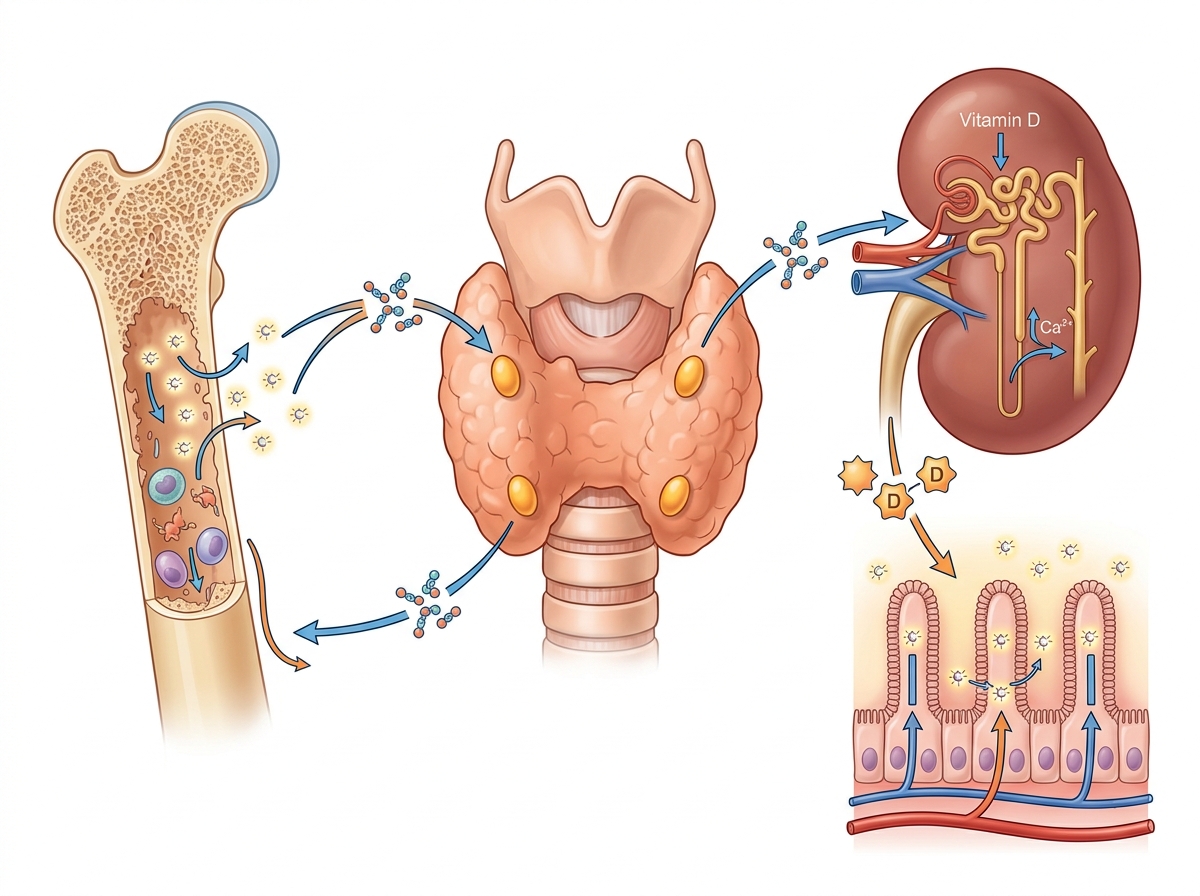
Simply put, this hormone manages the exact amount of calcium in your blood. This job is very important. Your nerves, muscles, and heart need the right level of calcium to work properly.
Calcium is a very common mineral that your body cannot live without. It keeps your bones and teeth strong, but it also helps with many other body tasks. Parathyroid hormone also helps balance phosphorus (another mineral) and vitamin D in your blood and bones. Think of PTH as your body's personal calcium manager.
Key Takeaways About Parathyroid Hormone.
- Calcium Control: PTH regulates calcium levels in your blood to support your heart, muscles, and nerves.
- The Four Glands: Four tiny glands in your neck behind your thyroid gland make this hormone.
- High Levels: Too much PTH can raise blood calcium and weaken your bones over time.
- Low Levels: Too little PTH can lower blood calcium and cause muscle cramps or tingling.
- Simple Testing: A routine blood test can easily check your PTH and calcium levels.
What Is the Role of Parathyroid Hormone?
Let us look closer at what PTH actually does in your body. Deep in your neck, sitting right behind your thyroid gland, are four tiny glands called the parathyroid glands. Each gland is only about the size of a grain of rice.
The moment your body senses that your blood calcium level is dropping, these glands release PTH into your bloodstream. The hormone then travels to different parts of your body to bring your calcium back to a healthy range.
Here is how it works in three main parts of your body:
- Bones: Your bones act like a giant calcium bank. When blood calcium gets too low, PTH tells your bones to release a small amount of calcium into your blood. This is much like taking money from your bank account when you are short on cash. However, if this happens all the time, your bones can become weak.
- Kidneys: Your kidneys play a huge role in this process. PTH tells your kidneys to make the active form of vitamin D, called calcitriol. This active vitamin helps your gut absorb calcium from the food you eat. PTH also tells your kidneys not to let calcium escape in your urine. Put simply, your kidneys avoid wasting precious calcium.
- Small Intestine: PTH tells your small intestine to absorb more calcium from your meals, working together with active vitamin D. These three parts team up to keep your blood calcium balanced.
How Is Parathyroid Hormone Controlled?
This process is simple yet amazing. Your body is very smart at keeping things in balance. The amount of PTH released depends entirely on how much calcium is in your blood. Doctors call this a feedback loop.
Here is how the loop works step by step:
- Your blood calcium level drops.
- Your parathyroid glands sense the drop.
- The glands release PTH into your blood.
- PTH helps pull calcium from your bones, kidneys, and gut into your blood.
- Your blood calcium level returns to normal.
- Once calcium is normal, your parathyroid glands slow down or stop releasing PTH.
This is much like a water tank turning off its motor when full, or an air conditioner turning off its compressor when the room gets cool enough.
Sometimes, however, something goes wrong with the parathyroid glands. When they ignore this feedback loop, they might release too much or too little PTH, which causes health issues.
Health Conditions Caused by Parathyroid Hormone Imbalances.
Now you can see why PTH is so important for keeping your calcium balanced. If your PTH level goes too high or too low, it can lead to health problems. Let us look at what happens in each case.
High PTH Levels: Hyperparathyroidism.
When your body makes more PTH than it needs, the condition is called hyperparathyroidism. The parathyroid glands make too much hormone, leading to specific changes:
- Your blood calcium level goes up. Doctors call this hypercalcemia. Because there is too much PTH, your bones release extra calcium into your blood, your kidneys keep more calcium, and your gut absorbs more of it.
- Your blood phosphorus level drops. Doctors call this hypophosphatemia. High PTH makes your kidneys get rid of extra phosphorus through urine.
Hyperparathyroidism can happen for a few main reasons:
- Most of the time, the cause is a non-cancerous growth (benign tumor) on one parathyroid gland, known as a parathyroid adenoma. This is not cancer.
- Rarely, all four parathyroid glands enlarge and make too much hormone.
- Very rarely, it results from parathyroid cancer.
- Certain kidney diseases, especially long-term kidney failure, can also cause this condition. When damaged kidneys fail to make vitamin D and phosphorus builds up, your body raises PTH to compensate.
Low PTH Levels: Hypoparathyroidism.
When your body makes less PTH than it needs, the condition is called hypoparathyroidism. This is much rarer than hyperparathyroidism. The parathyroid glands do not make enough PTH, leading to these effects:
- Your blood calcium level drops. Doctors call this hypocalcemia. Because PTH is low, your bones do not release enough calcium, your kidneys do not hold onto it, and your gut lacks active vitamin D to absorb it.
- Your blood phosphorus level goes up. Doctors call this hyperphosphatemia. Low PTH makes your kidneys hold onto phosphorus instead of clearing it.
The most common cause of hypoparathyroidism is damage to or removal of the parathyroid glands during neck surgery, especially surgery on the thyroid gland. Roughly 75 percent of cases happen for this reason.
Other possible causes include:
- Certain genetic conditions where the parathyroid glands do not form properly from birth.
- Autoimmune conditions, where your immune system attacks your own parathyroid glands by mistake.
- Rarely, very low magnesium levels can also block normal PTH function.
What Are the Symptoms of Abnormal PTH Levels?
Remember that PTH mainly controls your blood calcium. Therefore, when your PTH is too high or too low, the symptoms you feel actually come from having too much or too little calcium in your blood. Learning these signs is very important.
Symptoms of Low Blood Calcium (Hypocalcemia).
When blood calcium drops, such as in hypoparathyroidism, you might notice these signs:
- Brain fog or feeling sluggish, making it hard to focus on simple tasks.
- Dry skin, brittle nails, and thinning hair.
- Muscle cramps and spasms in your hands, legs, or face.
- Tingling or a burning feeling in your lips, fingertips, or toes.
- Feeling down, anxiety, or mood changes.
- Rarely, if calcium drops severely, it can cause seizures.
Symptoms of High Blood Calcium (Hypercalcemia).
When blood calcium gets too high, such as in hyperparathyroidism, you might notice these symptoms:
- Feeling tired all the time (fatigue) with very little energy for daily tasks.
- Frequent headaches.
- Joint pain and bone aches because extra PTH pulls calcium out of your bones.
- Needing to pee often and feeling very thirsty as your kidneys try to flush out extra calcium.
- Stomach upset, nausea, vomiting, or constipation.
- Kidney stones forming over time.
- Memory trouble, trouble focusing, or mild confusion.
- Severe calcium spikes can sometimes cause irregular heartbeats.
When to Seek Emergency Medical Care.
If you or someone near you experiences severe muscle spasms, severe confusion, chest pain, seizures, or irregular heartbeats, call 911 (US/Canada), 999 (UK), or go to your nearest Emergency Department (ER or A&E) right away.
How Is Parathyroid Hormone Tested?
Testing your PTH is easy. Your doctor can order a simple blood test to check your PTH level. Doctors usually test your calcium, phosphorus, and vitamin D levels at the same time. This gives your care team a complete picture of your health.
Labs and doctors call this specific test "PTH, intact." It measures the active amount of the hormone circulating in your blood.
| Condition. | PTH Level. | Blood Calcium. | Common Cause. |
|---|---|---|---|
| Hyperparathyroidism. | High. | High (Hypercalcemia). | Benign tumor on a gland. |
| Hypoparathyroidism. | Low. | Low (Hypocalcemia). | Prior neck or thyroid surgery. |
What Is the Normal Range for Parathyroid Hormone?
In most lab tests, a healthy adult PTH level falls between 15 and 65 picograms per milliliter (15 to 65 pg/mL). A picogram is a tiny fraction of a gram, showing just how small these hormone amounts are in your blood.
Keep in mind that normal ranges can vary slightly from one laboratory to another. Different labs use different equipment and testing methods. Always check the normal reference range printed right on your own lab report.
If your doctor orders a PTH test, they will review your results carefully. They will tell you if your level is normal, high, or low, explain what might be causing it, and guide you on any next steps.
Take-Home Message.
Let us review the most important facts about parathyroid hormone:
- PTH is a vital hormone made by your parathyroid glands that keeps your blood calcium balanced, alongside phosphorus and vitamin D.
- If your PTH gets too high (hyperparathyroidism) or too low (hypoparathyroidism), your blood calcium levels become abnormal and cause health issues.
- Watch out for signs like muscle cramps, tingling, brain fog, fatigue, bone aches, or thirst. If you notice these, speak with a doctor.
- Checking your PTH and calcium levels requires only a simple blood test.
- Most parathyroid conditions can be managed well when caught early.
Parathyroid hormone is truly a quiet hero in your body. When it works right, you stay healthy and active.
A Note from Nirogi Lanka.
Parathyroid hormone (PTH) is the primary hormone secreted by your four parathyroid glands that regulates calcium and phosphorus levels in your blood.
- When blood calcium drops, PTH triggers calcium release from bones, calcium reabsorption in kidneys, and vitamin D activation.
- Hyperparathyroidism can lead to bone thinning (osteoporosis), kidney stones, and constant fatigue.
- If you experience unexplained kidney stones or frequent bone fractures, speak with your doctor to check your blood calcium and PTH levels.


💬 Comments (0)
No comments yet. Be the first to share your thoughts here.
Add Your Comment