

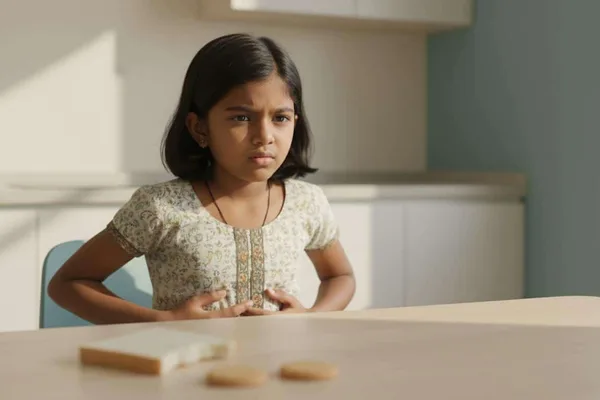
Sometimes you may have noticed that your little one gets upset stomach or other discomfort when he eats certain foods, especially foods made from wheat flour like bread and biscuits. This could be due to a condition called Celiac Disease. Let's talk about this in a little more detail today, because it's very important to be aware of it.
What is Celiac Disease? Let's understand it simply!
Simply put, Celiac Disease is an autoimmune disorder that occurs when a person has an intolerance to a substance called Gluten. Gluten is a protein found in grains such as wheat, rye, and barley.
A person with Celiac Disease cannot properly absorb important nutrients. If that happens, the person may suffer from malnutrition. Doctors still don't know exactly why the immune system reacts to gluten in this way. But if your child has Celiac Disease, there are ways to manage the symptoms and prevent damage to the intestines. So there's nothing to worry about.
How do you know if you have Celiac Disease? What are the symptoms?
Celiac disease is known by several other names, including celiac sprue, gluten-sensitive enteropathy, and non-tropical sprue. It can cause a variety of symptoms.
In young babies, this may be a condition called ``Failure to Thrive`` , where the baby does not gain weight or height as expected. Older children may experience symptoms such as:
- Diarrhea (stomach ache)
- Constipation (dry bowel movements)
- Pale, foul-smelling stools
- Stomach ache and bloating
- Weight loss
- Feeling tired all the time
- Headache (headache)
- Painful skin lesions (this is most common in younger people and adults, especially around the elbows and knees)
However, some people can have Celiac Disease without showing any symptoms .
These symptoms can appear at any time in a child's life. Some children may experience these symptoms the first time they eat a food containing gluten. However, other children may have eaten gluten-containing foods for years without any problems before developing symptoms.
In a small baby, the first signs of celiac disease may appear after solid foods such as cereals are introduced. For example, diarrhea, stomach cramps, and poor weight gain may occur. Over time, the child may not grow to the expected height, develop anemia , develop mouth sores, and have behavioral problems.
Why does this (Celiac Disease) occur? What is the cause?
When someone with Celiac Disease eats something that contains gluten, the gluten stimulates the immune system and damages the villi in our small intestine. Villi are tiny finger-like projections that line the inside of the small intestine. Their main function is to absorb nutrients from the food we eat and send them into the bloodstream. So, when these villi are damaged, the body cannot properly absorb the vitamins and minerals that are necessary for a child's growth.
The exact cause of Celiac Disease is not yet known . However, it is a condition that can run in families. This means that if someone in the family has Celiac Disease, their child is more likely to develop it. It can also occur with other conditions such as Down syndrome, Williams syndrome, Type 1 Diabetes , and Autoimmune thyroid disorders .
How do you know for sure if you have Celiac Disease?
Diagnosis of celiac disease usually begins with a blood test. This checks for antibodies against gluten and other proteins in the lining of the small intestine. Antibodies are a type of protein that our immune system makes. They help our bodies recognize and destroy germs and other threats. Normally, these antibodies stay in our bodies to fight off the germs if they come back.
So, if this blood test finds high levels of antibodies against gluten, the doctor will likely decide to take a small piece of tissue from the small intestine for testing (a biopsy) .
To do this (biopsy), doctors pass a long, thin tube (called an endoscope ) through the mouth, into the stomach, and then into the small intestine to take a small sample of tissue. During this time, the child is usually put to sleep or given medication to make them feel light sleepy. This is so that the child does not feel any discomfort.
Important: If a child is diagnosed with Celiac Disease, it is a good idea to have their siblings, parents, and grandparents tested as well, as they may also have the disease without any symptoms. Celiac Disease in adults can lead to serious health problems if left undiagnosed for a long time.
How is Celiac Disease treated?
There is no cure for this disease. Researchers are constantly looking for new treatments, some of which have shown promising results. But for now, the condition is managed with a gluten-free diet. This helps the lining of the intestines heal and relieve symptoms.
Changes to be made in diet
If your child has Celiac Disease, your doctor will guide you on what foods your child can and cannot eat. These changes can have a big impact on your family's daily life and your child's eating habits. Your doctor may also recommend that you see a dietitian .
You should completely eliminate wheat, barley, rye, and related grains from your child's diet. Since food manufacturers are not required to list gluten on labels, it can be a little difficult to make sure your child is avoiding gluten. In countries like the United States, if a product contains one of the 8 major food allergens (including wheat), it must be clearly labeled. However, "wheat-free" does not mean "gluten-free." Some wheat-free products may contain grains that contain gluten, such as barley and rye.
Therefore, read the label carefully before buying anything or feeding it to your child . Teach your child to do the same. The Celiac Disease Foundation's website has information on many foods to watch out for.
A few tips for choosing safe foods
Keep these things in mind when choosing foods:
- First, find out what foods your child can eat. Safe foods and ingredients include corn, rice, buckwheat, sorghum, arrowroot, garbanzo beans/chickpeas, quinoa, tapioca, teff, and foods made from potato flour. You can also eat uncooked meat, fish, poultry, nuts, seeds, oils, milk, cheese, eggs, fruits, and vegetables.
- Be careful about cross-contamination. Sometimes, gluten-free foods can come into contact with foods that contain gluten. This is called cross-contamination. For example, crumbs from regular wheat bread can get into jam jars, butter, or other spreads if you don't use a new knife or spoon every time. Therefore, it's a good idea to use spreads that come in squeeze bottles, and to keep things like butter and jam separate for people with celiac disease. You can also keep a separate toaster for toasting gluten-free bread.
- Before preparing gluten-free products, wash and sanitize equipment, utensils, and work surfaces thoroughly , especially after handling foods containing gluten. Wash your hands thoroughly and frequently while preparing food.
- At restaurants: Tell the waiter or kitchen staff about your child's condition so they know to avoid gluten and related ingredients in their food.
- At the grocery store: Many stores carry gluten-free breads, breakfast cereals, baking mixes, biscuits, and crackers. You can find more varieties at health food stores and natural food markets. Avoid buying gluten-free products in bulk food bins , as there is a high risk of cross-contamination.
What should you do if your child accidentally eats something containing gluten?
Even with all this care, sometimes your child may ingest something containing gluten. This is normal, don't worry . A small amount ingested once can cause a small amount of inflammation in the small intestine, but it may not cause any major symptoms right away. Normally, the lining of the small intestine is completely renewed in 3-4 days. So, after a single mistake, new cells come in and quickly replace the damaged cells. However, if you are exposed to gluten for a long time, the lining of the small intestine will continue to be damaged.
How can parents help?
If your child has celiac disease, tell other adults in your child's life – including caregivers, teachers, school nurses, camp counselors, babysitters, and friends' parents – about it. Explain to them the importance of keeping gluten-containing foods away from your child. Teach older children not to accept food from others unless it comes from someone who knows for sure that it is gluten-free.
Help your child get used to a gluten-free diet. This can be a challenge, especially at first. But over time, both you and your child will understand what foods they can and can't eat. Then it will be easier to find safe meals, snacks, and ingredients.
Reassure your child that they are not alone in their eating problems. Your doctor may be able to recommend a support group in your area. There are also online support groups and organizations that can help. For example:
- (Celiac Disease Foundation)
- (Beyond Celiac)
- (National Celiac Association)
Finally, things to remember
Celiac disease is a lifelong condition, but it can be managed well with proper diet and awareness . The most important thing is to help your child adjust to a gluten-free lifestyle. It may be a little difficult at first, but over time, it will become normal. Following the doctor's advice, talking to a nutritionist, and educating others will go a long way in helping your child live a healthy, happy life. Don't be afraid, face this with courage. We are all with you!
Celiac Disease, Gluten, Autoimmune Disorder, Sinhala medical article, Villi, Gluten-free diet, Cross-contamination




💬 Comments (0)
No comments yet. Be the first to share your thoughts here.
Add Your Comment