

You remember how scared we all were when the Covid-19 pandemic started. There was always new news, new things. After a while, people started talking about 'variants' that were different from the original virus. You could hear and see things like Alpha, Delta, Omicron on TV and in the newspapers. So, many people wondered what these 'variants' were, how they developed, and whether they were more dangerous than the original virus. Let's talk about it simply, in a way that you can understand, and in a friendly way today, okay?
Let's first see what a virus is?
Simply put, a virus is a very small, invisible microorganism. But to be precise, it is neither alive nor non-living. It is a very strange thing. These viruses cannot survive on their own, that is, they cannot live or reproduce on their own. For that, they need to sneak into a living cell, whether it is an animal or a human. It is like a thief breaking into a house and using the things in that house. After the virus sneaks into a cell, it uses the resources in that cell to make copies of itself, that is, thousands of new viruses. That is how a virus spreads inside our bodies.
So how do these viruses change? Let's learn about mutation.
Imagine you are making a thousand copies of the same page on a photocopier. Does each copy come out exactly the same as the original? No, right? Sometimes the copies may be slightly different. Maybe a little dot may come out more, or a letter may be slightly out of focus, or the color may be slightly different. That's how viruses are.
When a virus moves from one cell to another, that is, when it makes copies of itself, sometimes small mistakes occur in the copying process. This is what we call 'mutations' in medicine. These mutations are changes in the genetic information of the virus, that is, the basic blueprint of the virus. These changes can be very small, and sometimes they can be quite large, significant changes. Not all mutations are beneficial to the virus. Some mutations can weaken the virus, while others can make it stronger and spread faster.
So, what is this 'virus variant'?
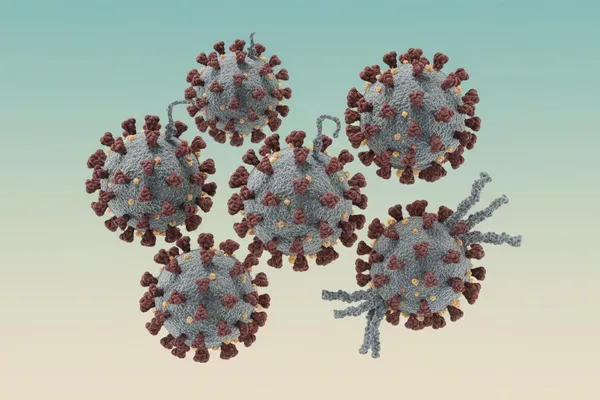
When a virus undergoes one or more mutations, resulting in a new generation of viruses that are significantly different from the original virus, we call it a 'variant' . Simply put, it is a close relative of the original virus, but has slight differences due to those mutations. These differences can cause the behavior of the new variant, such as the speed of spread and the severity of symptoms, to be different from the original virus.
The coronavirus that causes COVID-19 (SARS-CoV-2) has also undergone such changes, or mutations, over time. Several new variants have emerged during the pandemic. You may have heard names like Alpha, Delta, and Omicron . Each of these differed from the original virus in some way. For example, when the Delta variant arrived, the condition of patients became a little worse. When the Omicron variant arrived, it spread very quickly.
How do you name these genres?
When a new strain of virus is identified, it needs to be given a name. Otherwise, it can be very confusing for scientists, doctors, and the public to talk about it. The World Health Organization (WHO) takes the lead in giving these names. They use letters of the Greek alphabet (e.g., alpha, beta, gamma, delta). This systematic nomenclature means that no matter where you are in the world, everyone can clearly understand the same strain without any confusion.
How do these new variants differ from the original virus?
When a new virus variant emerges, it may differ from the original virus in several ways. Let's take a look at what they are:
- Contagiousness: Some new strains can spread more quickly and easily between people than the original virus or other strains. That means that a single infected person can spread the disease to several healthy people. You may remember how quickly the Omicron strain spread among people when it first appeared. It was reported to be much more contagious than other strains.
- Nature and severity of the disease: The symptoms of some variants, such as fever, cough, sore throat, and difficulty breathing, may be different from those of the original virus. Also, the illness caused by some variants can be more severe, requiring hospitalization and sometimes even death. You may remember that when the Delta variant came, many people had a hard time, and even hospitals were full.
- Vaccines and how we respond to medications: We get vaccines to protect us from COVID-19. These vaccines are designed to target the original virus or the main strains that were present at the time. However, some new strains may not respond as well to the vaccines we got. This means that the protection provided by the vaccine may be slightly reduced (vaccine effectiveness). Also, some of the treatments for COVID-19 may not work as well against these new strains. This is the main reason why scientists are constantly monitoring these strains.
- Reinfection: Some strains can cause a person who has previously recovered from COVID-19 to become ill again. Or even a fully vaccinated person can develop a new infection (breakthrough infection). This is because the mutations in the new strain make it difficult for our immune system to recognize it as a new virus, or because previous protection is insufficient.
Why do new variants like this arise?
This is a very important question. Every time a virus spreads among people, that is, every time it is transmitted from one person to another, that virus has the opportunity to make thousands of copies of itself. It is when such copies are made that the chances of those 'mutations' we talked about earlier increase.
Simply put, the more the virus spreads in society, the greater the chance that new mutations will occur and new variants will emerge.
That means the more we control the spread of the virus, the less likely it is that new, potentially more dangerous variants will emerge. That's why wearing face masks, washing hands frequently, maintaining social distancing, and especially getting vaccines, continue to be important. These reduce the chances of the virus spreading.
So how do we protect ourselves from these virus strains?
This is the most important thing. In many cases, the same things we did to protect ourselves from the original coronavirus will also help protect us from these new strains. Don't worry, we still have control. Even if the virus changes, our safety measures won't change that much.
"The best thing is, no matter what strain of the virus, there are some simple, everyday habits we can do to protect ourselves and our loved ones."
Let's see what it is:
- Get your COVID-19 vaccines on time: This is very, very important. Scientists are constantly updating vaccines to accommodate new strains. So getting updated vaccines or booster doses provides better protection against the strains that are currently circulating. Some may think, 'I've had all the previous vaccines, so why get another one?' But think about it, it's like updating the software on our phones. As the virus changes, the vaccine needs to change to keep up with it. While the vaccine may not prevent 100% of people from getting sick, it can greatly reduce the risk of getting sick, being hospitalized, and dying.
- Wash your hands often with soap and water: This is common to all illnesses, but with the COVID pandemic, we have realized its value even more. It is the best and easiest way to kill viruses that may be on our hands. We should rub soap and water on all surfaces of our hands for at least 20 seconds (about the time it takes to sing the "Happy Birthday" song twice). You can also use an alcohol-based hand sanitizer when soap is not available. How many times a day do we unknowingly touch our faces? Every time we touch our hands, if there is a virus on them, it can easily enter the body through the eyes, nose, and mouth.
- Get tested if necessary and stay home if you have symptoms: If you have symptoms that you think may be COVID-19, such as fever, cough, runny nose, sore throat, or shortness of breath, get a COVID-19 test as soon as possible, either a Rapid Antigen Test or a PCR test. It is also important to stay home and stay away from others to avoid spreading the disease to others. Even if you have a mild cold, thinking, "It's just a cold," and going out with others means that if it is COVID, you will unknowingly infect several others.
- Ensure good ventilation in homes, rooms, and workplaces: Opening doors and windows reduces the concentration of airborne particles that may contain the virus. This is especially important in crowded, covered indoor spaces. If the air containing the virus is trapped in one place, everyone in that room has a greater chance of breathing it in. It's like a room filled with smoke. When the windows are open, that dirty air goes out and new, clean air comes in. This reduces the concentration of the virus.
So, what are the things we should remember from this story? (Take-Home Message)
Okay, we've talked a lot about COVID-19 Variants. I hope you've gained some understanding after hearing all this. Finally, here are the most important things to keep in mind:
- Viruses are constantly undergoing small changes, or 'mutations' . This is their natural process, and we cannot stop it.
- These new generations of viruses that change in this way are called 'variants' . We have seen several such variants throughout the COVID-19 pandemic.
- These new strains can sometimes spread more quickly, cause more severe illness, and reduce the response to vaccines . But not all strains are necessarily more dangerous.
- The important thing is that there are simple, yet very effective things we can do to protect ourselves from these strains. Simple things like getting vaccines on time, washing hands frequently, staying away from others if you have symptoms, staying in well-ventilated areas, and wearing a mask if necessary can make a big difference.
- Don't panic, but be careful. Be aware of emerging scientific information about epidemics and new strains. Only get information from trusted sources. Follow medical advice.
Remember, if we all work together and responsibly, we can control these types of epidemics. If you have any questions or doubts regarding this, never be afraid or hesitant to ask your family doctor or local health officer.
` Covid-19, Virus Variants, Mutations, Coronavirus, Vaccine, Safety, World Health Organization, WHO




💬 Comments (0)
No comments yet. Be the first to share your thoughts here.
Add Your Comment