

Today we are going to talk about a slightly disturbing, but usually harmless, disease that is seen among young children and sometimes even among us adults. This is called Coxsackievirus infection. You may have heard of this name, or a doctor may have recently told you that your child has this disease. So, don't be afraid, let's talk about this simply and clearly.
What is this Coxsackievirus?
Okay, now let's see what Coxsackievirus is. Simply put, it's a type of virus. To be precise, it belongs to a large family of viruses called Enterovirus. You've probably heard of polioviruses and hepatitis A virus, right? Coxsackieviruses belong to that same family. Just think, these viruses love to live in our digestive system, that is, in the intestines. So that's where they start their work. This is like their home.
How does this spread from person to person?
Now you're probably thinking, "Okay, if this virus is in the intestines, how does it spread from person to person?" This is one of the most important things to know, because knowing this will help us a lot in preventing the spread of the disease.
This Coxsackievirus can be spread very easily from person to person. Here's what happens:
- From unwashed hands: Imagine, if someone with this virus, especially a young child, doesn't wash their hands thoroughly after going to the bathroom, the virus can spread to everything they touch. Then, if someone else touches those surfaces, eats food with the same hands, or touches their eyes, nose, or mouth, they can also get it. Young children touch everything, which is why it spreads so quickly among them.
- From things contaminated with feces: This virus is mostly found in feces. So, it can be transmitted by touching objects contaminated with feces, such as toys, doorknobs, tables, books, or eating food with such dirty hands. You should be especially careful when changing diapers of young children.
- Through droplets: Sometimes when you cough, sneeze, or speak loudly, droplets containing this virus can be spread and spread to those nearby.
Don't worry, this virus can survive for several days on dirty surfaces, such as doorknobs and toys. That's why staying clean and washing your hands regularly are so important to avoid these diseases.
What are the symptoms of this? Are they the same for everyone?
Okay, now let's look at the symptoms of a Coxsackievirus infection. Here's the thing, not everyone gets the same symptoms. It's like some people get a bad cold, and some people just get better.
In fact, about half of children who get this infection can get sick and recover without showing any symptoms! That means they can get the virus without feeling any pain. Isn't that amazing?
However, for others, symptoms may appear suddenly. The main symptoms that can be seen at such times are:
- A very high fever. Sometimes it can reach 101°F to 104°F (that's 38.3°C - 40°C Celsius).
- I have a headache.
- Muscles all over the body ache. It can feel like you've just exercised hard.
In addition to this, some people may also experience symptoms like:
- A sore throat, as if the throat is red.
- An upset stomach, meaning a stomach ache, maybe even diarrhea.
- Nausea, possibly vomiting.
Imagine, when a child gets this Coxsackievirus infection, he may just have a fever, without any other problems. So it's hard to tell right away what it is. But, most of the time, this fever lasts for about three days, and then it subsides.
What are the possible complications? Is this called Hand, Foot, and Mouth Disease?
Coxsackievirus can affect different parts of our body. That is, this virus can cause a variety of symptoms. Among these , one that many people have heard of and is common among young children is Hand, Foot, and Mouth Disease. Let's talk about it in a little more detail, because this is something that many parents fear.
How does Hand, Foot, and Mouth Disease occur?
This is the most common complication of Coxsackievirus infections. As the name suggests, it mainly affects the hands, feet, and mouth.
Imagine your little one suddenly refuses to eat, cries as if there is something in their mouth, and refuses to drink milk. When you examine the inside of their mouth, you may notice things like:
- Painful red blisters appear inside the mouth, on the throat, tongue, gums, roof of the mouth, and inside the cheeks. These blisters can sometimes look like small sores. This makes it very difficult for the child to eat or drink anything, and it is very painful.
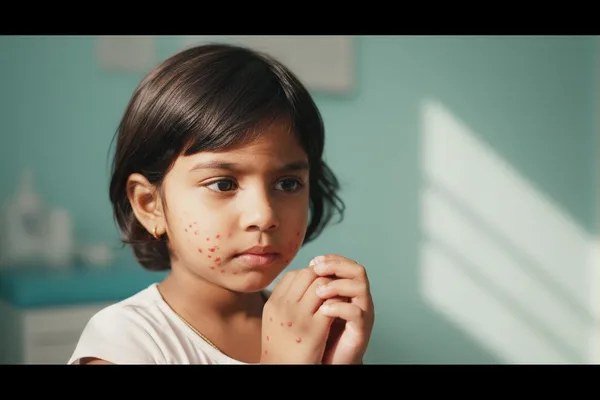
- Red blisters or spots appear on the palms of the hands and soles of the feet. These may sometimes not itch, but can be a little uncomfortable for some children. Some blisters may even look like watery blisters.
- Sometimes these blisters or spots can also be seen in the buttocks area and in places like the knees and elbows.
When a child has Hand, Foot, and Mouth Disease, these blisters appear along with a fever. The pain caused by these blisters may make the child refuse to eat or drink. It is very important to keep the child from becoming dehydrated during this time.
Important: Not all illnesses caused by Coxsackievirus are hand, foot, and mouth disease. Sometimes, a condition called herpangina, which causes sores in the back of the mouth and throat, can occur. Also, very rarely, this virus can cause serious conditions such as viral meningitis, a fever-like condition of the brain, or myocarditis, which affects the heart. But don't worry, these serious conditions are very rare. Most of the time, it stops with a simple fever or hand, foot, and mouth disease.
What should we do about this? How can we comfort the child?
Okay, now you have a question, "What do we do when we get this Coxsackievirus infection? Do we have to take him to the doctor?"
Most of the time, these viral infections get better in about 7 to 10 days without any special treatment. Just like a common cold. Antibiotics are not given for viruses. However, there are a few things we can do to make it easier for our child and help them recover faster:
- Rest, rest, rest: Let your child get plenty of rest. It's best to limit her playing time and let her stay in bed. Don't overexert herself.
- Give plenty of fluids: Since the child has a fever and is having difficulty eating due to the blisters in the mouth, there is a high chance of dehydration. Therefore , always give small amounts of fluids like water, Jeevani, orange juice, fruit juice (low sugar), and porridge. If you can't drink a large amount at once, give it a teaspoon. Things like ice pops are also good for a sore throat.
- Reduce fever: If your child has a high fever (that is, over 100.4°F or 38°C), you can give a medicine like Paracetamol, prescribed by a doctor, in the right dose and at the right time. Never give aspirin to young children without medical advice, as it can cause a dangerous condition called Reye's syndrome.
- Mouth pain relief: If your mouth sores are causing you a lot of pain, talk to your doctor about using something like a gel to relieve the pain. Gargling with salt water can sometimes help, but this can be difficult for young children. Alternatively, letting them hold a small amount of cold water in their mouths can also provide relief.
- Soft, non-spicy foods: Feed your child soft, non-spicy, non-sour, foods that are easy to swallow, such as yogurt, rice porridge, mashed potatoes, and soup. Spicy, sour, and hard foods (e.g., biscuits, chips) can make mouth sores worse.
Do we need to see a doctor? When should we go to the doctor?
Usually, if the fever subsides within a few days and the child gradually recovers, there is nothing to worry about. However, in cases like these, you should definitely see a doctor:
- If your child has a fever for more than 3-4 days, or if the fever suddenly becomes very high (over 104°F or 40°C).
- If the child is not drinking anything, has a dry mouth, does not urinate for 6-8 hours, does not produce tears when crying, or has sunken eyes - these are dangerous signs of dehydration.
- If your child has difficulty breathing, chest pain, a severe headache, a stiff neck, can't look at the light, is very sleepy, or is confused , these could be signs of a serious condition, such as the viral meningitis we talked about earlier.
- If the child is not drinking any fluids at all due to mouth sores in hand, foot, and mouth disease.
- If the child is under 6 months old and has a fever.
- If you have any doubts or fears about your child's condition. What comes to mind for a mother or father about their child is often correct. Therefore, if you have any doubts, the best thing to do is to show it to a doctor. Don't be shy, don't be afraid, that's what a doctor is for.
Prevention is the best!
The best way to avoid viral infections like this is to take the utmost care of cleanliness.
- Always wash your hands thoroughly with soap and water for at least 20 seconds, especially after using the bathroom, before eating, after changing your child's diaper, after sneezing, and after touching an animal.
- Teach children how to wash their hands properly, like a game. They'll love it.
- Avoid close contact with someone who has the virus and avoid using cups, plates, and towels that they have used.
- Keep frequently touched surfaces like toys, doorknobs, and tables clean with disinfectant.
- If your child is sick, limit their exposure to other people (e.g., schools, daycare centers, crowded places). This can help prevent the spread of the illness to others. Keep your child home until he or she is fully recovered.
Finally, remember this (Take-Home Message)
Okay, so we've talked a lot about Coxsackievirus infections today. Don't get overwhelmed by all this. Here are some important things to remember:
- Coxsackievirus is a viral infection that is common among young children. In most cases, it is not dangerous and will resolve without treatment in a few days.
- The main symptoms are fever, body aches, and headache. Hand, foot, and mouth disease (HFMD) may occur, which means blisters appear in the mouth, hands, and soles of the feet. Don't be alarmed by this, but do the things we've talked about to help your child feel better.
- Cleanliness is the best shield against this. Washing your hands regularly and keeping your environment clean are very important. Make this a habit.
- If your child has a high fever, is not drinking fluids, is showing dangerous symptoms such as difficulty breathing, or if you feel very scared, do not delay seeking medical advice.
- Most children do not experience any long-term effects from this. Once they recover, they will be able to play and run around normally again.
So, if your child has these symptoms, don't panic. Stay strong, take care of your child as we've discussed, and if necessary, see a doctor and get the necessary advice. Remember, you're not alone, we all face these things at some point. Get well soon!
` Coxsackievirus, Hand Foot and Mouth Disease, Children's Diseases, Viral Infections, Fever, HFMD, Children's Health




💬 Comments (0)
No comments yet. Be the first to share your thoughts here.
Add Your Comment