

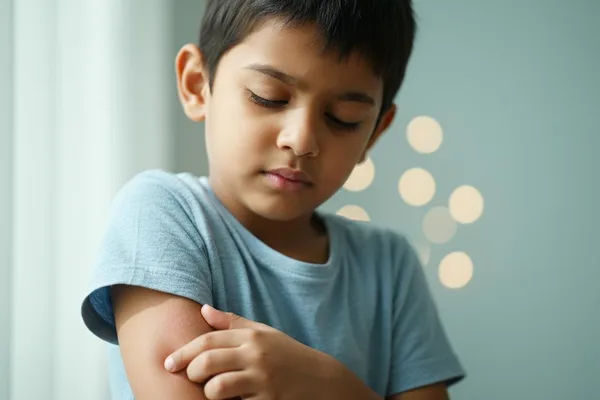
Sometimes your or your little one's skin suddenly starts to itch, turn red, and break out into small blisters, which is really annoying, isn't it? Sometimes it itches so much that you can't even sleep properly. Although we often call this skin discomfort 'eczema', this can be a medical condition called eczema. Today, we will talk about this eczema, especially the common type called atopic dermatitis. Don't worry, it's not that difficult to control if you are aware of it.
What is Eczema?
Simply put, eczema is a condition where the protective layer of our skin is weakened, causing dryness, inflammation, and itching . It's like our skin has small holes in the outer wall. Then, things in the environment, like dust and chemicals in soap, easily penetrate the skin and cause a skin reaction. This is what we call inflammation, redness, and itching.
There are different types of eczema. For example, there are types such as dyshidrotic eczema on the hands, nummular eczema, which causes coin-like patches, and seborrheic dermatitis, which affects the scalp and eyebrows. But the type we see most often, especially among young children, is atopic dermatitis . In fact, when most people say 'eczema', they mean atopic dermatitis. The word 'atopic' means that the condition is related to allergies. This means that children in families with asthma or allergies such as hay fever are more likely to develop this eczema.
How do you know if you have eczema? What are the symptoms?
The main and most annoying symptom of eczema is unbearable itching . It is sometimes said that 'the itch makes the skin itch, not the itch makes the skin itch'. The itching can be so severe. This is why babies cry so much and can't sleep.
What other symptoms can you see?
- The skin becomes dry and scaly. It can sometimes feel like a coconut shell.
- The skin turns red. The inflamed areas are usually red.
- They may appear as small blisters. When scratched, these may burst and ooze a watery liquid, and then form a crust.
- These symptoms are not constant. They subside at times and flare up again at other times. We call this flare-up a 'flare-up'. It comes and goes, like a storm.
- Itching may worsen at night, and it is common for this to disrupt sleep.
Now look, these symptoms may change a little with age.
How does eczema get in young babies (under one year old)?
When a baby under one year old gets eczema, it often first appears on the cheeks, forehead, or scalp. Imagine, your baby's beautiful, milky cheeks turning red and forming small blisters that the baby tries to scratch. Sometimes it can spread to the knees, elbows, and other parts of the body. But surprisingly, it is not often seen in the diaper area. This may be because there is more moisture in that area.
How about toddlers and young children over two years old?
When eczema develops in young children after the age of two, it is most often seen in areas such as the creases of the elbows, the creases of the knees, the wrists, ankles, and neck. The skin in these areas can become thick and leathery due to constant scratching. The skin color may also change. Sometimes eczema also appears on the palms and soles of the feet. This can be a bit bothersome, as it can make it difficult to carry out daily activities.
How does eczema affect adults?
When eczema occurs in adults, it can also appear on the elbows and knees, as mentioned above. It can also be seen on the hands, neck, and face . In some people, it can even spread all over the body. As adults, eczema can sometimes cause the skin to become very dry and flaky . When eczema has been present for a long time, the skin can become thick and dark in color.
The most important thing is that eczema is not contagious. This means that you cannot spread it to someone else.
Why does eczema develop? What are the causes?
It's really hard to say for sure that this is the only cause. Doctors believe that a combination of factors contribute to the development of eczema. Let's look at the main factors.
- Genetics: This is a major factor. If someone in your family has eczema, asthma, or allergies like hay fever, you are more likely to develop eczema. This means that it can be hereditary.
- Immune System Response: Our bodies have an immune system. This is what protects us from disease. In people with eczema, this immune system overreacts to even harmless substances (e.g., dust, pollen). This is what causes the skin to become inflamed and itchy.
- Skin Barrier Dysfunction: Healthy skin has a protective layer of fats and oils on the outside. This is what keeps the skin moist and prevents things like germs and allergens from entering. In people with eczema, this protective barrier is not properly formed. It seems to have gaps. So, the skin dries out quickly, and things from outside can easily penetrate the skin and cause problems.
- Environmental Factors: Some things in the environment we live in can also aggravate eczema. We call these 'triggers'. We'll talk about these in more detail in a bit.
What are the triggers for eczema?
Not everyone with eczema is affected by the same things. But in general, there are a few things that can make eczema worse, or cause a flare-up. It's important to recognize these and stay away from them as much as possible.
- Things that dry out the skin: Harsh soaps, detergents (washing powder), some shampoos, and frequent bathing in hot water. These strip the skin of its natural oils, making it even drier.
- Irritants: Some fabrics (especially wool, some synthetic fabrics), perfumes, chemicals in some cosmetics, tobacco smoke.
- Allergens:
- House dust mites: These are tiny creatures that live in bedding, pillows, mattresses, and carpets.
- Animal fur and hair (Pet dander): from dogs, cats.
- Pollen: Pollen from flowers and grasses.
- Molds.
- Certain foods: Milk, eggs, peanuts, soy, and wheat can cause allergies in some people (especially young children) and worsen eczema. However , if you suspect a food allergy, don't just stop eating that food without medical advice.
- Weather changes: Extreme cold, dry weather, or excessive heat and sweating can also aggravate eczema.
- Stress: Don't be surprised, stress is also a big reason for eczema to flare up! You've probably noticed that eczema gets worse during exam times and during heavy work.
- Infections: Some bacterial (e.g., Staphylococcus) and viral (e.g., Herpes) infections can also worsen eczema. These infections can easily occur when the skin is broken by scratching.
Important: It's a good idea to keep a little diary to track what triggers you or your child. This will give you an idea of what triggers eczema.
How do doctors diagnose eczema?
Most often, a doctor will examine your or your child's skin and ask you about your symptoms to determine whether you have eczema. The doctor will consider things like the appearance of the skin, the nature of the itching, and whether anyone in your family has eczema-like conditions.
A specific blood test is not usually needed to diagnose eczema. However, sometimes your doctor may order tests if allergies are suspected. Also, if a skin infection is suspected, a small patch of skin may be taken and tested.
How to control eczema? What are the treatments?
Although there is no cure for eczema, there are many ways to manage the condition, reduce itching, and keep your skin healthy. Don't worry, you can stay healthy by following your doctor's advice and taking proper care of your skin. The main goals are:
- Controlling itching and inflammation.
- Skin healing.
- Reducing the occurrence of flare-ups.
Okay then, let's see what we can do.
1. Keeping the skin moisturized - this is the most important thing!
It's essential for people with eczema to use a good moisturizer at least twice a day. Maybe even more. A moisturizer helps to lock in moisture, prevent dryness, and strengthen the skin's protective barrier.
- What kind of moisturizer is best? A fragrance-free, thick cream or ointment is best. Lotions are more watery, so they evaporate quickly. Ask your doctor about the best moisturizer for you.
- When to apply? It's best to apply moisturizer within 3 minutes of bathing, while your skin is still damp. And apply it a couple of times a day, especially whenever your skin feels dry.
Think of it like your skin is like a water tank. What moisturizer does is close the holes in that tank and stop the water from leaking out. Do you understand?
2. Stay away from those 'Triggers'.
Once you know what things make your eczema worse, try to avoid them as much as possible. For example:
- Use a mild, unscented cleanser instead of harsh soap.
- When washing clothes, choose a mild, unscented detergent. Rinse well after washing.
- Wear soft fabrics like cotton, rather than wool or rough fabrics.
- Reduce dust mites in your home by washing bedding regularly in hot water and removing carpets if possible.
3. Use the medication prescribed by the doctor correctly.
Sometimes moisturizer alone may not be enough. In that case, the doctor will prescribe certain types of ointments. When using these , it is very important to use them exactly as the doctor recommends, and for the duration of time prescribed.
- Topical corticosteroids: These are the most commonly prescribed medications for eczema. They come in the form of creams or ointments. They work by quickly reducing inflammation and itching. They are available in different strengths. Your doctor will tell you the right strength and duration for your condition. Don't worry, they are very safe and effective when used as directed.
- Topical calcineurin inhibitors (TCIs): These are another type of cream that reduces skin inflammation. Since they do not contain steroids, they are sometimes prescribed for sensitive areas like the face and neck, or for long-term use.
- Antihistamines: These come in pill form. They can be given to reduce itching, especially at night, to help you sleep better. However, they do not cure eczema, they only help control itching.
- Antibiotics: If a skin infection develops, antibiotics may be prescribed to treat it.
In some severe cases, oral corticosteroids or other immunosuppressants may be given, but only under the close supervision of a doctor.
4. Be careful about how you bathe.
Bathing properly is also important for people with eczema.
- Bathe daily, but don't bathe for more than 5-10 minutes.
- Don't use hot water. Lukewarm water is best.
- Avoid harsh soaps. Use a gentle, soap-free cleanser. Only apply soap to the areas where eczema is present.
- Do not rub your body vigorously. Pat dry with a towel.
- Apply moisturizer within 3 minutes of bathing, while your skin is still damp. Don't forget this!
5. Tips to control itching.
Itching is the biggest problem. But scratching can actually damage the skin and worsen eczema. So, it's important to control scratching as much as possible.
- Keep your nails short. This will reduce the damage to your skin even if you scratch it.
- If you are scrubbing at night, you can put cotton mittens on your baby.
- When you feel like scratching, apply some moisturizer instead, or place a cold compress on the area.
- If the doctor has prescribed antihistamines, use them properly.
How is it to live with eczema?
Eczema can be a frustrating condition at times. It can be embarrassing and distressing because of the constant itching and visible lesions. This can especially affect young children.
- You're not alone: Eczema is a common condition. Talk to your doctor, family, or a trusted friend about it.
- Manage stress: As we mentioned earlier, stress can worsen eczema. So, do things that make you happy, exercise, meditate, and get enough sleep. These things will help reduce stress.
- Support groups: In some countries, there are support groups for people with eczema. These can be a great place to learn about other people's experiences and find comfort.
Remember, you can live a normal, happy life with eczema. The most important thing is proper management and a positive attitude.
When should you see a doctor?
If you are unable to control your eczema with home remedies and over-the-counter medications, or if you have any of the following symptoms, be sure to see a doctor.
- If the itching and redness are severe enough to interfere with sleep.
- If there is no improvement with home treatments.
- If the skin becomes yellow, crusty, oozing a watery liquid, or looks like pus, these could be signs of a skin infection.
- If the skin has a fever-like condition, or blisters appear with pain.
- If eczema is disrupting the child's daily activities and schoolwork.
- If you have any doubts or fears about this.
The doctor can accurately assess your condition and, if necessary, prescribe stronger medication, or refer you to a dermatologist.
Finally, things to remember (Take-Home Message)
Eczema, especially Atopic Dermatitis, is a skin condition that can be a bit annoying, but with proper management, it can be well controlled . There is no reason to panic.
- The most important thing is to keep your skin moisturized at all times. Don't forget to apply a good moisturizer several times a day.
- Identify the triggers that make your eczema worse and avoid them.
- Use the medicine exactly as prescribed by your doctor. Don't be afraid of steroid creams. They are very useful when used as directed by your doctor.
- Control scratching as much as possible. Scratching will only make the condition worse.
- If you have signs of skin infection (yellow crusts, pus), see a doctor immediately.
- Eczema is not contagious, so don't be afraid to socialize with other people.
- Stay positive. If managed properly, you can live a normal, comfortable life with eczema.
If you or someone in your family has this problem, don't suffer alone, seek medical advice. Then you will get the help you need.
` Eczema, atopic dermatitis, skin diseases, itching, pediatrics, skin care, dry skin




💬 Comments (0)
No comments yet. Be the first to share your thoughts here.
Add Your Comment