
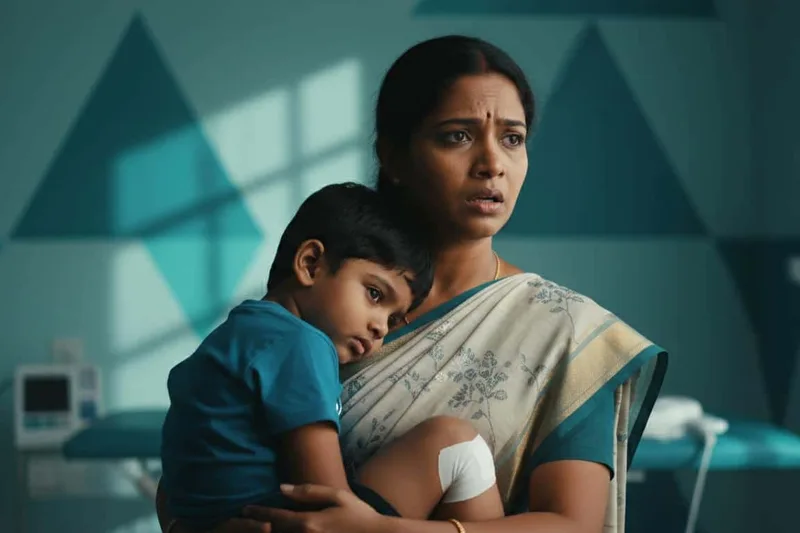
Hello! If your little one suddenly gets sick, or if there is a minor accident, it is very normal for you as a parent to feel worried, right? At such times, our mind immediately runs to the hospital's emergency room, that is, the ER (Emergency Room) . Because we know that if we go there, we can get treatment at any time of the day, no matter what the child's condition is. But, do we have to go to the ER for every minor illness or injury? Sometimes, there are times when you can get relief from your family doctor or a general treatment center. Let's talk about all of this today.
Do I really need to go to the ER? Or can I get help somewhere else?
Here's the thing, sometimes it can be a real medical emergency . In such a case, the best thing to do is to take your child to the ER (Emergency Room) (some people also call this the ED - Emergency Department ).
However, there are some illnesses and minor accidents that can be treated by seeing your family doctor and getting medicine, or by seeking treatment at an urgent care clinic (in Sri Lanka, these are often found in private hospitals, or some doctors' channeling centers also provide such services).
So, in the event that we have to go to the ER, it is very important to know what to expect when we get there and what we need to prepare for.
When should you call 1990 to call an ambulance?
There are some situations where it is safer to call an ambulance than to take your child to the ER in your car. In Sri Lanka, we can call the 1990 Suwaseriya Ambulance Service . Here are some situations where you should definitely call an ambulance:
- If the child is having difficulty breathing and the skin appears blue .
- If you have been in a car accident and lost consciousness, or if you have been seriously injured.
- If the child has epilepsy or a seizure .
- If the child is unconscious or unresponsive to speech.
- If there is a suspicion that the child has suffered a neck or spinal injury .
- If you have lost consciousness after a head injury , continue to vomit, or are not responding normally.
- If you are bleeding uncontrollably .
- If your child is unresponsive or has difficulty breathing due to poisoning . The most important thing is that if you suspect poisoning, call the National Poisons Information Centre on 0112686143 for advice. They may also refer you to the ER.
Important: It's hard not to panic in a situation like this, but take the necessary steps as calmly as possible.
How do we prepare before going to an ER? (Plan Ahead)
It's normal to feel nervous when you have to go to the ER with a child. But a little preparation in advance can help reduce that anxiety.
Talk to your child's regular doctor to find out what to do in an emergency and which ER to go to. Your doctor may be able to tell you about the nearest ER, or they may refer you to an ER at a hospital where they see patients frequently.
Should I take my child to the ER at a children's hospital?
Simply put, children's hospitals are places that specialize in treating children. They may have more pediatric specialists , nurses, and facilities specifically designed for that purpose. So, if there is an emergency and there is a nearby children's hospital (for example, Lady Ridgeway Children's Hospital), you may want to consider going there.
Alternatively, you can seek medical attention at the ER of your nearest public or private hospital. If for some reason your child's specific condition cannot be treated at that hospital, the doctors there will arrange to transfer your child to a facility with the appropriate facilities.
Should we write down the child's medical history on a piece of paper?
This is very important. In the heat of an emergency, it can be difficult to remember details about your child's illnesses and medications. Therefore, it is very useful to write down your child's medical history . Keep it in a place where everyone in the house can see it. This will be useful if someone who is taking care of your child (e.g. a nanny, a grandparent) has to take your child to the ER in an emergency.
Here are some things to add to that medical history :
- The medications the child is currently taking (names and dosages).
- Allergies the child has (to medications, foods, etc.).
- If you have been hospitalized before, please provide details.
- Previous surgeries .
- Chronic conditions the child has (e.g. asthma, diabetes).
- Significant illnesses in the family (e.g. heart disease, cancer).
- A report on the child's immunization history .
Also, write down the name and phone number of your child's Primary Care Provider (that is, your family doctor), and the name and number of the pharmacy where you regularly get your medications.
What should you remember when getting ready to go to the ER?
When you go to the ER with your child, it's important to know exactly what your child's current problem is.
- When/where did the problem start (if it was an injury, then when; if it was an illness, how long ago).
- What are the current symptoms ?
- What treatments and medications have you already tried ?
- When/what time did the child last eat or drink anything ?
Imagine that your child has swallowed some medicine or a liquid that you use at home. When you go to the ER, take the bottle or packet that contained the drink. That way, the doctors can understand exactly what kind of treatment to give. If your child has swallowed something small (e.g. a coin, a piece of a toy), take another one of those things with you if possible.
What to Expect When You Go to the ER?
Expect to wait a while.
In any ER, except in the most serious emergency, expect to have a short wait . If you have time before going to the ER, bring something to read, such as a book or magazine. It's also a good idea to bring a pen and paper to write down any questions you have for the doctor. If your child is not having too much trouble, bring something small to play with (like crayons, books, toys, a favorite teddy bear). If you think your child may need to stay in the hospital, it's also a good idea to bring a change of clothes and a toothbrush for you and your child.
There's no way to know exactly how long you'll be in the ER. But if your child has a serious medical problem , you can be sure that the doctors will provide the necessary treatment right away.
Doctors tend to see the most severe injuries and illnesses first, so if you go in with a minor injury, you may have to wait a little longer. You may have to wait even if there is no one in the waiting room, if the exam rooms are full, or if many doctors and nurses are treating one serious patient. The most important thing is, if you feel your child's condition getting worse while you are waiting to see a doctor, tell the medical staff there immediately.
What is Triage? Let's learn about other documents too
Immediately after arriving at the ER, a nurse will come and see the child. She will ask about symptoms, check vital signs (such as fever, pulse rate, and breathing rate), and perform a quick assessment. This is called triage . Simply put, this is the process of prioritizing the child's medical needs based on the severity of their condition.
You will then be directed to a registration process . There you will be asked to sign Consent for Treatment Forms. If you have health insurance, bring that card with you. (In Sri Lanka, this insurance information is not relevant in a government hospital, but is important in a private hospital).
More things to know:
- Many ERs have translation services or someone who can help with translation. If you do not speak Sinhala well (e.g., if you speak Tamil or English), it is a good idea to bring a family member or friend who can help you.
- In some cases, the doctor may prefer that the child not eat or drink anything. Therefore, before giving the child anything to eat or drink, ask the medical staff if it is okay.
- If you go to the ER on a weekend or at night, a specialist may not be there at that time. But if necessary, they will arrange to bring him in. If surgery is needed, they will contact a surgeon.
How to calm your child? (Reassuring Your Child)
While you are waiting in the ER, you and your child may see very sick or injured people. It is normal for a young child to be scared when they see or hear things like that. So, tell your child that the ER is the best place for sick people to be, and that the doctors here will make them feel better. If possible, give an example of a time when someone you know was injured and was scared at the time, but recovered after the doctors treated them.
Some larger hospitals have Child Life Specialists who can help children deal with the stress of being in the ER, prepare them for medical procedures, and teach them non-pharmacological pain management techniques.
Things to Keep Track Of
While you're in the ER, try to write down important information you hear.
- The names of the doctors.
- What they say about the illness or injury.
- Medicine or treatment given to the child.
- Instructions on what to do at home (Follow-up or Care at Home) .
What to know when going home from the ER? (Leaving the ER)
If your child is discharged from the ER, make sure you understand the Home Care Instructions. If you don't understand something, don't hesitate to ask.
In most cases, the doctor who treated your child in the ER will then talk to your family doctor. If your child is admitted to the hospital, the ER doctor will let your doctor know.
Some ERs will give you written or electronic documentation of what was seen, while others will type it up and send it to your family doctor. Keep a copy of the paperwork you receive when your child is discharged, and take it with you when you go to see the doctor later.
Finally, take-home message:
Going to the ER with a child can be a nerve-wracking experience. However, if you don't panic, are a little prepared, and have a little understanding of what happens in the ER, you can make that difficult time a little easier.
Remember: Your child's safety and well-being are the most important things. Don't hesitate to get help when and where you need it. It's also a good idea to talk to your doctor about these things regularly.
Wishing you all good health!
` Emergency care, ER, Emergency Room, Children's health, Ambulance service, Medical history, Triage, Health service in Sri Lanka


💬 Comments (0)
No comments yet. Be the first to share your thoughts here.
Add Your Comment