

Having a baby is a very exciting and changing time in your life. Do you know how important it is to get some exercise that is good for your body and mind during this time? But you can't do all the exercise you normally do. Let's take a closer look at this, shall we?
What are the benefits of exercising during pregnancy for you and your baby?
Exercising during pregnancy is great for you and your baby, especially if you don't have any health issues that would prevent you from exercising. Check out these benefits...
- Happy mind, energized body: When you exercise, you feel in control of yourself, and your body also gets good energy. Did you know? When you exercise, a chemical called ``(Endorphins)`` is released in our brain. This makes us feel very happy. Not only that, if you exercise properly:
- Back pain is reduced and posture is improved. This is because the muscles in your back, buttocks, and thighs are strengthened.
- Constipation is reduced because the bowel movements are accelerated.
- Hormonal changes during pregnancy can make your joints a little looser. When you exercise, the lubricant in your joints comes into play, protecting them from wear and tear.
- You sleep better at night because the stress and anxiety of the day are reduced and your mind becomes calmer.
- Prepare yourself and your body for childbirth: Having strong muscles and a healthy heart can make childbirth much easier. If you can control your breathing properly, it will be easier to bear the pain. Also, if labor is prolonged, your body's endurance will help a lot.
- You can get back to your old body quickly after having a baby: If you were already exercising before pregnancy, continuing to exercise will reduce your body fat. But remember, don't try to lose weight by exercising during pregnancy. Our goal during this time should be to maintain our fitness level.
What's more, exercise increases blood flow to your skin, which can help your skin look brighter. Some studies have shown that mothers who exercise have a lower risk of complications like preeclampsia (high blood pressure during pregnancy) and gestational diabetes (diabetes during pregnancy).
What kind of exercise is good to do during pregnancy? What are the things to be careful about?
This really depends on when you start exercising and whether you have any complications during your pregnancy. If you were already exercising before you got pregnant, you can continue your usual exercise program with the necessary modifications.
But if you weren't very active before you got pregnant, start slowly and gradually increase your exercise as you get stronger. According to the US Department of Health and Human Services, healthy pregnant women (who aren't already very active or don't do strenuous exercise) should get at least 150 minutes (2 1/2 hours) of moderate-intensity aerobic activity per week. For example, you could take a brisk 30-minute walk during lunchtime, five days a week.
``Moderate-intensity`` is the level at which you can carry on a normal conversation while exercising. These can include:
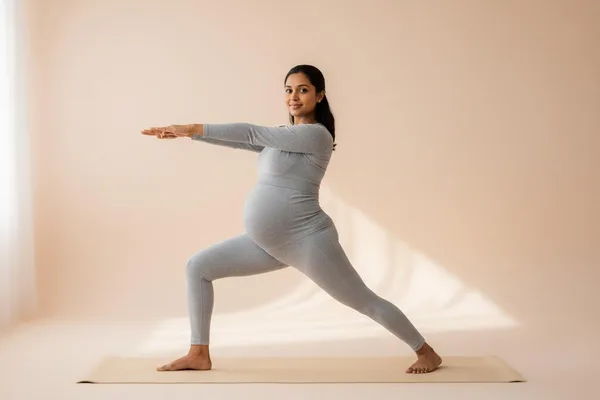
- Low-impact exercises: These are very gentle exercises that don't put much pressure on the joints (e.g., swimming, yoga).
- High-impact exercises: These are exercises that put a little more strain on the body, such as jumping. Most women with healthy pregnancies can do some moderate-intensity high-impact exercises (such as jogging or aerobics). They do not increase the risk of low birth weight, premature birth, or early miscarriage. However, since high-impact exercises are very taxing on the body and can cause discomfort during pregnancy, it is best to reduce your exercise if you feel any discomfort.
While high-impact exercises can feel like a good workout, low-impact exercises can also increase your heart rate and oxygen intake. They also help you avoid sudden or jerky movements that put stress on your joints, bones, and muscles.
The most important thing is to talk to your doctor before continuing your old exercise routine or starting a new one. Talk to him/her about any concerns you may have.
Be aware that you may need to limit your exercise if you have any of these conditions:
- High blood pressure (Hypertension) during pregnancy.
- Early contractions.
- Vaginal bleeding.
- Premature rupture of your membranes (the fluid in the amniotic sac surrounding the fetus).
Try some exercises like this.
You can try dancing, swimming, water aerobics, yoga, Pilates, cycling, or walking. Swimming is especially good because you feel light and buoyant in the water.
Try to do a combination of cardio (aerobic exercise), strength training, and flexibility exercises. Minimize bouncing as much as possible.
Many experts recommend walking. It's easy to vary the pace, add hills, and increase the distance. If you're just starting out, start by walking briskly for about a mile, 3 days a week. Add a few minutes each week, increase the pace a little, and then add hills as you go. Whether you're new to this or an experienced walker, spend the first 5 minutes warming up slowly and the last 5 minutes cooling down.
If you were a runner before you got pregnant, you may be able to continue running, but you may need to make some small changes to your routine.
It is wise to avoid these exercises during pregnancy.
Many doctors recommend avoiding exercises that involve lying on your back after the first trimester of pregnancy.
Unless your doctor advises otherwise, it's also a good idea to avoid activities that involve:
- They jump a lot.
- Those that suddenly change direction.
- Those that can hit the stomach.
For example, contact sports, downhill skiing, skating, gymnastics, and horseback riding are all high-risk activities.
Some doctors say that step aerobics is okay if you can reduce the height of the step as your pregnancy progresses. But others warn that the risk of falling is higher during pregnancy because your center of gravity changes. If you choose to do aerobics, be careful not to push yourself too hard or to the point of exhaustion .
How should I start exercising?
Remember, you should talk to your doctor before starting any exercise program. When you're ready to start exercising, keep these things in mind:
- Start slowly. If you've never exercised before, even 5 minutes a day is a good start. Increase by 5 minutes each week, working up to 30 minutes.
- Wear comfortable, loose-fitting clothes. Wear a bra that provides good support for your breasts.
- Drink plenty of water to prevent overheating and dehydration.
- Don't exercise if you are sick.
Another thing is, it's not good for your baby to get too hot. A temperature higher than 102.6°F (39°C) can cause problems for your baby, especially in the first three months. So don't exercise too much on hot days. When it's hot, avoid exercising outdoors during the hottest part of the day (between 10 a.m. and 3 p.m.). Instead, exercise in an air-conditioned place or go for a walk in a shopping mall. Also, remember that when you swim, the water cools you down, so you may not realize that you're overheating.
What other things should I be concerned about?
No matter what type of exercise you and your doctor choose, listen to your body. It's normal to feel dizzy early in pregnancy. As your baby grows, your center of gravity changes. This can make it easier to lose your balance and fall, especially in the last trimester.
Your energy level can vary greatly from day to day. As your baby grows and pushes on your lungs, your ability to take in more air (i.e. oxygen) during exercise becomes less. If your body says, "Stop now!", stop!
If you have any of these symptoms, your body is telling you that you've had enough exercise:
- If you feel very tired.
- If your head feels dizzy.
- If you feel like your heart is beating too fast (`(Heart palpitations)` - that is, your chest feels like it is pounding).
- If you feel like you're having trouble breathing.
- If you have pain in your back or hip area.
Another important thing: If you feel too tired to talk while exercising, it means you're exerting yourself too much.
If you have any of these warning signs, see a doctor immediately!
If you have any of these warning signs while doing any exercise, talk to your doctor immediately:
- Vaginal bleeding.
- Unusual pain.
- Dizziness or lightheadedness.
- Unusual shortness of breath.
- Racing heartbeat or chest pain.
- Fluid leaking from your vagina.
- Feeling like the uterus is contracting (Uterine contractions - that is, abdominal pain).
Finally, the most important things you need to remember are these:
Okay, so we've talked a lot about exercising during pregnancy. In short, exercising correctly and safely is very, very good for you and your baby. It not only makes your mind and body feel good, but it also prepares you for childbirth.
However, before you start exercising, be sure to talk to your doctor. Discuss with him or her what exercises are right for you, how long you should do them, and what precautions you should take.
The most important thing is to listen to your body. If you feel tired or uncomfortable, stop. Exercise will help you stay happy and healthy during this pregnancy!
` Pregnancy, exercise, exercise during pregnancy, safe exercise, childbirth, health, pregnancy health




💬 Comments (0)
No comments yet. Be the first to share your thoughts here.
Add Your Comment