

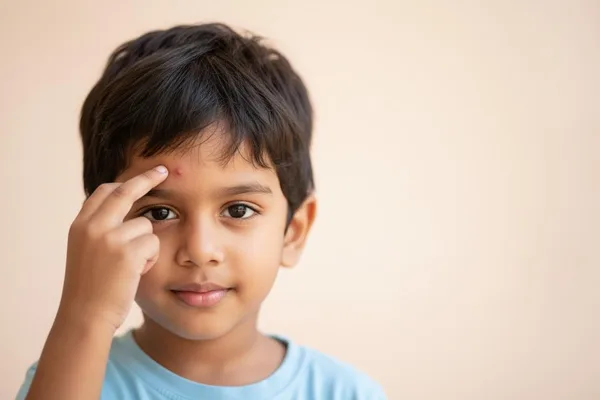
It's normal for our children to fall a little here and there while running, jumping, or playing, and to hit their heads in such a place, isn't it? Most of the time, it's just a small bump or a bruise, and it's not a big deal. But sometimes, this head injury can be a little serious. That's why today we thought we'd talk about these head injuries, or `(Head Injuries)`. If we are properly aware of this, we can protect our children and do the right thing without panicking in an emergency.
What does it mean to have a head injury?
Simply put, a head injury is any damage to the skin of the head (scalp), the bones of the skull (the skull), or the brain itself. This can be something as minor as a small bump, or it can be something serious enough to require immediate medical attention.
Imagine that your child falls off a chair while playing. The area where the head hit the ground may become slightly red and look like a small bump. This usually subsides in two to three days. However, if the fall is more severe, the skin on the head may be cut and bleed, or even more seriously, the brain may be affected. That's why it's not a good idea to take every head injury lightly.
What causes these head injuries?
There are several main reasons why children and even older, younger children can get head injuries. Let's take a look at what they are:
- Falls: This is the leading cause of head injuries in young children. Things like falling out of bed, falling off the sofa, slipping down stairs, and falling while playing.
- Cycling accidents: Other accidents are common while riding a bicycle. The risk is especially high when riding without a helmet.
- Vehicle accidents: Serious head injuries can also occur from accidents while riding in a car or van.
- Sports Accidents: There is a risk of head injuries while playing sports like football, rugby, and cricket. Some sports are more risky because of the high contact involved.
- Child abuse: Although rare, deliberate assaults on children can cause severe head injuries. This is a very sad situation.
What are the main types of head injuries?
There are many different types of head injuries. Some affect only the skin, some affect the bones, and some affect the brain itself. Let's take a look at the main types:
- Lacerations: This is when the skin on the head is cut and bleeding. This can happen when you fall or get hit by something sharp.
- Contusions: Bruising of the skin on the head. Sometimes it can look blue or purple, like a blood clot.
- Concussion: This is a condition that requires some attention. What happens here is that the brain is jolted inside the skull after a blow to the head, temporarily affecting the normal functioning of the brain. This can cause symptoms such as headaches, dizziness, vomiting, and confusion. Once you have had a concussion, you are more likely to have another one.
- Hematoma or Hemorrhage: This is also a serious condition. Bleeding can begin to occur inside the skull, around the brain, or within the brain. This can put pressure on the brain and damage brain cells.
- Skull Fracture: A severe blow to the head can cause a fracture of the skull. This is also serious because the broken bone fragments can damage the brain.
Now you probably understand that hitting your head can cause all kinds of problems.
What are the symptoms of a head injury?
The symptoms of a head injury vary depending on the nature of the injury.
In the case of a simple, minor injury , you may only feel a little pain at the site of the injury. It may even appear as a small lump. If the skin on the head is cut, there may be some bleeding.
However, in the case of a more serious injury , you may see one or more of these symptoms:
- Loss of consciousness (fainting)
- Dizziness, difficulty walking
- Vomiting (especially if vomiting occurs repeatedly, or if vomiting occurs hours after the injury)
- Severe headache
- Changes in vision (double vision, blurred vision)
- Blood or watery fluid coming from the ears or nose
- Behavioral changes (unexpected agitation, confusion, excessive sleepiness)
- Numbness or tingling in the limbs
- Having a seizure
If you have symptoms like these, you should seek medical advice immediately as it could be a serious condition.
How does a doctor recognize this?
When you take your child to a doctor, the doctor will first ask about how the injury occurred and what symptoms are present. Then they will carefully examine the child's head.
- Minor injuries can often be identified without extensive testing. If the skin on the head is cut and bleeding, a few stitches or staples may be needed.
- If a serious injury is suspected, the doctor may order a special test, such as a CAT scan, of the head. This can show exactly what damage has occurred to the brain and bones inside the skull.
Therefore, it is very important to pay close attention to the symptoms of a head injury and tell the doctor the details.
What to do if your child has a serious head injury? Be sure to remember these things!
If your child has a head injury and has any of the following warning signs , you should call the 1990 (Suwa Seriya) ambulance service immediately, or take them to the nearest hospital as soon as possible. Don't panic, but be quick.
- If you lose consciousness (pass out).
- If you don't respond to what I say.
- If there is a change in vision (seeing one or two things, blurred vision).
- If there is a visible serious injury , or if bleeding does not stop .
- If there is blood or a clear fluid coming from the nose or ear (this could be cerebrospinal fluid).
- If there is a major change in behavior (sudden agitation, decreased alertness, excessive sleepiness).
- If you feel dizzy or lightheaded when walking .
- If a seizure occurs.
- If you vomit more than twice , or if you vomit several hours after the injury.
- If you feel a sense of numbness or weakness in your arms or legs .
- If you say you have neck pain or that your neck hurts when you touch it.
What else should you do at a time like this?
- If the child is not breathing, if you know how to give CPR (cardiopulmonary resuscitation), start it immediately.
- If there is bleeding, press it down with a clean cloth until the bleeding stops.
- Do not move the child around, and only remove the child carefully if the area is dangerous or where there is a risk of further injury.
- If your child is wearing a helmet or other sports protective equipment, do not try to remove it. Doing so could cause further injury to the neck or head. The medical staff will do this properly.
The most important thing is not to panic and seek medical help immediately.
What if it's a minor injury, not that serious?
If your child has a head injury, even if it doesn't seem serious, you should stop whatever activity (such as playing) they were doing right away. Then call your family doctor and explain the details. The doctor will ask you about the injury and your symptoms and decide whether your child needs medical attention.
Listen to your gut. You know your child best. If you feel that your child's appearance is not right, or that their behavior is different, don't hesitate to call the doctor or call 1990, even if it's just a small thing. It's better to ignore a big problem than to ignore it.
How can we protect our children from head injuries?
Of course, not all head injuries can be prevented. However, there are many things we can do to protect our children's heads.
- Helmets are a must: Children should wear a properly fitted helmet when skiing, snowboarding (although these are rare in Sri Lanka), cycling, scootering, skateboarding, and rollerblading. Wearing a helmet can still cause head injuries, but it provides great protection against skull fractures and serious brain damage.
- Sports-related safety equipment: Check to see if the child is using special safety equipment (for example, a helmet for cricket, pads) related to the sport they are playing.
- Safety in vehicles: Always seat children in an age-appropriate car seat or booster seat. For older children, make sure they are wearing their seatbelts properly. This is very important.
- Make your home environment safe for children: If you have young children at home, be aware of areas where they could be at risk (e.g., tables with sharp edges, slippery floors). Install gates on stairs.
- Be careful about play areas: Choose areas where children play that have a soft surface , such as mulch, rather than concrete or dirt, so that injuries are less likely to occur if you fall.
- Talk to Coaches: If your child is on a sports team, talk to the coach and find out about the team's rules to reduce the risk of head injuries and concussions (e.g., limiting tackling in football, limiting heading the ball in soccer). Also, ask if your child will be removed from the game if they get a head injury.
- Talk to your children: Teach your children to never hide a head injury. Make them understand that they should stop playing or doing something immediately and tell their parents, coach, or teacher immediately. It is important to tell them even if the injury is minor.
If we take care of these things, we can greatly reduce the chances of our children suffering head injuries.
Take-Home Message:
Okay, so now you have a good understanding of the head injuries we talked about today. Here are some things to keep in mind:
- Not all head injuries are the same. Some are minor, some are serious.
- Be aware of the warning signs of a head injury. Seek immediate medical attention if you experience loss of consciousness, persistent vomiting, or behavioral changes.
- In case of a serious injury , do not panic, call 1990 immediately or go to a hospital.
- Even if it seems like a minor injury, it's wise to stop what you're doing and talk to a doctor.
- Prevention is the best way to prevent accidents. Many accidents can be prevented by wearing a helmet, using safety gear in vehicles, and making your home and play areas safer.
- When a child hits their head, don't just ignore it, thinking, "It's okay, it's just a small thing." Keep an eye on the child for a while.
The safety of our children is our most important concern. Therefore, it is very important to be aware of these things. If you have any further questions, don't forget to talk to your family doctor.
` Head injuries, Head Injuries, Child accidents, Brain injuries, Emergency treatment, Helmets, Safety




💬 Comments (0)
No comments yet. Be the first to share your thoughts here.
Add Your Comment