
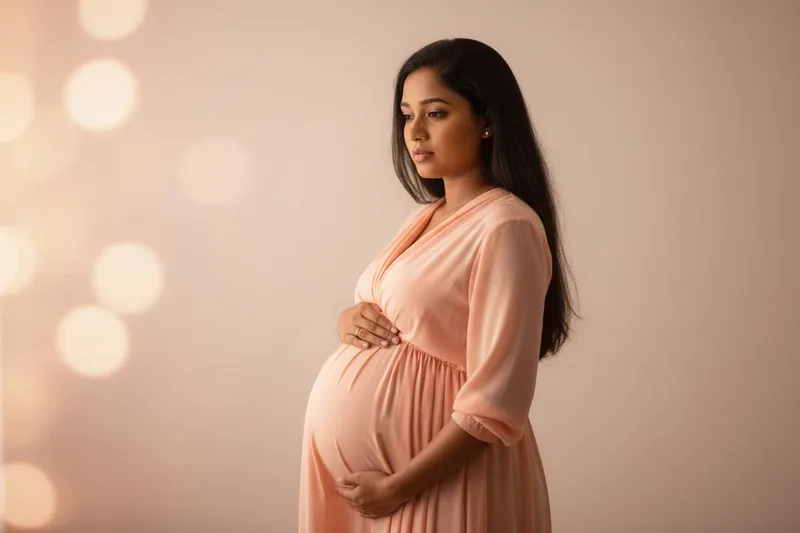
Often when we hear the term 'high-risk pregnancy' or 'high-risk pregnancy', we get a little scared, don't we? The fear that something bad will happen to me and the baby comes to mind. But what does this really mean? Let's talk about this simply, in a way that you can understand? Then you can eliminate the unnecessary fear you have about this.
What exactly is a "High-Risk Pregnancy"?
Simply put, a 'high-risk pregnancy' means that there is a slightly higher chance of a health problem for the mother, the baby, or both, or that the baby will be born prematurely . This doesn't mean that something bad will definitely happen, does it? It just means that we need to be a little more careful and follow medical advice exactly. In such cases, doctors and health care teams will pay special attention to you and your baby, and provide the necessary tests and advice.
Whose pregnancy can be "at risk"? Let's see what the reasons are.
Now let's look at the circumstances under which a pregnancy can fall into the 'risk' category. Not all of this applies to everyone, but if one or more of these factors are present, doctors will pay special attention to that pregnancy.
Does age affect? (Age Factor)
- "If you are 17 years old or younger , meaning you are still very young, your body may not be fully prepared for this. Also, due to your lack of life experience, you may not be able to follow nutrition and medical advice. Therefore, special care is taken with pregnancies at this age. At this age, there is a higher risk of things like pregnancy-induced hypertension and low birth weight."
- "The same goes for if you are 35 years old or older . We call this 'advanced maternal age'. With age, the chances of developing certain health problems (for example, high blood pressure, diabetes) increase. Also, the chances of the baby having certain genetic problems , for example, Down syndrome, may increase slightly with age. But this does not mean that having babies after 35 is not good. With the necessary medical supervision and proper screening tests, it can also be successful."
What was your body weight before pregnancy? (Pre-pregnancy Weight)
- "If you were underweight before you got pregnant, it means your body may not be getting enough nutrients. If that happens, it can affect the baby's development, and the baby may be born with low birth weight or be born prematurely."
- "Also, if you were overweight or obese before you got pregnant, that can also lead to some complications. For example, you are more likely to develop conditions like gestational diabetes, high blood pressure (gestational hypertension/preeclampsia), and blood clots. You are also more likely to need a cesarean section."
Is there more than one baby? (Multiple Pregnancy)
- "If you are carrying twins, triplets , or more babies, it is also considered a 'high-risk' pregnancy. This is because having more than one baby puts a lot of strain on the mother's body. The mother is more likely to develop anemia, high blood pressure, and gestational diabetes. The babies are also more likely to be born prematurely, have low birth weight, and have other complications. This is why multiple pregnancies require frequent medical checkups and ultrasound scans."
Do you already have any health problems? (Existing Health Conditions)
- "If you already have any health problems such as high blood pressure (High Blood Pressure / Hypertension) , diabetes (Diabetes Mellitus) , depression (Depression) , heart conditions, kidney disease, thyroid disorders, epilepsy, autoimmune diseases, these conditions can worsen during pregnancy and affect the baby. Therefore, it is very important for people with such diseases to seek medical advice before becoming pregnant. You may need to change your medications if they are not suitable for pregnancy."
- "For example, if a mother with diabetes does not control her blood sugar levels, the baby may become very large (macrosomia), the baby may have low blood sugar levels after birth (neonatal hypoglycemia), or the baby may have birth defects . Therefore, controlling blood sugar levels during pregnancy is very important."
Were there any problems in previous pregnancies? (Problems in Previous Pregnancies)
- "If you have had any problems with a previous pregnancy, for example, premature labor/delivery , recurrent miscarriages, ectopic pregnancy, placental problems, or a baby born with a genetic problem or birth defect , your next pregnancy may also be at risk. Therefore, doctors should be especially aware of this. Also, if you have had a previous cesarean section, you should inform your doctor about this."
Lifestyle Factors
- " Smoking , using illegal drugs , and drinking alcohol during pregnancy are very harmful to both the mother and the baby. These things can cause the baby to grow poorly, have low birth weight, be born prematurely, have an impact on intellectual development, cause various birth defects, and sometimes even lose the baby. Therefore, if you have such habits, it is best to completely quit them before getting pregnant. You should also stop these things completely after you find out you are pregnant."
What do I do if my pregnancy falls into the "high risk" category?
Okay, now you understand what a 'high-risk pregnancy' is and what causes it. You may be thinking, 'Oh, I have one or two of these things too, what do I do now?' Don't worry. The most important thing is to work with your doctor or healthcare team to manage any health problems that you can control.
Remember: 'risk' doesn't mean that something bad will definitely happen. It just means that we need to be a little more careful and cautious.
Your doctor will ask you to have special tests (like detailed anomaly scans, fetal echocardiography) and to come to the clinic more often than a normal pregnant woman. You may also need to see specialists (like perinatologists). All of this is to protect you and your baby. So it's very important to follow your doctor's instructions exactly. If you don't understand something or are worried, talk to your doctor about it.
Some more tips that are important for a healthy pregnancy (and especially a high-risk pregnancy)
Whether it's a high-risk pregnancy or a normal pregnancy, every mother hopes for a healthy baby. So let's remind ourselves of a few other important things that will help with that. These become even more important in a 'high-risk' situation.
- Seek medical advice from the beginning (Early and Regular Prenatal Care)
- "As soon as you find out you're pregnant, see a doctor as soon as possible and start prenatal care . Go to the clinics on the scheduled dates as your doctor tells you. Only then can your and your baby's health be monitored and any necessary advice and medication be given. This will help you identify and treat any problems quickly."
- Good nutrition, a healthy diet
- "You need to be very careful about the food you eat during this time. Get used to a nutritious diet like fruits, vegetables, legumes, whole grains, lean meats, fish, milk, yogurt, and eggs . Reduce sweets, oily foods, processed foods, and fast foods as much as possible. If your doctor has given you supplements like iron, calcium, and folic acid, take them exactly as prescribed. Don't forget to drink plenty of water (at least 8-10 glasses a day)."
- "Imagine, your baby grows inside the womb from the nutrition you give it. So if you eat good things, the baby will also get good nutrition."
- Exercise, but only as directed by a doctor (Exercise if Approved)
- "If the doctor says 'it's fine', it's very good to do light exercises that are suitable for you. You can do things like walking, yoga exercises that are suitable for pregnant women, and swimming. But, ask your doctor what kind of exercise is suitable for you and how long you should do it. Never exercise until you are tired, exhausted, or in pain. "
- Healthy Weight Gain
- "It's normal to gain weight during pregnancy. However, it's not good to gain too much weight or to be too underweight. Your doctor will tell you how much weight you should gain based on your pre-pregnancy body mass index (BMI). Try to maintain that amount."
- Protect from Infections
- "It is very important to protect yourself from various infections during this time. Because some infections can also affect the baby."
- " Always wash your hands thoroughly with soap. Especially before eating and after using the toilet."
- " Do not eat things like raw meat, raw fish, raw eggs, unpasteurized cheese, and milk. Eat only well-cooked foods."
- "Get the immunizations your doctor recommends. For example, tetanus vaccine, influenza vaccine."
- "Be aware of mosquito-borne diseases like Zika virus and dengue. Protect yourself from mosquitoes."
- "To avoid infections like toxoplasmosis, avoid touching cat feces, and wear gloves when doing yard work."
- Safe Sex
- "If you don't know your partner's sexual history, or if you suspect that he or she may have a sexually transmitted disease (STD) such as HIV, herpes, or syphilis, don't have unprotected sex and use a condom. Because if you have an infection, it can be transmitted to the baby, which can have dangerous consequences. Talk to your doctor about this openly."
- Reduce Stress
- "It's normal to feel a little anxious and sad during pregnancy due to hormonal changes. However, try to reduce stress as much as possible and stay relaxed. Listen to your favorite song, read a book, engage in light meditation, do deep breathing exercises, and talk about what's on your mind with a trusted person. If necessary, seek advice from a mental health professional. Your mental well-being is very important for the healthy development of your baby."
Finally, things to remember (Take-Home Message)
Okay, so I hope you now have a better understanding of what a 'High-Risk Pregnancy' is. The most important thing to remember is, don't be afraid of the word 'high-risk'. It just means that you and your baby need special care and attention.
- Your doctor is your best friend. Listen to what he or she says and follow it. If you have any questions or doubts, don't be afraid to ask. Go to every clinic regularly.
- Adopt a healthy lifestyle. Good food, exercise with medical approval if necessary, adequate sleep, and mental happiness are all very important.
- Completely break free from harmful habits. Stay away from smoking, alcohol, and drugs.
- You are not alone. Your family, husband, friends, and healthcare workers are there to help and support you.
Like every mother, we sincerely wish you a healthy, happy baby!
` Pregnancy, High-Risk Pregnancy, Prenatal Care, Healthy Pregnancy, Baby's Health, Mother's Health


💬 Comments (0)
No comments yet. Be the first to share your thoughts here.
Add Your Comment