

Sometimes you may have seen a small child, or perhaps your own, suddenly have a red, itchy rash on their skin. It's normal to feel a little scared when you see this unexpected phenomenon. But don't worry, this is what we call 'Urticaria' or more commonly 'Hives'. Let's learn a little more about it today.
Do you know what these hives are?
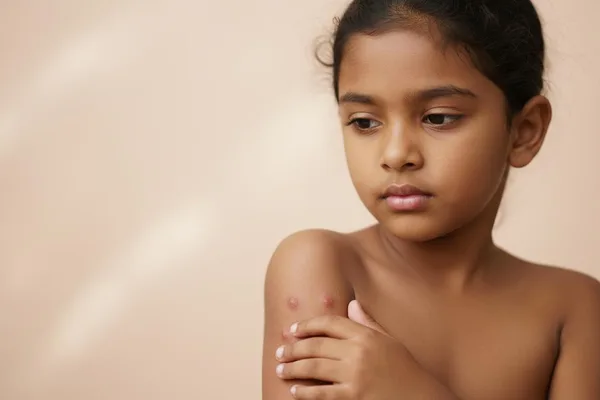
Simply put, hives are red, raised bumps on the skin. Sometimes they look like small dots, sometimes they look like large spots, and sometimes they can coalesce into one big patch. The amazing thing is that these bumps can appear anywhere on the body.
These hives can usually last from a few hours to a few days, sometimes even a week. As the old hives fade, new hives may appear. If these hives last less than 6 weeks, we call them 'Acute Hives'. That is, the kind that gets better after a while. But for some people, these hives can continue for more than 6 weeks. That is what is called 'Chronic Hives'. That is, a longer-lasting, bothersome condition.
Why does this happen? What are the causes of hives (Urticaria)?
Now you're probably wondering, 'Why on earth do these rashes suddenly appear?' What actually happens is this. There are special cells in our blood called 'Mast Cells'. These cells release a chemical called 'Histamine'. It is because of that histamine that fluid leaks from the tiny blood vessels under the skin, collects on the skin, and forms those rashes and large spots we mentioned.
There can be a variety of reasons for the release of histamine in this way. However, sometimes the exact cause cannot be found, and that should also be kept in mind.
Harm caused by allergies
Most of the time, hives are caused by an allergy. This means that these rashes can appear within minutes of coming into contact with something that is not good for the body. Here are some things that can cause allergies and rashes:
- Food and drink: Especially seafood (like shrimp, crab, squid), peanuts and other tree nuts, milk, some fruits. Imagine your friend's child ate some peanuts at a party and soon after broke out in red rashes all over his body. That's it.
- Medications: Some medications, such as antibiotics, and some allergy shots can also cause it.
- Animals: From pets like cats and dogs, or from other animals.
- Pollen from flowers: During the flowering season, these can float in the wind and cause allergies.
- Insect bites: Insects such as mosquitoes, gnats, and wasps.
Other causes that can cause harm without allergies
These rashes are not always caused by allergies. There are other causes as well:
- Infections: Due to other infections, including some viral infections.
- Exercise: Some people get it even after sweating profusely and exercising.
- Stress and Anxiety: These can occur when an exam is approaching or when you are feeling a lot of pressure.
- Sun exposure: Even the strongest sun can be harmful to some people.
- Cold exposure: Touching cold things like ice water or snow, or being in a cold environment.
- Contact with chemicals.
- Scratching: Some people develop lesions along the path of scratching their skin. This is also called dermatographia.
- Putting pressure on the skin: Like sitting in the same position for a long time, or carrying a heavy bag on your shoulders.
We also call hives caused by physical causes (such as cold, sun, and pressure) 'physical hives'.
It is sometimes very difficult to find the cause of the 'chronic urticaria' or persistent hives that we mentioned earlier. But sometimes it can be related to some weakness in the immune system, for example, with a disease like 'Lupus'. Also, these long-term hives can come from certain medications, foods, insects, infections, etc. But most of the time, even doctors are unable to find the exact cause of these chronic hives.
What symptoms do you see when you have this disease on your body?
The main characteristic of hives is the appearance of red, itchy welts. These welts can look like this:
- The middle part may be pale.
- They can come in clusters in one place.
- The shape and location can change within a few hours. That means it's not where it was in the morning but where it is in the evening.
- It can be as small as a tiny dot, or as large as a large plate.
- It itches a lot, and sometimes there can be a burning, stinging pain.
Some people may also develop a condition called 'angioedema' along with these symptoms. This can cause swelling around the eyes, lips, hands, legs, genitals, or throat. Sometimes the entire body may become red and blister like. Not only that, but symptoms such as nausea, vomiting, and stomach cramps can sometimes accompany this.
The most important thing is that, although very rarely, hives and angioedema can be accompanied by a severe allergic reaction called 'anaphylactic shock'. This is very dangerous. It can cause breathing difficulties, a sudden drop in blood pressure, dizziness, and loss of consciousness. If you experience these symptoms, you should be hospitalized immediately.
How does a doctor diagnose this? (Diagnosis)
Most of the time, a doctor can diagnose hives just by looking at your child's skin. But to find the cause, the doctor will ask you about your child's medical history, recent illnesses, medications, exposure to allergens, and daily stress .
If your child has chronic hives, the doctor will tell you to keep a daily diary of what your child does, what they eat, and where they get hives most often. This is called a daily record. This can help you find the cause.
In addition, some tests may be done to find the exact cause of the hives. For example , blood tests, allergy tests, and tests to check for other medical conditions that can cause hives (e.g., thyroid disease, hepatitis) .
Doctors also perform special tests to check for the 'physical hives' we talked about earlier. For example, they place an ice cube on the child's skin to see if they react to the cold. Or they place something heavy, like a sandbag, on their legs to see if the pressure causes any pain.
What can be done to treat this condition? (Treatment)
Most of the time, hives that are not serious and have just come on suddenly do not require any special treatment and will get better on their own. However, if the exact cause is found, avoiding it is the main part of the treatment. Think of it like if you get sick after eating peanuts, you would avoid eating peanuts again.
If you are itching a lot because of hives, your doctor may prescribe an antihistamine. These medications work by stopping the release of histamine into the blood, which we mentioned earlier, and controlling the itching.
For persistent hives, your doctor may prescribe a non-sedating, over-the-counter, or prescription antihistamine to take every day. However, not all medications work for everyone. So it's important to talk to your doctor to find the right medication for your child.
If a non-drowsy antihistamine doesn't help, your doctor may prescribe a stronger antihistamine, another medication, or a combination of medications. Very rarely, a doctor may prescribe a steroid pill or liquid to treat chronic hives. But this is usually only for a very short period of time (about 5 days to 2 weeks). This is to avoid the side effects that steroids can cause.
What to do in case of emergency? (In Case of Emergency)
Anaphylactic shock, a severe allergic reaction that causes hives or angioedema, is rare. However, if it does occur, immediate medical attention is essential.
Doctors advise children with severe allergies to always carry an injectable shot called epinephrine. If your child is at risk of a severe allergic reaction, your doctor will teach you and your child how to safely administer the shot in an emergency.
So, let's remember what we talked about? (Take-Home Message)
Okay, so let's review the most important facts about 'Urticaria' or hives that we talked about today, shall we?
- Hives are red, itchy, raised bumps on the skin. They are very common.
- Most of the time, these are caused by an allergy, but there can be other reasons as well.
- If possible, it is best to identify and avoid triggers for these symptoms.
- There are antihistamine medications to reduce itching.
- Some hives will go away on their own, but if they persist (chronic hives), you should see a doctor and get proper treatment.
- > If you experience severe symptoms such as difficulty breathing, swelling of the throat, or dizziness, it is an emergency. Go to the hospital immediately.
- Don't worry, there are good treatments for this condition. The most important thing is to talk to your doctor and get the right advice.
` Hives, Urticaria, Skin diseases, Allergies, Children's diseases, Histamine




💬 Comments (0)
No comments yet. Be the first to share your thoughts here.
Add Your Comment