
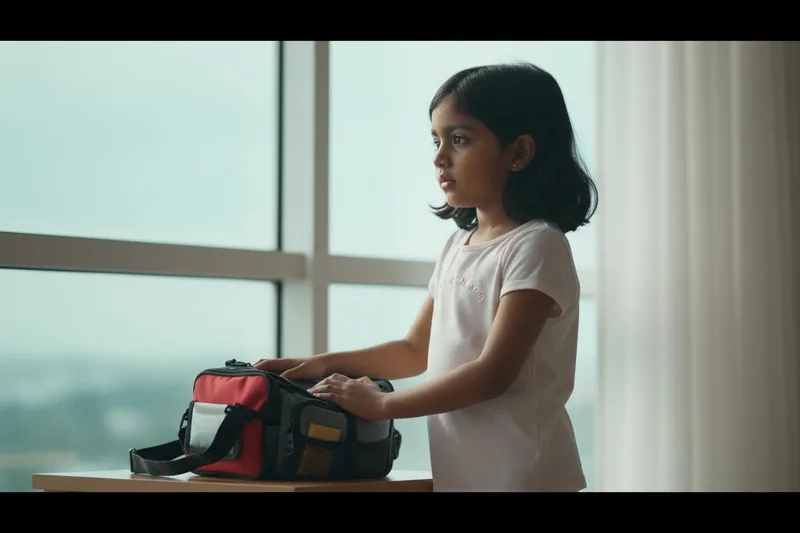
You know, unlike some storms, when this hurricane comes, we have a little time to prepare. That is, it is not something that will suddenly break and fall. But when you think for days about 'Will it come our way? Or not?', you and your family can feel a little pressure and fear, right? That is normal. But don't worry! If we prepare in advance, especially if we include the little ones in the house in this work, we will feel a lot of control, relief, and unnecessary fear will be greatly reduced. So, let's see how we can prepare to face this?
How to prepare your family for a hurricane?
The first thing to do is to tell the little ones at home what is going on, what we are going to do, clearly and in a way that they can understand. Let them understand that we are doing these things not to panic, but to prepare . Ask them the questions they have in their minds, and answer them simply. Speak in a way that does not scare them, but in a way that makes them believe that they can be a part of this too.
Let's prepare emergency kits!
Next, we need to prepare two emergency kits. Think about it, one to use when you're at home, and the other to take with you in case you have to leave the house in an emergency.
- Stay-at-home kit: This includes a battery-operated weather radio – because we need to know the details if the power goes out. Bottles of clean water (at least 3-4 liters per person per day), canned food ( well-packaged , not expired), a flashlight and extra batteries, and a power bank to charge your phone (battery-powered phone chargers).
- To-go kit: This includes some of the items mentioned above, as well as a few changes of clothes, important documents (copies of ID cards, bank books, etc., in a waterproof bag), some money, and personal hygiene items.
The Red Cross website has complete lists of what to include in such kits, which you can also view.
If you are a family with infants, you should also think about a way to heat formula, diapers, bottles, and water. Also, some children may have special medical conditions. For example, if you have a child with conditions like asthma, diabetes, or who uses an electric ventilator, it is very important to ask your family doctor and prepare in advance the necessary medications, equipment, and extra batteries for them.
Get the little ones involved in collecting these items and going to the store. When they are given a responsibility, it doesn't seem like such a big deal to them. Think ahead. Because when you hear that a storm is coming, stores can quickly run out of things like water bottles and torches. Don't forget, if you have pets at home, prepare food, drink, and other necessities for them too.
Be sure to keep a first aid kit.
The next most important thing is to keep a first-aid kit at home. Whether it's a minor injury or something major, this can help save a life if it's too late to see a doctor. Get the little ones involved and check to see if the medicines, plasters, bandages, etc. in it are in good condition and have not expired.
Remember, after a storm, even if you call emergency services like 911, they may be busy, and the roads may be blocked, delaying their arrival. So, if possible, take a first aid or CPR (cardiopulmonary resuscitation) class with your young child. Some institutions also offer these online.
Get your phone ready too.
These days, everyone has a phone. So, the phone can be our best friend in times like these.
- As soon as you know a storm is coming , keep your phone and power bank well charged.
- When you install a weather app on your phone, you can instantly find out details such as where the storm is and which direction it is heading.
- Also, save the emergency phone numbers of institutions like the Electricity Board, Water Supply Board, and the numbers of the Grama Niladhari and police in your area in your phone. Because sometimes phone services can be down.
Consider telehealth as well.
Another thing is that it can be a little difficult to get to a doctor after a storm. Roads may be flooded and traffic may be disrupted. So, check ahead of time to see if there are telehealth services in your area, which means you can talk to a doctor over the phone or via video call. You may even be able to download an app on your phone to use it.
Protect your home and garden
Next, we need to take steps to protect our home and garden.
- If the little ones are a little older, get them together and go around the house to check that the doors and windows are properly closed and locked. If possible, put boards on the large windows.
- Bring items in the garden that can be blown away by the wind, such as bicycles, toys, plastic chairs, tables, and flower pots, indoors or tie them up tightly.
- If there are any dead branches on the large trees in the garden, remove them as much as possible.
Remember, the biggest dangers are caused by things like this being blown away by the wind during a storm.
Look at the people below.
We need to think not only about ourselves, but also about those around us at this time. Perhaps the elderly, those living alone, or families with young children may need your help. If you can help them prepare the necessary supplies or do something to protect their homes, that would be a great thing. Teach the young children in your home to help with these things as well.
Talk about a place to meet.
Finally, but most importantly, the whole family should come together and decide on a place where everyone can meet in case someone gets lost, either during or after the storm. It could be a well-known place like a neighbor's house, a nearby temple, church, or temple. Everyone should have a clear understanding of that place.
How to reduce a child's fear during a hurricane?
When things like heavy rain, strong winds, and lightning strike, especially hurricanes, come, it can be hard for little ones to handle. They can get very scared and anxious. So, how can you help them calm down by reducing the stress and fear they have?
- The most important thing is to stay calm and courageous. If you are nervous or scared, your children will be even more scared.
- Talk to them about the storm and what it can do (without being scary) in a way they can understand. Say things like, 'This will be over soon, and nothing will happen to us because we're all together.'
- Ask them the questions they have in mind and answer them patiently. Don't say things like, 'Don't ask stupid questions.'
- Hug them often and make them feel like you're with them.
- As we talked about earlier, involving them in the preparation process gives them a sense of control, which can be a big help in reducing fear.
- Do things that can distract them during the storm. We'll talk about that next.
What can little ones do if the lights go out during a storm?
The main problem that comes with a hurricane is the power outage. You may be without power for hours, even days. In such a situation, there are fun things that children can do to keep themselves busy at home. Imagine, you can let them do things like this until the power comes back:
- Read books by the light of a battery torch.
- Get the whole family together and play board games or card games.
- Make jigsaw puzzles. There are ones suitable for different age groups.
- Draw and color. Prepare things like crayons and watercolors in advance.
- For older children, you can let them do simple crafts. For example, practice sewing a design they like on an old T-shirt, or make origami, which involves folding paper into animals and flowers .
- There are games that don't require any fancy equipment. Hang a torch on the wall and play shadow puppets, charades, and 20 questions .
- Have fun with a little exercise, have a family dance-off. If your phone is charged, you can put on a little song and dance.
- To reduce fear and stress , everyone should do breathing exercises together. Breathing in and out slowly can help you feel a sense of relief.
What else do we need to know?
Getting the whole family, especially the children, involved in preparing for this storm can be a huge help to everyone. However, even after doing so, sometimes the little ones can still be scared and nervous about it. That's normal. The most important thing is to keep talking to them about it, listening to what's on their mind, and comforting them.
Even after the storm is over, the problems don't end. Your home and the surrounding environment may be damaged. The water may not be clean. There may be a risk of disease transmission. It is very important to follow the health advice issued by recognized organizations such as the Centers for Disease Control and Prevention (CDC) in the United States on how to stay safe and what to do. That information can be found online.
Final Take-Home Message
Okay, so I think you now have a good idea of how we should prepare to face a hurricane without panicking when it's said to be coming.
Simply put, a hurricane is not something to be afraid of if you are properly prepared.
The most important things to remember are:
- Plan ahead: Make a list of things you need and gather them.
- Make two emergency kits: one for home, and one for when you have to go out.
- Involve everyone in the family: Assign responsibilities, especially to the little ones, and make them understand.
- Allay children's fears: Talk to them, reassure them of their safety.
- Prepare what to do if the power goes out: Find ways to keep the little ones entertained.
- Be aware of safety measures: Ensure safety before and after the storm.
- Help your neighbors too.
The most important thing is to stay calm. When you act courageously and thoughtfully, the rest of your family will follow suit. So, follow these tips and stay safe! May the three of you and your family be blessed!
` Hurricane, family preparedness, emergency kit, children's fears, safety, first aid, storm preparedness, power outage


💬 Comments (0)
No comments yet. Be the first to share your thoughts here.
Add Your Comment