

Iron is an essential nutrient for our bodies. Iron is a very important nutrient, especially for the growth and health of a young child. So, today we will talk about this iron, how important it is for our children, how much we need, what happens if we don't get enough, and how to provide it properly.
What exactly is this iron?
Simply put, iron is a mineral found in our bodies, as well as in some of the foods we eat and plants. Although our bodies need it in very small amounts, the work it does is huge. Have you heard of red blood cells? Those red blood cells contain a special protein, which we call ``hemoglobin`` .
The main job of this `(Hemoglobin)` is to capture the oxygen that comes into the lungs when we breathe and carry it to every other cell and tissue in the body. Think of it like a truck that delivers oxygen. So, this `(Hemoglobin)` truck is given the power to 'pick up' oxygen, and the iron that we mentioned helps it 'bind' is what we call iron. Without iron, `(Hemoglobin)` cannot carry oxygen properly.
Now you understand how important iron is? If the body does not have enough iron, the body cannot properly produce `(Hemoglobin).` Then the number of red blood cells also decreases. The result? The tissues and organs in our body do not receive the required amount of oxygen. This is like a plant lacking water. Getting this oxygen properly is essential for the development of a young child's brain, learning ability, and activity.
We usually get iron from foods like meat, fish, and dark green vegetables. Some foods, such as infant formula and cereals, also have iron added to them, which is called fortified.
How much iron do our little ones need?
Now you may be wondering, 'How much iron does my child need per day?' It actually varies with the child's age. Let's see how that works.
From birth to about 6 months
Usually, for babies who are exclusively breastfed, the iron they get from their mothers is sufficient for the first 4 to 6 months. This is because the baby stores a certain amount of iron while still in the womb. But after that, that is, after about 6 months, doctors recommend that you start giving them iron-rich foods, such as fortified cereals and well-cooked meats. Sometimes, if a breastfed baby doesn't have enough iron, the doctor will tell you to give them iron drops. However, babies who are fed iron-fortified formula don't need to be given iron.
For babies from 7 months to 1 year (12 months)
A baby this age needs about 11 milligrams of iron per day. Since they are starting to eat complementary foods at this time, it is important to include iron-rich foods in their diet.
For toddlers from 1 to 3 years old
These little guys only need about 7 milligrams of iron a day. At this age, they can be a bit reluctant to eat, so it can be a bit of a challenge for mothers to prepare meals that provide them with iron.
For children aged 4 to 8 years
They need 10 milligrams a day. Because they are school-age, this amount of iron is essential for them to stay active.
For children aged 9 to 13 years
For people of this age , 8 milligrams per day is sufficient.
For teenagers
It's a little different here.
- A young male child needs 11 milligrams of iron per day.
- But a young girl needs about 15 milligrams a day. The reason for this is that they are growing very fast during this time. Also, when girls start menstruating, some iron is released from the body through this process, so they need extra iron to compensate for that loss. This is very important, and as parents, we need to be careful about this.
Those who need to pay more special attention
- Young children who play sports: Children who regularly engage in strenuous exercise and play sports may lose more iron from their bodies through sweat and other means than the average person. So they may need extra iron.
- Vegetarians: Since they don't eat meat or fish, they also need to think about their iron needs. This is because iron from animal foods is more easily absorbed by the body than iron from plant foods. We'll talk about that later.
What happens if you don't have enough iron? (Iron Deficiency)
Okay, now we know how much iron we need. So, what happens if the body doesn't get enough iron? That's what we call iron deficiency . This is a condition that can occur in some children, especially toddlers between the ages of 1-3 and young children (especially girls who bleed heavily during their menstrual periods).
In fact, some young girls, even if their menstrual cycle is normal, are at risk of developing iron deficiency if the amount of iron they consume from their diet is not enough to replace the amount of iron lost through menstrual bleeding. Therefore, it is very important to take care of that as well.
After a year, that is, after 12 months, when little ones stop drinking iron-fortified formula, it can sometimes be insufficient to get the amount of iron they need from the other foods they eat. Imagine, if your little one suddenly stopped drinking the formula they were drinking before, it might be difficult for him to get the amount of iron he needed from food alone, right? That's when iron deficiency tends to occur.
Iron deficiency is not a simple thing. It can affect a child's growth. It can also lead to learning disabilities, memory loss, difficulty concentrating, and behavioral changes (e.g., frequent irritability, restlessness). If this iron deficiency continues, it can turn into a condition called iron-deficiency anemia . Simply put, it means that the number of red blood cells in the body decreases, and the ability to carry oxygen to the body is impaired. Then the child may feel tired all the time, become pale, have difficulty breathing, get sick often, and show symptoms such as a fast heartbeat.
What should I do to ensure my child gets the right amount of iron?
This is the most important question. It is important to make our children understand that iron is an essential part of a healthy diet. Let's take a look at some foods that are rich in iron.
Foods rich in iron:
- Meats: beef, pork, goat, chicken (especially dark meat and liver are high in iron)
- Seafood: fish (especially mackerel and halibut), shrimp, squid, crab
- Tofu: Made from soybeans, this is a good source of iron for vegetarians.
- Dry nuts (grains): lentils, chickpeas, green beans, peas, soybeans
- Nuts and seeds: peanuts, cashews, almonds, pumpkin seeds, sesame seeds
- Dried fruits: prunes, dates, dried apricots
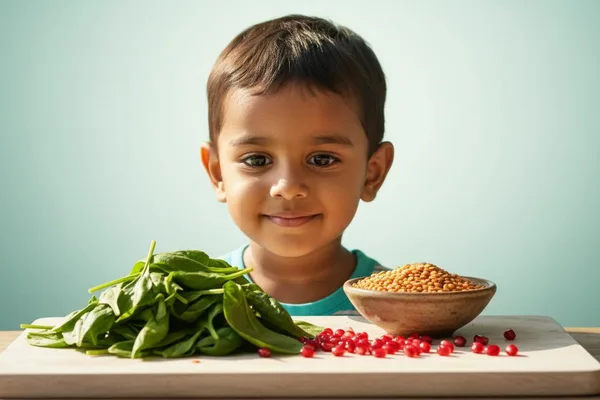
- Dark green vegetables: spinach, gotukola, kankun, mukunuwenna, sarana, tampala
- Foods with added iron: Iron-fortified breakfast cereals, breads, some types of pasta
(Remember one thing here: Iron from animal foods, i.e. meat and fish (also called `heme iron`), is more easily absorbed by our bodies than iron from plant foods, i.e. vegetables, fruits, and nuts (`non-heme iron`). That's why you need to think about it a little when giving iron to a vegetarian child. But don't worry, there are ways to increase the absorption of plant-based iron.)
Things that help the body absorb iron better:
Okay, now let's see what else we can do to make sure children get the right amount of iron:
- Limit the amount of milk toddlers drink: It's best to limit milk to 16–24 fluid ounces (473–710 milliliters) per day. If they fill their stomachs with milk, they may eat less of other iron-rich foods. Also, the calcium in milk can interfere with the body's ability to absorb iron.
- Continue to give iron-fortified infant cereals: It is best to give these until your child is around 18-24 months old, as advised by your doctor.
- When giving iron-rich foods, give them foods with vitamin C: For example, when giving iron-rich foods, add a little lime to them, or add something rich in vitamin C to the food, such as oranges, tangerines, guava, strawberries, papaya, tomatoes, broccoli, and bell peppers. Because vitamin C is something that increases and helps the body absorb plant-based iron. Think of it as giving a little 'boost' to iron absorption.
- Avoid giving coffee and tea with meals: Both of these contain a chemical called `tannins` . These `tannins` reduce the absorption of iron by the body. So, giving these close to mealtimes (an hour before or after a meal) is not a good idea, especially for young children.
So, here are some things to remember from what we've talked about!
Okay, we've talked a lot about iron, haven't we? I think you have a good understanding of it now. Finally, it's important to keep these things in mind:
- Iron is essential for our children's growth, health, and brain function. It is used to make hemoglobin, which helps carry oxygen throughout the body.
- The amount of iron needed varies depending on the age of the child. Be careful about that. Pay special attention to young girls, children who play sports, and vegetarian children.
- Iron deficiency and iron-deficiency anemia are conditions that can affect a child's life. Therefore, if your child is pale, seems tired all the time, has a loss of appetite, or is having difficulty learning, see a doctor for advice.
- Include iron-rich foods (meat, fish, dark green vegetables, nuts, iron-fortified foods) in your child's daily diet. Provide a varied and balanced diet.
- Give iron with food that contains vitamin C to help the body absorb it better. Reduce the amount of coffee and tea you give close to mealtimes.
- If you have any doubts, if you think your child may be iron deficient, the best thing to do is to talk to a doctor. Then, if necessary, they can do tests and advise you on exactly what to do. The doctor may also prescribe iron supplements.
Our children's health is the most precious thing we have. So, let's all try to build a healthy, happy future for them by being aware of these little things related to nutrition!
` Iron, child nutrition, iron deficiency, anemia, vitamin C, balanced diet, (Iron)




💬 Comments (0)
No comments yet. Be the first to share your thoughts here.
Add Your Comment