
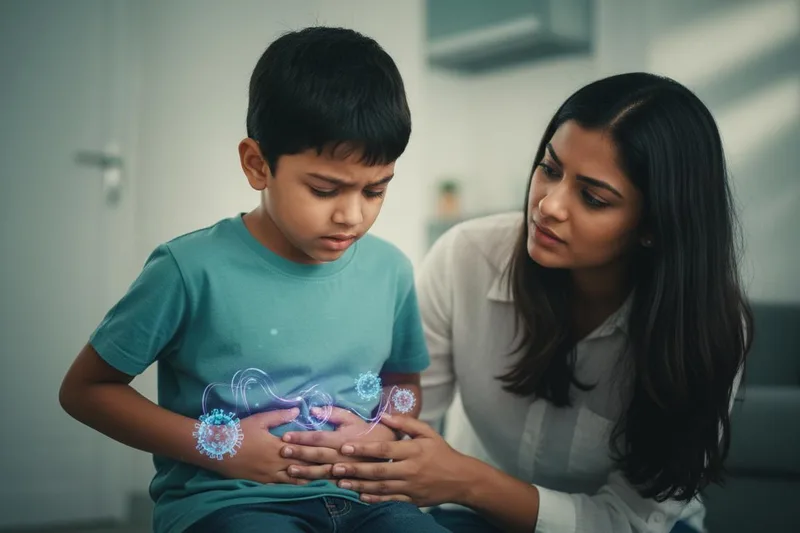
Today we are going to talk about a slightly unpleasant, but very contagious illness that many people get, especially young children. You may also call it "the stomach virus" or "the vomiting and diarrhea disease." In medical terms, we call it Norovirus. It is not really related to the flu or cold, but it is something that can spread very quickly among family members and children at school.
So what is this Norovirus?
Simply put, Norovirus is a virus that infects our intestines. This is what causes vomiting and diarrhea . Some people also call it the "stomach flu" or the "stomach bug." But remember, this is not really related to the "flu" we know, that is, the influenza virus. It is a separate virus.
What are the symptoms of Norovirus?
Symptoms usually begin to appear within a day or two after the virus enters the body. You may experience things like:
- Nausea and vomiting: This is one of the main symptoms. You may suddenly feel nauseous and start vomiting.
- Watery diarrhea: Watery diarrhea accompanied by abdominal pain.
- Stomach ache: Feeling a pain or discomfort in the stomach.
In addition to these main symptoms, some people may also experience:
- I have a fever.
- Feeling cold (chills)
- Headache
- Body aches, muscle aches
But the strange thing is, sometimes people who are infected with this Norovirus may not show any symptoms . But they can still spread the virus to others. That's why this is a disease that you need to be very careful about.
Especially in a young child, if vomiting and diarrhea continue like this, water and salts can be lost from the body, leading to dehydration . They may feel dizzy and lightheaded. These symptoms may be more severe in children with other health problems.
Does this spread very quickly?
Yes, absolutely! Norovirus is a virus that spreads very quickly and easily from person to person. Sometimes you can spread the virus even before you start feeling sick. Surprisingly, you can still spread the virus to others for weeks after you've recovered.
Anyone can get it. It is especially likely to spread in crowded places . For example:
- Childcare centers
- Schools
- Cruise ships – You've probably heard that many people get sick on cruise ships. Most of the time, it's the Norovirus.
Imagine, this virus is in the feces and vomit of an infected person. After someone goes to the toilet without washing their hands properly, or after changing a small child's diaper, the virus can be transferred from their hands to other objects and surfaces. Small children can get the disease if they touch a toy or other surface that has been contaminated with the virus and then put those fingers in their mouths.
Also, if you eat or drink food that has the virus (we also call it food poisoning) , or if you are near someone who is sick when they vomit, those virus particles can also be inhaled into the air. This is a very subtle way of spreading.
How does the doctor recognize this?
Most of the time, doctors will determine whether you have a Norovirus infection based on your symptoms . Special testing is usually not necessary.
However, if a child's symptoms are very severe , or if other complications are suspected, the doctor may order a blood, poop, or pee test.
What is the treatment for this?
You may find this comforting: Most norovirus infections get better on their own within a few days. Here are some things you can do at home until your child is better:
- Get plenty of rest: Not overexerting your body will help it heal faster.
- Give plenty of water and fluids: You need to replace the water lost from vomiting and diarrhea. The best way to do this is to give an Oral Rehydration Solution (ORS) . You know the ones like "Jeevani". You can buy these from pharmacies and supermarkets. These ``ORS`` contain the amount of water, sugar, and salts a child needs. In addition, you can also give frozen electrolyte pops or things like soup.
- Do not give any medicine that has not been prescribed by a doctor. Especially remember, since this is a virus , antibiotics will not help. Antibiotics only work on bacteria.
- Wash your child's hands thoroughly with soap and water regularly: This can prevent the virus from spreading to other family members and to the child himself.
- Once the vomiting stops, start feeding your baby small amounts of food: If he or she is not vomiting, you can feed him or her normally if he or she wants to. But don't feed him or her a lot at once. It takes a while for the appetite to return. Unless feeding milk increases vomiting or diarrhea, there is no need to stop feeding him or her. However, it is better to stop eating oily and fried foods for a few days.
How long will this illness last?
Symptoms of a Norovirus infection usually last for two to three days , then gradually subside.
Most importantly, a child with a Norovirus infection should not be sent to school or daycare until the vomiting and diarrhea have stopped completely for 24 hours. Also, it is not a good idea to send them to swimming pools until they are completely recovered. If they are a small child who wears diapers, they should be kept away from swimming pools until the diarrhea has stopped completely for 7 days.
Can't we survive this?
To be honest, it is impossible to completely prevent the spread of Norovirus. Also, there is no vaccine for it yet.
However, if someone in your household gets sick, you can take these steps to protect other family members:
- Wash your hands thoroughly with soap and water for at least 20 seconds before and after caring for someone who is sick, and after cleaning them. Alcohol-based hand sanitizers do not kill the virus. So soap and water are best.
- Wear rubber gloves and a face mask when cleaning up vomit or feces.
- Wipe down dirty surfaces and around the toilet with a diluted bleach solution ( for example, 5 tablespoons of bleach per gallon of water). Let the bleach sit on the surface for at least 10 minutes before wiping it off. (Remember, bleach can discolor colored items.)
- Wash dirty clothes like this:
- Use the longest cycle and hot water on the washing machine.
- Use the highest heat setting on the dryer.
If these steps are followed correctly, the spread of the virus to others in the household can be greatly reduced.
When should I see a doctor?
Most of the time, symptoms will subside within a few days. However, you should definitely see a doctor if:
- If the child has not drunk anything for several hours.
- If you are showing signs of dehydration , this means:
- If your mouth feels dry.
- If you cry and only shed very few tears.
- If you urinate less than three times a day, or if your diaper is not wet for 4-6 hours.
- If diarrhea or vomiting still occurs after a few days.
- If you get a high fever.
- If you have blood in your vomit, blood in your diarrhea, or severe stomach pain.
In cases like this, it is best to seek medical advice immediately.
So, what are the most important things we need to remember?
Okay, so, the main points we need to remember from what we've talked about are these:
- Norovirus is a highly contagious virus that causes vomiting and diarrhea .
- The best way to avoid this is to wash your hands thoroughly with soap and water regularly, especially after using the toilet, before preparing food, before eating, and after caring for someone who is sick.
- It is very important to drink plenty of water and fluids when you are sick. You need to take care not to become dehydrated.
- Although the illness usually improves within a few days, if certain dangerous symptoms appear, you should see a doctor immediately .
- Do not send a sick child to school until 24 hours after symptoms have completely resolved.
If you take care of these things, you and your family will be able to greatly reduce the discomfort caused by this Norovirus. Stay safe everyone!
` Norovirus, vomiting, diarrhea, stomach virus, infectious diseases, dehydration, pediatric diseases, health


💬 Comments (0)
No comments yet. Be the first to share your thoughts here.
Add Your Comment