
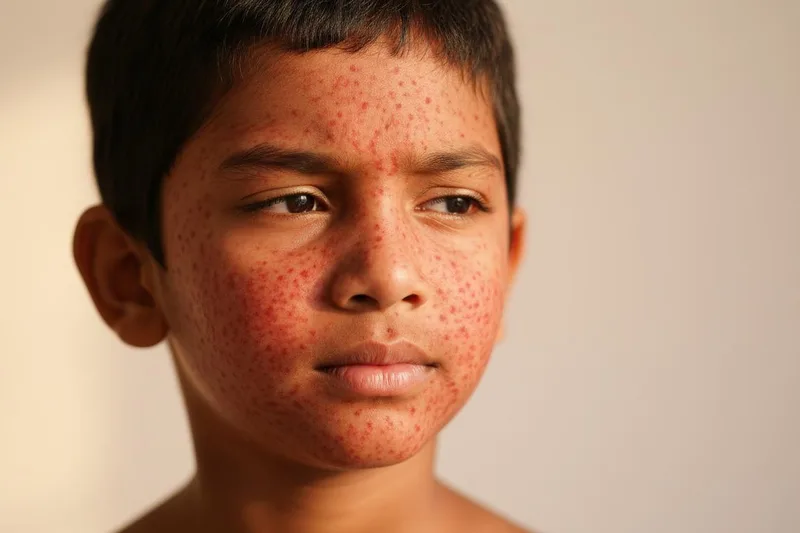
Has your child suddenly developed a fever and a sore throat? Has he developed a red, blister-like rash all over his body? Sometimes this could be Scarlet Fever. Don't worry, that's what we're going to talk about today. This is a condition that usually affects children between the ages of 5 and 15.
What is Scarlet Fever? Quite simply...
Simply put, Scarlet Fever is a condition caused by a bacterial infection. It is caused by a type of bacteria called Group A Streptococcus . You may have heard of this bacteria because it is the same bacteria that causes strep throat. So, when this bacteria enters the body, it produces a toxin that causes that distinctive red rash. This rash is why the disease is called Scarlet Fever. Some people also call it Scarlatina .
Scarlet fever often occurs when a child has a strep throat infection, or sometimes a strep skin infection.
What are the symptoms of this disease? Let's take a closer look.
The main and most characteristic feature of Scarlet Fever is the red rash . Let's learn a little more about this:
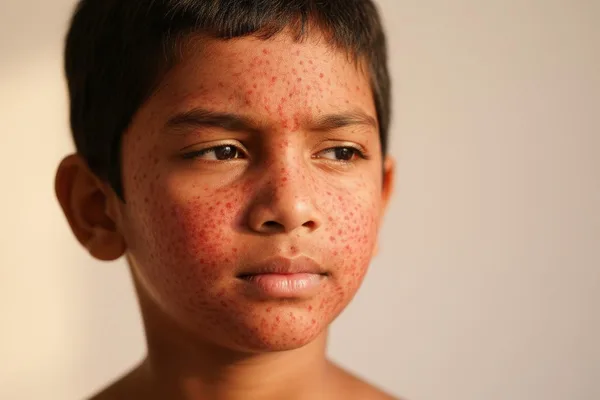
- Appearance and nature: This rash looks like a sunburn. However, it also appears as small blisters on the skin surface, and feels rough like sandpaper when touched. Some children may even scratch it a little.
- Where it starts and spreads: This rash usually starts on the neck, face, or chest. It then gradually spreads to other parts of the body, such as the stomach, arms, and legs.
- Facial appearance: Although the face appears red, the area around the mouth is pale and clearly visible . This is also a special feature of this disease.
- Lines in body folds: This rash can appear as dark red, lines (Pastia's lines) in areas where the body folds, such as the armpits, inside the elbows, and groin.
- When the rash goes away: The rash usually goes away after about a week. However, after that, the skin in the areas where the rash was, especially on the palms and soles, starts to peel . This can last for several weeks.
In addition to this rash, several other symptoms may be seen:
- Very high fever: A sudden, intense heat wave, possibly reaching 101°F (38.3°C) or higher.
- Severe sore throat: The throat hurts, it's hard to swallow. The inside of the throat may be red, and there may be a white, pus-like discharge.
- Strawberry tongue: In the early days, a white coating appears on the tongue, with red dots appearing on top of it. After a few days, the white coating disappears, and the tongue becomes completely red, with small blisters that look like a strawberry.
- Swollen lymph nodes in the neck: The lymph nodes (glands) on either side of the neck may become swollen and painful to the touch.
- Other symptoms: Some children may also experience headaches, body aches, stomach aches, nausea, and vomiting.
Imagine your child playing and suddenly saying, "Mom, I have a fever and a sore throat." When you look, you see that his body is hot, his neck is sore, and he has small red blisters on his chest. When you touch them, they feel like sandpaper. At a time like that, you should definitely see a doctor.
How is Scarlet Fever transmitted?
This is like any other infectious disease. A person with Scarlet Fever:
- From droplets of saliva that enter the air when you cough or sneeze.
- By directly touching an infected person.
- By sharing things like cups, plates, and spoons that have been used by an infected person.
- When you touch things like doorknobs or toys that are contaminated with bacteria and then touch your nose, mouth, or eyes with the same hand .
- By touching the wound of someone who has a strep infection (wound) on the skin.
Therefore, it can spread a little faster in places where there are small children, such as schools and daycare centers.
How does a doctor know for sure that this is Scarlet Fever?
When you take your child to a doctor, the first thing he or she does is examine the child thoroughly.
- Physical examination: The doctor carefully examines the child's skin rash, throat, tongue, and lymph nodes in the neck.
- Asking about symptoms: You will be asked how your fever is, how long you've had a sore throat, and what other problems you're having.
In addition, a throat swab is tested to confirm the presence of Group A Streptococcus (Bacteria), the bacteria that causes Scarlet Fever.
- This involves taking a sample by gently scraping the inside of your throat and the surface of your tonsils with a small cotton swab. Although this may feel a little uncomfortable, it doesn't hurt much.
- This sample can then be subjected to a rapid strep test , which can provide results within a few minutes.
- Sometimes, even if the rapid test result is negative (meaning the bacteria are not present), if the doctor is still suspicious, the sample may be sent for a ``culture'' test . This can provide a more accurate result within a day or two.
What are the treatments for Scarlet Fever? This is very important!
Scarlet Fever is a bacterial infection, so it is treated with antibiotics . This is the most important thing.
- Doctors often prescribe antibiotics like penicillin or amoxicillin . If your child is allergic to penicillin, they will give you a different antibiotic that is suitable for that.
- It is essential to take antibiotics for the full prescribed period . Usually, you need to take these medications for about 10 days. Even if your child feels better in two or three days, do not stop giving them medicine for any reason . If you stop, the bacteria will not be completely destroyed, and the disease may worsen and dangerous complications may occur.
By giving antibiotics:
- It kills bacteria and reduces symptoms quickly.
- It stops the disease from spreading to others.
- Most importantly, it prevents dangerous complications like rheumatic fever.
What can we do to comfort our little one at home?
While the doctor is giving the medication correctly, there are a few things we can do at home to give our child a little more comfort:
- Give antibiotics at the right time, in the right dose, for the right number of days. This is number one.
- Give plenty of fluids to drink. Things like water, fruit juice (low sugar), and porridge are good. This helps with a sore throat and fever.
- Give foods that are easy on the throat, soft. Things like soup, yogurt, and rice are easy to swallow.
- Reduce fever and pain: Paracetamol or ibuprofen can be given as directed by your doctor. Aspirin should not be given to young children, especially during viral infections, as it can cause a dangerous condition called Reye's syndrome.
- Maintain humidity in the room: Using a cool mist humidifier can help reduce throat dryness.
- Keep your nails short: Scratching the rash can damage the skin and lead to other infections.
- Reduce itching: Bathing in lukewarm water with a little oatmeal may help reduce itching.
- When can I return my child to school or daycare? Usually, 24 hours after starting antibiotics, you can return your child to school, even if they have a fever. But be sure to ask your doctor for advice on this.
Can dangerous conditions develop if left untreated? Yes, definitely!
Scarlet fever can lead to some serious complications if not treated properly, which is why it is so important to take the right antibiotic treatment.
- Rheumatic Fever: This is the most dangerous complication. It can damage the heart, joints, brain, and skin. It can also cause permanent damage to the heart valves.
- Kidney infection (Post-streptococcal glomerulonephritis): This can cause the kidneys to swell and affect their function.
- Other infections: Ear infections, skin infections, throat abscesses, and pneumonia can also occur.
- Spread of infection: The bacteria can spread to other parts of the body.
Therefore, if your child seems to have symptoms of Scarlet Fever, it is very important to see a doctor immediately and begin appropriate treatment.
Can Scarlet Fever be prevented?
There is currently no vaccine that can completely prevent this infection. However, there are things we can do to reduce the spread of these infections:
- Wash your hands well: Wash your hands with soap and water frequently, especially before eating and after using the toilet.
- Avoid sharing personal items: Do not share things like cups, plates, towels, and toothbrushes with others.
- Cover your mouth and nose when coughing or sneezing: Cover your mouth and nose with a tissue or the inside of your elbow.
- Keeping sick children home: Do not send a child with strep throat or scarlet fever to school or daycare until treatment has begun and the doctor says to do so.
So, let's remind ourselves of the most important points again? (Take-Home Message)
Okay, we've talked a lot about Scarlet Fever. Here are some of the most important things you need to remember:
- Scarlet Fever is a disease caused by a bacteria called `Group A Streptococcus (Bacteria)`, and is characterized by a distinctive red, rough rash .
- Symptoms such as fever, sore throat, and strawberry tongue may also occur.
- This definitely requires antibiotic treatment.
- If your child has these symptoms, see a doctor immediately.
- Give the antibiotics your doctor prescribes for the full duration, exactly as prescribed. Do not stop halfway.
- Practicing good hygiene practices can reduce the spread of these diseases.
If something like this happens to your child, the best thing to do is not to panic and seek medical advice immediately. That way, you can get your little one well soon and protect them from dangerous things.
` Scarlet Fever, Children's Diseases, Skin Rashes, Throat Infections, Bacterial Infections, Antibiotics




💬 Comments (0)
No comments yet. Be the first to share your thoughts here.
Add Your Comment