
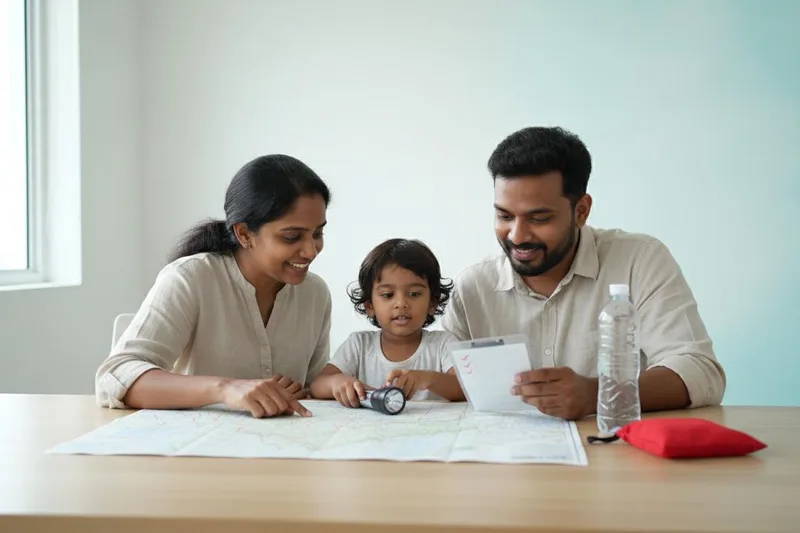
You've probably heard of tornadoes. They can be very dangerous because they can strike at any time and anywhere without much warning. But don't panic, okay? If we are prepared for such a situation in advance, the fear and stress that the whole family feels when such a storm comes can be greatly reduced. Everyone will know exactly what to do and when to do it. So, let's see how to best prepare for this.
How to prepare for a tornado as a family?
This is the most important thing. Getting the whole family together to talk about this and make a plan can make a big difference.
Be aware of the warning signs
First, you need to teach your children that if a tornado is approaching, warnings will be sent to their phones, on TV, and on the radio. In some areas, there are large sirens that will also sound at this time.
However, sometimes these storms can come without any warning. Therefore, it is very important to teach children about some of the signs that a tornado is coming. These include:
- If you see a cloud close to the ground, shaped like a cone, rotating from top to bottom .
- If it looks like a cloud of broken things, dust gathering and rising .
- If the sky suddenly looks green or very dark .
- If there is hail, like large ice cubes .
- If you hear a loud rumbling sound, like a train is coming .
If you see or hear something like this, it means you need to be a little careful.
Let's know exactly where to go and what to do.
It's best to teach children what to do and where to go before a tornado hits, so they don't panic and know how to get to the safest place in the house quickly.
Here are some things to teach them:
- If a tornado is coming, you should go as low as possible in your home and stay away from windows and doors .
- If your home has a basement or a storm cellar , it's best to go there.
- Otherwise, go to a room in the middle of the house that doesn't have windows . For example , a closet or bathroom is good.
- If possible, get under something sturdy, like a table, and cover your head and body with a blanket. Teach this especially to young children.
For example, if you are in a mobile home, or if someone is outside or in a car and a tornado is approaching, you should try to get to a nearby storm shelter or sturdy building as soon as possible.
If you can't find a sturdy building, go to a low spot like a ditch, lie down on the ground, and cover your head and neck with both hands to protect yourself . If something like this happens to your children, such as when they are riding their bikes, tell them to keep their helmets on to protect their heads .
The most important thing is to stay in a safe place until you are told it is safe to come out .
Also check out the disaster plans at schools and daycare centers.
Schools and daycares in tornado-prone areas may be teaching children what to do in an emergency. So, find out if your child's school has such a plan and talk to them about it.
Choose a place where everyone can meet.
If, unfortunately, your family gets separated during or after a storm, decide in advance where everyone can gather. This could be a nearby house, a large tree, or a place that everyone knows.
Pack emergency kits
Tornadoes can cause power outages, water shortages, and other disruptions. Therefore, it is important to prepare an emergency kit to prepare for a storm. Older children can also help with this.
Put things like this in it:
- A weather radio ( battery-operated)
- Clean water bottles
- Canned food (sealed, non-perishable)
- Torch and extra batteries
- Battery-powered phone chargers
- Some first aid supplies
It's a good idea to prepare a to-go kit for when you need to leave the house quickly, and a stay-at-home kit for when you need to stay home. The Red Cross website has a list of items you'll need for this, which you can check out.
However, if you have small babies at home who are breastfeeding , they will need additional items like formula and diapers . Also, people with illnesses like asthma , diabetes , or those who use ventilators should include their own special items and medications in this kit. Ask your doctor or midwife about this.
Children can also help you gather these items or go shopping with you. Also, if you have pets at home, don't forget to think about their food, drink, and other necessities.
Prepare extra clothes.
Pack an extra set of clothes for everyone in the family. It's also important to wear shoes or boots . Because if you're barefoot or wearing only socks, it's dangerous to step on broken glass or other objects. Also, pack a long-sleeved shirt, jacket, and pants . Imagine if your children were in their pajamas and had to suddenly step out of a safe place, they wouldn't be protected from debris or broken glass outside, right?
Gather first aid supplies.
It's important to have a first-aid kit at home. Even children can help you set it up, check for missing items, and check for expired items.
After a tornado, emergency services like 911 may be overwhelmed, or roads may be blocked and they may be delayed in arriving. So, as part of your storm preparedness, it's a good idea to take a class with your young child on first aid and CPR (Cardiopulmonary Resuscitation), which is a method of giving chest compressions and breathing in an emergency. Sometimes these classes are even available online.
Keep your phone ready too.
Always keep your cell phone well charged. It's also a good idea to install a weather app on your phone to find out where a tornado is. Also, save the phone numbers of your utility companies, such as electricity and water, in your phone. You'll need to call them if your services go out.
It can be difficult to find a doctor after a storm. So, see if there are telehealth services in your area, which allow you to talk to a doctor over the phone or via video call. If so, it's a good idea to download the app on your phone in advance.
Also find out about the neighbors.
If you live in a tornado-prone area, your children can join you in helping elderly people or other neighbors who need help packing . That's a great idea.
How can you help reduce your child's fear during a storm?
Weather events like severe thunderstorms, tornadoes, and hurricanes can be difficult for children to handle. They can feel very scared. Here are some ways you can help them reduce their stress, fear, and keep them calm :
- Stay calm: If you get nervous, your children will be even more scared. So, try to stay as calm as possible and reassure them.
- Listen to them: Listen to what they say about their fears. Instead of just saying, "Don't be afraid," try to understand their feelings.
- Explain simply: Explain the storm and other things in a simple way that they can understand.
- Distract them: When they are in a safe place, talk to them, play a little game, or read a story.
- Give reassurance: Always say things like, "We're all in this together, we're safe."
It is very important to help children reduce their fear and stay calm during a storm. Your calmness is their greatest strength.
What else should you know?
Even if your family is fully prepared, the thought of a tornado can be overwhelming for children. Learn more about how to talk to them about this storm and how to ease any fears or doubts they may have.
If your home or property has been damaged after a storm, check out the CDC (Centers for Disease Control and Prevention)'s advice on how to stay safe . It has a lot of important information.
Take-Home Message
Okay, so from what we've talked about, it should be clear to you how important it is to be prepared for an emergency like a tornado.
- Make a plan: Get the whole family together and make a plan for what to do in the event of an accident.
- Be aware of warnings: Recognize the signs of a tornado and teach them to your children.
- Choose a safe place: Make sure everyone knows where the safest place in the house is.
- Prepare an emergency kit: It should contain the necessary items.
- Calm children: Understand their fears and support them.
If you have done these things, you will be much stronger to face any emergency. Remember, preparation is the best defense!
` Tornadoes, disaster preparedness, family safety, emergencies, child safety, hurricanes, first aid


💬 Comments (0)
No comments yet. Be the first to share your thoughts here.
Add Your Comment