
Hello! You are in a very special and a little curious time these days, aren't you? Maybe you have already started to feel small changes in your body. Or maybe you still can't even imagine this new journey, this new guest. However, it is certain that a little life is starting to take shape in your womb very quickly. Let's see what is happening inside your body, in the world of your little one, in this fourth week?
What happens to the little baby in your womb?
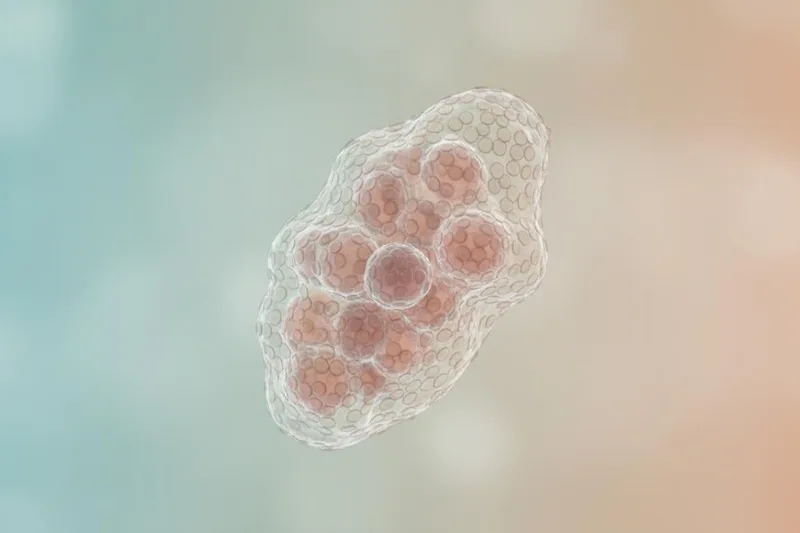
At this fourth week, your baby is still just a ball of cells that is too small to be seen with the naked eye. To be precise, doctors call this an `embryo` . Just think, it's smaller than a small sesame seed! But inside this tiny embryo, a lot of work, a very complex process, is happening. This embryo is now made up of mainly two layers of cells .
- One is the top layer of cells called the `epiblast` .
- The other is the underlying layer of cells called the `hypoblast` .
Simply put, these two tiny layers of cells are what will eventually form all of your baby's organs and body parts . Isn't that amazing? It's amazing how much can come from this tiny thing.
Two other very important things are happening during this time.
1. Amnion and amniotic fluid: This is like a little safety net. This sac called `amnion` is filled with `amniotic fluid` . This is what surrounds your fetus and helps it grow safely and comfortably without any danger. It's like a little safe house for the baby. This fluid is what allows the baby to move around a little and not be pushed around in the same way.
2. Yolk sac: This is also very important. It is like the baby's first meal. This `yolk sac` is the one that makes the blood and nourishes the embryo in the early stages. The embryo grows rapidly with the nourishment it receives from this. Later, when the `placenta`, a very special organ that is used to do this work, is fully formed, the role of the yolk sac gradually decreases. That is, the baby is fed from this small sac until the placenta takes over.
So, how are you feeling this week?
Four weeks is usually the time when you realize that your monthly period has stopped. You may have already known this good news by now from a home pregnancy test . Imagine, a friend of yours, let's say Nimali. She has been feeling a little tired for a few days, her breasts are a little sore. Her period has also passed. So, when she took a pregnancy test, she found out that she was having a baby. The joy and surprise she felt at that time were beyond words. You must have had a similar experience, right?
During this time, a huge hormonal revolution takes place inside your body. In particular, the hormone `hCG (Human Chorionic Gonadotropin)` increases very rapidly. This is what is detected in pregnancy tests. To be precise, this `hCG` hormone is what tells your body, "Yes, you are going to be a mother now, get ready for it."
These hormonal changes may cause you to feel things like:
- Breast pain or tenderness: Your breasts may feel slightly enlarged, painful to the touch, and heavy. You may also see blue veins.
- Feeling tired: You may just feel tired and sleepy all day. This is very normal, because your body is doing a lot of work inside.
- Frequent need to urinate: Hormonal changes and increased blood supply to the kidneys may cause you to need to go to the bathroom more often.
- Dislike of certain foods or unpleasant smells: You may feel disgusted at the sight of foods you used to enjoy, or you may find it difficult to tolerate certain smells (e.g., cooking smells, the smell of certain soaps).
- Morning Sickness: Some people may start to feel nauseous and vomit around this time. Although it's called "morning sickness," it can happen at any time of the day. But it doesn't happen to everyone.
But remember, not everyone experiences these symptoms the same way. Some people may not experience any of these symptoms at all. Or they may feel very subtle. This is normal, so don't worry about it. You don't have to have the same symptoms as your friend.
How big is the little one?
This week, your baby, or embryo, is very small. Think of it as the size of a poppy seed ! Yes, that's how small it is. It's only about a millimeter long. But it's hard to imagine how much is going on inside that little body, isn't it? Its cells are dividing rapidly, specializing, and laying the foundation for future organs.
What things do you need to be careful about this week?
This is a very important time. Your baby's early development, especially important parts like his brain and spinal cord, are starting to form, so you need to think especially about your health, the food you eat, and your lifestyle.
- Confirm your pregnancy: If you haven't taken a home pregnancy test yet, take one. Then, see a doctor as soon as possible and register . That way, you can get the necessary advice and tests done properly.
- Start taking folic acid: This is very important. Folic acid is essential for the development of your baby's nervous system, especially to prevent neural tube defects (such as spina bifida). Doctors often recommend starting this as soon as you plan to have a baby. If you haven't already, start taking it today, as recommended by your doctor.
- Healthy diet: Eat nutritious food. Don't eat too much because you "have to eat for two," but the food you eat should be of good quality.
- Fresh fruits, vegetables, herbs (washed thoroughly)
- Fiber-rich foods (whole-grain rice, oats, barley)
- Add protein-rich foods (well-cooked fish, eggs, milk and dairy products, well-cooked meat, nuts, lentils, and chickpeas) to your diet.
- Remember to eat only well-cooked foods . Avoid things like raw meat, raw fish, raw eggs, and cheese made from unpasteurized milk.
- Stay away from harmful things:
- Avoid smoking completely. If people around you smoke, stay away from that environment (passive smoking). This is very harmful to the baby.
- Stop drinking alcohol completely. There is no safe amount of alcohol during pregnancy.
- Do not take any medication without your doctor's approval. If you are taking any medications (e.g., for diabetes, high blood pressure), inform your doctor about them and adjust them appropriately during pregnancy.
- Avoid exposure to certain chemicals, pesticides, and radioactive materials . If you use harsh chemicals when cleaning your home, wear gloves and work in a well-ventilated area.
- Drink enough water. Try to drink at least 8-10 glasses of water a day.
- Get plenty of rest. If you feel tired, take a nap and rest. Get a good night's sleep.
- Light exercise: As per the doctor's advice, you can do light exercise like walking. However, lifting weights, strenuous exercise, or exercise that puts pressure on the abdomen is not appropriate at this time.
- Mental health: During this time, you may experience a variety of emotions. Emotions such as happiness, fear, and curiosity may come and go. Talk about what's on your mind with your partner, family, or a close friend. Try to keep your mind relaxed. Read a book, listen to a song, or do something that makes you happy.
What if you have small problems and fears?
In these early days, it's normal for things to come to mind one by one and for you to feel slight discomfort.
- Some people are afraid, "I don't have any symptoms, is the baby okay?" As I said before, not everyone has symptoms, that's normal. Don't panic until you see a doctor and get advice.
- It's normal to wonder , "Is this real?" It takes some time to adjust to this big change.
- You may experience mild cramping or spotting . This is when the embryo implants itself in the wall of the uterus (implantation bleeding). This usually only lasts for a day or two, and the amount of bleeding is very light.
But, remember, if you have symptoms like severe stomach pain, stomach pain with shoulder pain, heavy bleeding (like a period or more), fever, dizziness, you should see a doctor immediately. These could be signs of an ectopic pregnancy or miscarriage.
The most important thing is to talk to your doctor if you have any questions or concerns, without keeping them to yourself. Don't think, "This is a small thing, I don't need to ask." You have the right to ask anything that's on your mind.
What's next?
This is the beginning of an amazing journey for you and your little one. Your baby will be growing very quickly in the next few weeks. His heart will start beating (you may even be able to see it on a scan at around 6 weeks!), and little limbs, fingers, eyes, and ears will start to form. So during this time, you should take extra care of yourself and the little life in your womb. When you go for your first check-up, the doctor will tell you a lot more details and prescribe the necessary tests.
The most important things you need to remember this week
Okay, so, let's remind you of some of the most important things for your fourth week from what we've talked about:
- The little one in your womb is now an `embryo` . Although he is very small, his basic body parts and organ systems are beginning to form.
- The amnion and yolk sac form, providing the baby with protection and initial nourishment.
- You may or may not experience pregnancy symptoms (such as breast tenderness, fatigue, nausea). It varies from person to person.
- Taking the vitamin ``folic acid'' is a must. This is very important for the healthy development of the baby.
- Adopt a healthy lifestyle . Eat, drink, and rest well. Stay away from harmful things like smoking and alcohol.
- Hurry up and register with your doctor . Then you will get exactly the guidance you need.
- Don't be afraid to discuss any questions or doubts you have with your doctor .
This journey is beautiful, but also a responsibility. We wish you the strength to cope with all this! You are not alone, there are many people to help you and share this joy with you. Your partner, family, and friends are probably all waiting for this new guest. We will see you in the coming weeks with similar information!
` Pregnancy, 4 weeks pregnant, embryo development, pregnancy week 4, embryo development, four weeks pregnant, folic acid, pregnancy symptoms


💬 Comments (0)
No comments yet. Be the first to share your thoughts here.
Add Your Comment