
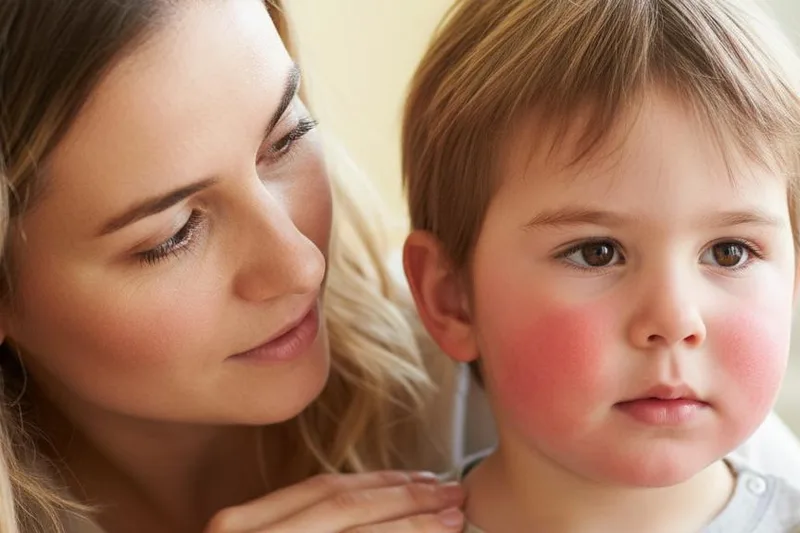
Have you ever noticed how sometimes a child's cheeks suddenly turn bright red, as if someone had slapped them? Or do you sometimes get aching joints for no reason? The cause of this may be a much more common virus than you think. Today we're talking about this virus called Parvovirus B19. Although it may sound like a big name, it's usually not dangerous. But it's worth knowing.
What is Parvovirus B19?
Simply put, Parvovirus B19 is a virus. It causes a disease called "Fifth Disease," which is common among young children. It got its name because it was previously classified as the fifth disease when it came to classifying rashes in children. However, it can affect not only children but also adults.
When children get this, the main thing they see is a rash. But when an adult gets it, they often experience joint pain rather than a rash. It's like arthritis. This pain can last for weeks, even months.
While this is usually not serious, it can be a bit risky for some people. This is especially true for pregnant women , people with weakened immune systems , and people with certain blood disorders .
What are the symptoms when this happens?
There are several common symptoms of parvovirus B19 infection, but not all of them occur in everyone.
| Symptom | A simple explanation |
|---|---|
| Rash | This is the main sign of this disease. Especially in children, the cheeks become dark red. This is also called "slapped cheek rash". After a few days, this rash can spread to the arms, legs and other parts of the body. It takes on a lacy appearance. It can also be a little itchy. This rash is less common in adults. |
| Joint Pain | This is most common among adults. It can cause pain and swelling in joints such as the hands, wrists, knees, and ankles. This can last for weeks. |
| Other features | In addition, as with a common viral flu, symptoms such as malaise, body aches, mild fever, headache, sore throat, and cough may occur. |
How does this spread from person to person?
This is spread just like a common cold.
- Through coughing and sneezing: When an infected person coughs or sneezes, the virus is released into the air through droplets of saliva, which can be transmitted to someone nearby by inhaling it.
- By touch: The virus can be transmitted by touching surfaces such as doorknobs, toys, and tables that have been contaminated with the virus and then touching your nose, mouth, or eyes with the same hand.
- Through blood: This can often happen during a blood donation. The virus can also be transmitted from an infected mother to her baby in the womb.
The important thing is that a person is most contagious before the rash appears. Once the rash appears, the transmission is much less.
Who is at higher risk?
As mentioned earlier, anyone can get Parvovirus B19 infection, but some people are at higher risk of developing serious complications.
- Pregnant mothers: If this infection occurs during pregnancy, especially in the early months, it can affect the unborn baby.
- People with weak immune systems: People with weak immune systems, such as cancer patients, HIV patients, and organ transplant recipients, have a harder time fighting this virus.
- People with certain blood diseases: For example, for people with diseases like sickle cell disease, this virus can cause a dangerous decrease in the number of red blood cells in the blood.
What complications can occur due to this infection?
Although most people recover from the disease without any complications, people in risk groups may experience the following conditions:
- Severe Anemia: Parvovirus B19 can temporarily stop the production of red blood cells in our bone marrow. While this is not a big problem for a healthy person, it can be dangerous for someone who already has blood diseases.
- Problems during pregnancy: If this happens to a pregnant mother, it can very rarely lead to miscarriage, stillbirth, or a serious condition called ``Hydrops fetalis'' where the baby's body fills with water.
- Long-term joint inflammation: Rarely, especially in children, this infection can lead to a long-term inflammatory joint disease called ``Juvenile idiopathic arthritis''.
How to accurately diagnose the disease?
Often, a doctor can guess the disease by looking at the red, characteristic rash on a child's cheeks. But if you want to be sure, especially if you are in a risk group, here are some tests to do.
- Blood tests: Your blood is checked for antibodies against Parvovirus B19. This can help determine whether you are currently infected or have been infected in the past.
- PCR test: This can directly detect the presence of the virus in the blood. This is called `(Nucleic acid testing - NAT)` or `(PCR testing)`.
Is there a treatment for this? How is it cured?
There is no specific treatment for this, that is, there is no medicine that can kill the virus. It usually heals in about a week or two, as our body's immune system fights it off.
All you have to do is do things that relieve the symptoms.
- Rest well.
- Drink plenty of fluids like water and fruit drinks.
- You can take a painkiller recommended by your doctor for fever and body aches .
However, if serious complications occur, for example if anemia becomes severe, hospitalization and blood transfusion may be necessary. Sometimes, a treatment called ``Intravenous immunoglobulin (IVIG)`` is also used to help with immunity.
Can dogs transmit Parvovirus to humans?
This is a question that many people ask. No, humans cannot be infected with Parvovirus B19 from dogs or other animals. The Parvovirus that causes humans and the Parvovirus that causes dogs are two completely different viruses.
When should I see a doctor?
If you have symptoms of Parvovirus, especially if you belong to one of the risk groups mentioned earlier (e.g. pregnant, immunocompromised), be sure to see your doctor.
| If you have these symptoms, go to the Emergency Department (ETU) immediately. | |
|---|---|
| - Fainting or loss of consciousness | - Chest pain |
| - Difficulty breathing | - Blue or grayish discoloration of the skin, lips, or fingernails (cyanosis) |
| - Feeling like your heart is beating fast | - Feeling great fear or anxiety for no reason |
Take-Home Message
- Parvovirus B19 (Fifth Disease) is a common virus that causes a red rash in children and joint pain in adults.
- This is usually not serious and will heal on its own within a few days or weeks.
- However, pregnant mothers, people with weakened immune systems, and those with certain blood diseases are at risk of complications from this.
- It spreads like a cold. Through coughing, sneezing, and dirty hands. So washing your hands with soap and water regularly is the best protection.
- If you are pregnant and have been in contact with someone who has this disease, or if you have symptoms, tell your doctor immediately.


💬 Comments (0)
No comments yet. Be the first to share your thoughts here.
Add Your Comment