
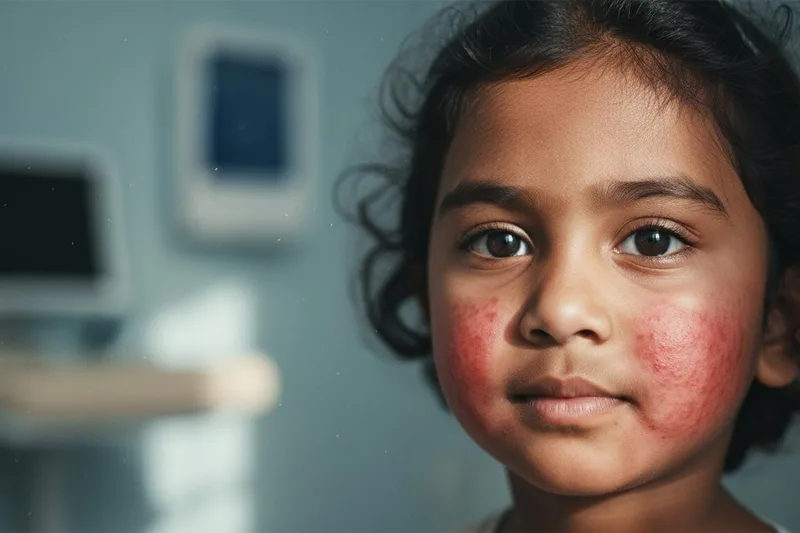
Oh, it's normal to hear about a rash coming from a house with a small child, isn't it? Sometimes a rash suddenly appears on the body, or the joints hurt. So, as a mother or father, it's normal for you to feel a little scared and worried when you see something like this. Today we're going to talk about a virus called Parvovirus B19, which can cause symptoms like these, especially in young children, but can also affect adults. Let's see what it is, how it develops, what are the symptoms, and how to protect yourself.
What is Parvovirus B19? Simply put...
Parvovirus B19 is a small virus. It's like the virus that causes colds and flu. It can cause a rash and joint pain. You may have heard of a disease called "Fifth disease." It's caused by this parvovirus B19 in young children.
But this is not a disease that only affects children. Adults can also get it. When a child develops this , a rash is often the main symptom . However, when an adult develops it, the rash may not appear, but a joint pain similar to arthritis may appear. This joint pain may last for weeks, or even months.
Importantly, if you are pregnant, have a weakened immune system (meaning your body's ability to fight off disease is reduced), or have certain blood-related diseases (for example, sickle cell disease), you are more likely to develop serious complications from Parvovirus B19 infection.
Although B19 is the most well-known member of the Parvovirus family, there are other types of parvoviruses that can cause disease in humans. For example, human tetraparvoviruses, human bocaparvoviruses, and human protoparvoviruses. All of these cause similar symptoms.
What are the symptoms of Parvovirus B19?
Symptoms of parvovirus infection include:
- A rash: This is most commonly seen on the face of young children, but it can appear anywhere on the body.
- Joint pain: This is especially common in adults.
- Fever: You can get a fever if your body gets too hot.
- Headache : You may get a headache.
- Cough: It may feel like a slight cough.
- Sore throat: You may feel a sore throat.
Can we talk a little more about this "parvovirus rash"?
When the rash caused by parvovirus B19 appears on the face of young children, it is sometimes called a "slapped cheek rash." Imagine a young child's cheeks turning very red, as if someone had slapped them hard. It is bright red and sometimes has a lacy appearance . It is also called "fifth disease" as mentioned earlier. However, adults rarely get this type of rash.
This rash is not only on your face, but can also appear on other parts of your body, for example, your arms, legs, chest, back, and buttocks. Sometimes it can also be itchy . This rash may last for a week or two and then go away, or it may continue to get worse for several weeks.
How does this parvovirus infect us?
Parvovirus B19 is spread in the same way as other respiratory viruses. That is:
- Coughing and sneezing: When an infected person coughs or sneezes, the virus is released into the environment through small droplets. If a healthy person breathes in the droplets, the disease can spread.
- Touching objects contaminated with the virus: If we touch objects that someone with the virus has touched, such as doorknobs, countertops, toys, or phones, and then touch our nose, mouth, or eyes with the same hand, the virus can enter our body.
Not only that, it can also be transmitted through blood . For example, during a blood transfusion or through contact with the blood or other body fluids of an infected person. It can also be transmitted from a pregnant mother to her unborn child .
Who is at higher risk of developing a parvovirus infection?
Anyone can get parvovirus B19. However, if you belong to one of these groups, you are slightly more likely to develop complications:
- If you are pregnant: If this occurs during pregnancy, it can affect the baby.
- If your immune system is weak: This means people with diseases like HIV, those taking cancer medication, or those who have had an organ transplant and are taking medications that suppress their immune system.
- If you have blood-related diseases that can cause a decrease in red blood cells, such as sickle cell disease or autoimmune hemolytic anemia.
What are the possible complications of Parvovirus?
Parvovirus B19 can cause complications such as:
- Severe anemia: This virus affects the production of red blood cells in our body, which can lead to anemia, a condition known as anemia.
- Pregnancy loss/stillbirth: If this infection occurs during pregnancy, the risk of miscarriage or stillbirth increases.
- Hydrops fetalis: This is a serious condition that can occur if a pregnant woman is infected with parvovirus. It causes fluid to build up inside the baby's body.
- Juvenile idiopathic arthritis: This is very rare, but some young children may develop a condition of prolonged joint swelling and pain after contracting parvovirus.
How do doctors diagnose Parvovirus B19?
Doctors have several tests to diagnose parvovirus B19. These are:
- Blood tests: A sample of your blood is taken and checked for antibodies that your body has made against parvovirus B19. This can tell if you currently have the disease or have had it in the past.
- Nucleic acid testing (NAT): This uses PCR testing or another NAT method to directly detect parvovirus B19 in a blood sample or bone marrow sample. This method is especially used to detect active infections in people with weakened immune systems .
What can be done to prevent Parvovirus?
There is no specific treatment for parvovirus, but in most cases it resolves spontaneously without any complications .
However, if you have a condition like anemia, or if you are pregnant and your baby has hydrops fetalis, you may need a blood transfusion . Also, sometimes doctors use intravenous immunoglobulin (IVIG) to help fight infection if you have complications.
Can parvovirus be prevented?
Of course you can! Here are some things you can do to reduce the risk of getting or spreading parvovirus infection:
- Wash your hands thoroughly with soap and water regularly. For at least 20 seconds.
- Avoid close contact with people you think may be infected.
- Cover your mouth and nose when coughing or sneezing. It's best to use a tissue, or the inside of your elbow.
- Avoid touching your nose, mouth, and eyes frequently.
- If you are infected, stay home from work or school. This can help prevent spreading the disease to others.
Does parvovirus get better on its own?
Yes, most parvovirus infections go away on their own in a week or two. However, the rash can sometimes fade and then reappear. It can last for weeks. The joint pain can sometimes last for months.
To help you feel better, your doctor may advise you to take painkillers (OTC pain relievers - available at the pharmacy), drink plenty of fluids, such as water, and get plenty of rest.
When should I see a doctor?
If you have symptoms of parvovirus, especially if you are pregnant, have a weakened immune system, or have a blood-related condition, be sure to talk to a doctor . Don't panic, but it's important to get proper medical advice.
When should I go to an Emergency Treatment Unit (ETU) ?
If you have these severe symptoms, go to an emergency room immediately:
- Weakness or fainting
- Chest pain
- Difficulty breathing
- Blue/gray discoloration of the skin, lips, or nails (Cyanosis)
- Heart palpitations
- A feeling of intense, unexplained fear or impending doom
Can humans get parvovirus from dogs?
This is a question that many people ask. No, you cannot get parvovirus from dogs or other animals . There are two types of parvovirus: one that affects humans and one that affects dogs. So there is nothing to worry about.
Finally, things to remember (Take-Home Message)
If you have a young child in your home, it may seem normal for them to get sick, but it's good to be aware of some illnesses. Parvovirus is one such disease. Although it is common, it is fortunately not serious in most cases.
However, if you are pregnant, have a blood-related disease, or have a weakened immune system, you should definitely take steps to protect yourself from such infections . If you have any doubts or fears about this, don't be shy and talk to your family doctor. Stay healthy!
` Parvovirus B19, Fifth Disease, Red Cheeks, Joint Pain, Pediatrics, Viral Infections, Pregnancy Health




💬 Comments (0)
No comments yet. Be the first to share your thoughts here.
Add Your Comment