
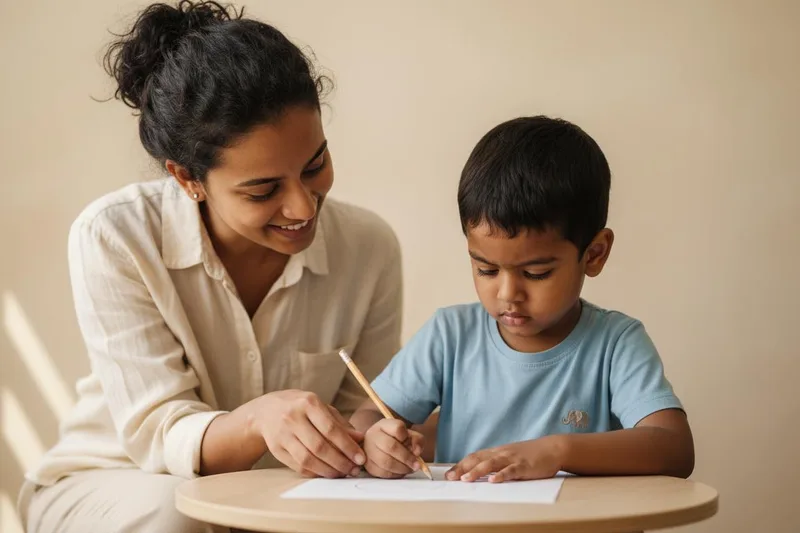
Have you ever found it difficult for your little one to write with a pencil, eat alone, put on shoes, or play with other children? While these may seem like normal things at times, some children need special help to do these daily tasks properly. This is where Pediatric Occupational Therapy comes in. It can make a big difference in a child's life.
What exactly is Pediatric Occupational Therapy?
Simply put, pediatric occupational therapy is a specialized treatment that helps children perform their daily tasks, from playing to working at school, more easily and successfully. Although it is called 'occupational', it is not about adult jobs. Here, the child's 'occupation' is playing, learning, and doing their own work.
Occupational therapists help children reach developmental milestones appropriate for their age, overcome sensory challenges , and develop self-care and play skills.
Imagine, some children have difficulty using the small muscles in their hands to do things. For example, stringing beads, putting on buttons, or writing neatly with a pencil. We call these fine motor skills . Occupational therapy can help develop these skills.
| Main areas of help from occupational therapy | Examples |
|---|---|
| Movement | Fine Motor Skills: The ability to write, draw, and cut with scissors using the fingers. |
| Learning | Cognitive skills like attention, problem solving, and memory. |
| Playing | Playing with other children and controlling their emotions (Social and Emotional Skills). |
| Daily Living | Things like dressing yourself, eating, and brushing your teeth. |
What kind of children need this treatment?
Occupational therapy can be helpful for any child, from infancy to adolescence. It is especially beneficial for children with the following conditions:
- Congenital conditions: Some children may be born with conditions that affect physical or intellectual functioning.
- Developmental delays: Children who are slow to talk, walk, or demonstrate other abilities appropriate for their age.
- Conditions related to the nervous system: Conditions such as Autism Spectrum Disorder (ASD) , Cerebral Palsy .
- Injury: A child who has to use a device like a prosthetic leg due to an accident may need to get used to it.
Each child's treatment plan is individualized. This means that your child's needs are carefully assessed and specific goals are set for them.
What actually happens in a therapy session?
This is a problem that many parents have. Occupational therapy is not a place where you force your children to do something. It's more like learning through play.
First meeting: Evaluation
The first day your child meets with an occupational therapist is an assessment. During this time, the therapist will determine what your child's abilities are and what areas need improvement.
- A parent or guardian must be with the child at this time.
- The therapist gives the child small activities to do. For example, drawing, coloring, eating different types of food (rough, soft), stringing beads, and stacking blocks.
- During this time, the therapist will ask you about your child's daily routine and any problems you may be having. This first meeting may take about an hour or two.
Next Therapy Sessions
After the initial assessment, the therapist creates a treatment plan specific to the child. In each subsequent session, activities are done that help the child reach the goals in this plan. These are things that interest the child, such as play.
Examples:
- Practicing writing the letters of the alphabet.
- Getting used to putting on socks and shoes by yourself.
- Playing a game like a board game with rules.
- If necessary, learn how to use assistive devices.
What are the benefits and potential challenges of these treatments?
It is important to be aware of the benefits of occupational therapy and the small challenges that a child may sometimes face.
| Main Benefits | Potential Risks/Challenges |
|---|---|
| Success in school work. | Stress when doing new things. |
| Increased ability to work independently. | Fear of impossibility. |
| Increased self-confidence and self-esteem. | Frustration when you can't. |
| Being able to play and interact well with others. | Sometimes losing interest. |
These challenges are not major risks. They can be largely managed by supporting the child and talking to the therapist regularly.
How can we help as parents?
Your contribution is very important here.
- Patience: Not all children are the same. Therefore, the speed at which they learn new things may vary. Don't worry if your child is not moving at the speed you think they should.
- Home training: Practice what the therapist teaches you at home with your child, following their instructions.
- Communication: Talk openly with the therapist about your child's behavior and any changes you notice at home.
If you have any concerns or questions about your child's development, talk to your doctor . He or she will refer you to a pediatrician or a pediatric occupational therapist, if necessary.
Remember, this is not something that can be learned overnight. It is like going to school. The child needs ongoing training, encouragement, and support.
Take-Home Message
- Pediatric Occupational Therapy is a treatment method that helps children perform daily activities (playing, learning, working independently) more easily.
- If your child is late in reaching age-appropriate developmental milestones, or shows aversion to certain activities (e.g., refusing certain foods or clothing), talk to a doctor about it.
- This treatment method is carried out through fun activities such as play, and each child has an individually tailored treatment plan.
- Parental support, patience, and good communication with the therapist are essential for the child's development.
- This treatment increases the child's self-confidence, helps them succeed in schoolwork, and helps them become more social.




💬 Comments (0)
No comments yet. Be the first to share your thoughts here.
Add Your Comment