
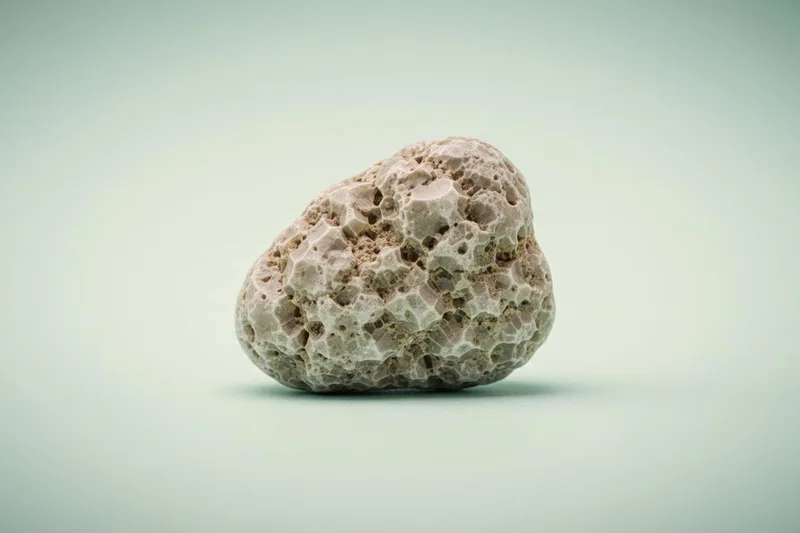
Kidney stones are a problem that many people have, and sometimes cause unbearable pain. Small stones often pass through the urine after drinking plenty of water and taking the medicine prescribed by the doctor. But some stones are very large. Today we are going to talk about a special and very successful surgery that doctors recommend when they cannot be removed by other methods.
Simply put, what is PCNL?
The full name of PCNL is Percutaneous Nephrolithotomy . Although the name may sound a bit complicated, the meaning is very simple.
- "Percutaneous" means "through the skin."
- "Nephrolithotomy" means "the surgical removal of a stone from a kidney."
In simple terms, PCNL is a procedure where a very small incision is made in your back and a large stone is removed from the kidney. It is mainly used to remove large stones that have not been successfully treated with other treatments, such as medication, shock wave lithotripsy, or other procedures.
Is PCNL a major surgery?
Yes, PCNL is considered a major surgery. But don't worry. It's not like traditional open surgery. Open surgery involves a larger incision, which means it takes longer to heal and is more painful.
But PCNL is a "minimally invasive" surgery. That means that because it's done through a very small incision, there's less impact on your body, fewer complications, and you can recover more quickly. But because it's a major surgery, it's done by a team of specialist doctors in a hospital.
Who really needs this surgery?
Most of the time, kidney stones pass out with urine. Otherwise, the doctor will refer you to other simple treatments. PCNL surgery is performed in the following cases:
- If the kidney stone is very large: This method is usually best for removing stones larger than 2 centimeters.
- If other treatments fail: If the stone cannot be removed with treatments such as shock wave lithotripsy or laser ureteroscopy, which involves passing a camera down the urethra and removing the stone with a laser.
- If the stone is located in a complex location: If the stone is located in a difficult place inside the kidney to remove.
Your urologist will be the best person to decide whether you need this surgery. He or she will review your CT scan and other tests and recommend the treatment that is best for you.
Let's learn step by step how the surgery is performed.
It will be a great relief to be well informed about this type of surgery before you undergo it. Let's take a look at how this process works.
1. What should I do before the surgery?
You will need to see the doctor a few days before the surgery. There:
- Your health status is checked: things like blood pressure and heart rate are measured.
- Be aware of your medications: You should tell your doctor about all the medications you are taking, including vitamins and herbal remedies. If you are taking blood thinners (e.g., aspirin) , you may need to stop taking them before surgery. But never stop taking any medication without first asking your doctor.
- Tell us about your allergies: Be sure to let us know if you have any allergies to any medicine, food, or anything like a plaster.
- Fasting: You will be advised not to eat or drink anything after midnight the night before the surgery. If you have to take any essential medication, you can take it with just a sip of water.
- Tests: You may be asked to do a `CT (computed tomography) scan`, `Ultrasound scan`, or `X-ray` to see the exact location and size of the kidney stone.
2. What happens during the surgery?
The surgery is performed by a team of specialist doctors, an anesthesiologist, and a nursing staff.
- Anesthesia: First, you will be put under general anesthesia. So you will not feel any pain during the surgery, and you will be completely asleep.
- Position: The surgery is often performed with you lying on your stomach (prone position) on the bed. This allows easier access to the kidney from the back.
- Small incision: The specialist will make a small incision, about 1 centimeter, on your back, where your kidney is.
- Instrument insertion: Through the incision, a protective tube (sheath) is inserted into the kidney. Then, a tiny camera (nephroscope) is inserted through the tube and the stone inside the kidney is viewed on a screen.
- Stone removal: If the stone is small, it is taken out with the same instrument. If the stone is large, a laser beam or a special vibrating device ``lithotripter`` is used to break the stone into small pieces and remove those pieces.
- Insertion of a tube: After the stone is completely removed, a small tube (drainage tube) or a ureteral stent may be inserted into the bladder to allow urine and blood to drain out of the kidney. This helps the wound heal.
- Suturing: Finally, the small incision made on the back is closed with stitches.
This entire process can usually take about two to four hours .
3. What happens after the surgery?
After the surgery is over, the anesthesiologist will stop administering the anesthesia. You will gradually regain consciousness within a few minutes.
- Recovery Room: You will first be taken to the recovery room, where your health will be closely monitored.
- Pain Management: You may feel some pain after regaining consciousness. The nursing staff will give you painkillers to help with this.
- Hospital stay: You will usually have to stay in the hospital for about a day. During that time, doctors will monitor your recovery.
- Blood in the urine: It is normal to have a small amount of blood in your urine for a week or two after surgery. Don't worry about it.
What are the benefits and risks of PCNL surgery?
Like all medical treatments, this one has benefits and minor risks.
Advantages:
- The ability to almost completely remove large kidney stones that cannot be removed by other methods.
- This is a surgery with a very high success rate of between 75% - 98%.
- The incision is smaller than in open surgery, so the wound heals faster.
- There is less time to spend in the hospital.
Risks:
Although these are very rare occurrences, it is important to be aware of them.
- Risks associated with anesthesia.
- Infection at the surgical site.
- Excessive bleeding.
- Blood clot formation `(hematoma)`.
- Some damage to the kidney.
- Sometimes it is not possible to remove the entire stone.
- Severe urinary tract infection (Sepsis).
Your doctor will explain these risks to you in more detail. Remember that these are very rare events.
How long will it take to recover? What precautions should be taken at home?
It usually takes about two to four weeks to fully recover. It is very important for your body to rest during this time.
- Avoid lifting weights: Do not lift anything heavier than the weight of a liter of milk (about 4 kg) for two weeks .
- Exercise: Stay away from strenuous exercise for a while.
- Going back to work: If you have an office job, you can go back to work in about a week. However, if your job requires physical exertion, it is best to take at least two weeks off.
Need to see the doctor soon!
If you experience any unusual symptoms after surgery, don't ignore them. If you have any of the following symptoms, call your doctor immediately or go to the Emergency Department (ETU) of the nearest hospital.
| Feature to pay attention to | Description and what to do |
|---|---|
| Heavy bleeding | If the surgical site is bleeding continuously or the bandage is completely soaked with blood. |
| Thick blood or blood clots in the urine | If the urine is dark red rather than pink or if there are blood clots that look like tomato sauce. |
| Fever and chills | If your body temperature is 100 Fahrenheit (38 Celsius) or higher and you feel shivery, this could be a sign of an infection. |
| Unbearable pain | If you have increasing pain that cannot be controlled even with painkillers. |
Be sure to see your doctor again four to six weeks after surgery for a checkup.
Take-Home Message
- PCNL is a very successful and safe surgery that removes large kidney stones that cannot be removed by other treatments.
- Although this is a major surgery, it is performed through a small incision, so you can recover quickly.
- Follow your doctor's instructions carefully before surgery. Tell him about all the medications you are taking.
- Rest is very important after surgery. Avoid heavy lifting and strenuous activities for a while.
- If you experience any unusual symptoms such as fever, heavy bleeding, or unbearable pain, seek medical advice immediately.
- If you have any further questions about this, don't hesitate to talk to your doctor. He or she will provide clear answers to all your concerns.




💬 Comments (0)
No comments yet. Be the first to share your thoughts here.
Add Your Comment