

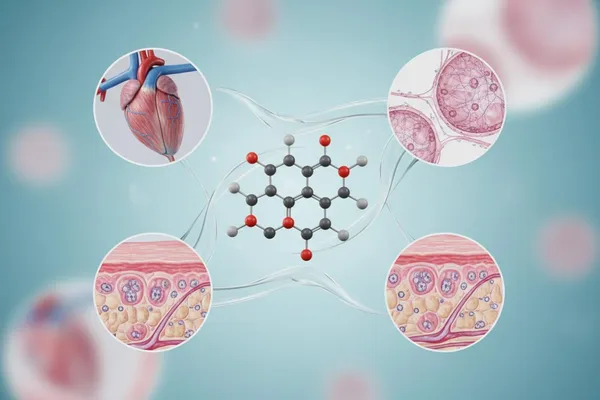
You've probably heard of drugs like Viagra. Most people know that these are drugs that are given for sexual dysfunction. But did you know that drugs in a different class, called Phosphodiesterase Inhibitors, are used to treat a wide range of conditions, from heart disease to lung disease, skin disease, and joint disease? Today, let's talk about this amazing class of drugs. Let's simply understand what they are, how they work, and what are the pros and cons.
Simply put, what are Phosphodiesterase Inhibitors (PDE inhibitors)?
These are a type of medicine that widens the blood vessels in our body, reduces their stiffness, and makes blood flow easier. Imagine that when a water pipe is clogged, if you make it a little bigger, the water flows more easily. This reduces blood pressure and improves blood flow to various parts of the body. Because of this ability, this type of medicine is used as a treatment for a wide range of diseases.
How does this medicine work?
To understand this, we first need to know about a little chemical messenger in our body. Its name is Phosphodiesterases , or PDE for short. This PDE is a type of enzyme . Enzymes are like little helpers that speed up and facilitate other chemical processes in our body.
There are several types of these PDE enzymes in our bodies. Scientists have used numbers to distinguish them. The special thing is that each type of PDE is most active in specific areas of the body.
- PDE-3: This type is found primarily in your heart and circulatory system . It is also involved in the blood clotting process.
- PDE-4: This is mostly found in the lungs . It works by tightening the muscles in the airways.
- PDE-5: This type is found in the lungs and male genitalia .
So, drugs called Phosphodiesterase Inhibitors (PDE inhibitors) work by blocking the activity of the PDE enzymes mentioned above. It's like closing a door. Some PDE inhibitor drugs work very selectively . That is, they target only a specific type, such as PDE-5. There are other drugs that work nonselectively . That is, they can affect all types of PDE to some extent.
What conditions are treated with this medicine?
The class of drugs called PDE inhibitors has been approved by agencies such as the U.S. Food and Drug Administration (FDA) to treat more than a dozen medical conditions. Here are some of them.
| Disease category | Medical condition and simple explanation |
|---|---|
| Heart and blood circulation |
|
| Inflammatory diseases |
|
| Diseases of the male reproductive system |
|
| Respiratory system diseases |
|
What are the benefits of PDE Inhibitors?
This type of medicine is very beneficial in treating certain medical conditions. There are several reasons for this.
- Easy to use: These medications come in many forms. They are available as oral pills, topical creams, and IV injections. Some medications need to be taken daily, while others can be taken only when needed.
- Targeted treatment: As I mentioned earlier, some medications target only a specific type of PDE, so they are less likely to cause unwanted effects (side effects) on other parts of the body. It's like the drug works exactly where the disease is.
- Several benefits of one drug: Sometimes two related conditions can occur in the same person. For example, benign prostatic hyperplasia (BPH) and erectile dysfunction (ED) can both occur together. The PDE-5 inhibitor tadalafil is approved to treat both conditions. Similarly, there are drugs that can treat both gout and the associated arthritis.
What are the side effects and risks of this medication?
The most important thing is that all these medications should be taken only under medical advice. The potential for side effects can vary from medication to medication and from person to person.
The main side effects depend on which type of PDE inhibitor the drug belongs to.
| PDE Inhibitor Type | Minor and moderate side effects | Potentially serious side effects (tell your doctor immediately) |
|---|---|---|
| PDE-3 Inhibitors (affects the heart and blood vessels) | Headache, weakness, swelling, nausea, vomiting, stomach pain, dizziness, skin rash. | Heart rhythm irregularities (arrhythmia), chest pain, low blood pressure, unusual bleeding or bruising, liver damage. |
| PDE-4 Inhibitors (affects lungs and inflammation) | Weight loss, nausea, vomiting, diarrhea, upper respiratory tract infections, headache, insomnia, inflammation at the injection site. | Worsening of existing depression, suicidal thoughts, hypersensitivity reactions (itching, swelling, rash). |
| PDE-5 Inhibitors (affects sexual impotence and pulmonary hypertension) | Headache, flushing, stuffy nose, backache, muscle pain, nausea, dizziness, and possibly seeing light in a blue color (temporary). | Priapism: A painful erection that lasts more than 4 hours without sexual stimulation. This is a medical emergency. Changes/sudden loss of vision or hearing, liver damage. |
| Nonselective Inhibitors (e.g. caffeine, theophylline) | Restlessness, insomnia, tremors, nausea, vomiting, diarrhea, dizziness, headache. | Fast heartbeat, irregular heartbeat, chest pain, seizures. |
Special warning: If you are taking a medication such as nitroglycerin under the tongue for chest pain, and you develop chest pain within 24 hours of taking a PDE-5 inhibitor (e.g. Sildenafil, Tadalafil), go to the hospital's emergency department (ETU) immediately. Combining these two medications can cause a dangerously low blood pressure.
Who should not take this medicine?
For some people, this type of medication called PDE inhibitors may not be suitable because of their other medical conditions or other medications they are taking. We call these contraindications . There are two types of these:
1. Absolute contraindications:
- To any PDE inhibitor: If you have previously had a severe allergic reaction (hypersensitivity) to this medicine or a similar one.
- For Cilostazol: If you have any type of heart failure.
- For PDE-5 inhibitors (such as Sildenafil, Tadalafil): severe heart disease, unstable chest pain (unstable angina), recent heart attack or stroke.
2. Relative contraindications:
- For PDE-5 inhibitors: If you are taking nitrates or alpha-blockers, you should talk to your doctor as they can cause your blood pressure to drop dangerously.
- For Cilostazol: If you have bleeding disorders.
- For Pentoxifylline: If you have recently had bleeding in the brain or eye.
If you are pregnant, trying to get pregnant, or breastfeeding, always talk to your doctor before taking any medication. There is evidence that some PDE inhibitors may affect the fetus in animal studies.
When should you see a doctor?
If your symptoms change or affect your daily activities, it's best to tell your doctor. However, if you experience any of the following , go to a hospital or emergency room (ETU) immediately.
- Symptoms of a heart attack: chest pain, shortness of breath, sweating, dizziness, nausea.
- Priapism: A painful erection that lasts more than 4 hours without sexual stimulation. This can cause permanent damage if not treated promptly.
- Sudden loss of vision or hearing: If you experience sudden loss of vision, loss of vision, or loss of hearing, seek medical attention immediately. Delay may cause permanent damage.
Take-Home Message
- Phosphodiesterase inhibitors (PDE inhibitors) are a very useful class of medications used not only for sexual dysfunction, but also for a number of heart, lung, skin, and joint-related diseases.
- All of these medications should be taken only on the recommendation of a doctor. Tell your doctor about any other illnesses you have and any other medications you are taking.
- Side effects can occur, so be aware of them before starting the medication.
- If you experience severe symptoms such as chest pain, shortness of breath lasting more than 4 hours, or sudden loss of vision/hearing, go to an Emergency Department (ETU) immediately.
- Using this medication without a doctor's prescription, by asking others or asking at pharmacies, can have serious, even life-threatening, consequences.




💬 Comments (0)
No comments yet. Be the first to share your thoughts here.
Add Your Comment