
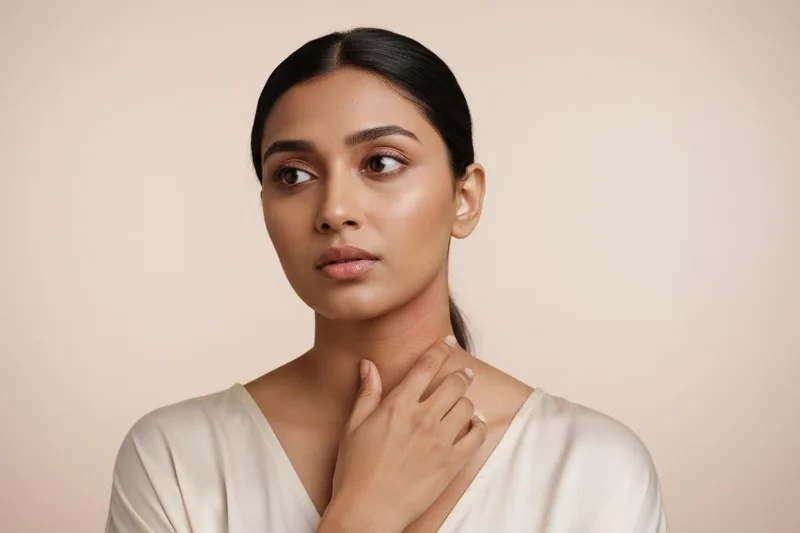
Has this happened to you too? After spending some time in the sun with your friends, you suddenly notice that your skin, especially your hands, neck, and other exposed areas, turns red and feels like it's burning, and sometimes itchy, like small blisters. Many people think that this is just a normal sunburn. But it could be something different. That's what we call photosensitivity.
Simply put, photosensitivity is an abnormal, excessive reaction of your skin to sunlight or other sources of ultraviolet (UV) radiation. It's not like getting sunburned. It can happen after just a few minutes of exposure to the sun. So if you're wondering, "My skin breaks out more than others even after a short period of exposure," it's important to talk to your doctor about it.
What are the symptoms of photosensitivity?
When this condition occurs, various skin symptoms can appear. These are most common in areas of the skin that are exposed to the sun, that is, not covered by clothing. Sometimes, these symptoms can appear on the sleeves of the T-shirt you are wearing, or on the bottom of the pants, and can even appear as if the clothes are being lined up.
| Symptom | Description |
|---|---|
| Skin changes |
|
| Symptoms affecting the whole body | If a large area of your body is exposed to the sun, these symptoms may also occur:
|
| Important: If you have any of these symptoms that affect your body, seek medical advice immediately. | |
There are two main types of photosensitivity:
This condition can be divided into two main types depending on how it occurs.
1. Phototoxic reactions
This is the most common type. Simply put, it's a chemical reaction. A medication you take, a skin cream you apply, or a chemical in your body reacts with the UV rays from the sun and directly damages your skin cells. It's like a bad sunburn.
- Time it takes for the reaction to occur: Can occur within minutes or hours of sun exposure.
- Appearance: Redness of the skin, swelling, and burning pain.
2. Photoallergic reactions
This is a little different. What happens here is that your body's immune system, due to UV rays, mistakes a medicine or a skin cream you're taking as a "foreign enemy." Then the immune system starts fighting it. This comes out as an allergy.
- Time to reaction: This takes a while to occur. It can take one to three days after exposure to the sun.
- Appearance: Usually appears as itchy welts, blisters, or hives. Sometimes these welts can appear on areas that have not been exposed to the sun .
Why does this photosensitivity occur?
There can be several reasons for this. Sometimes the cause is very simple. Other times it could be a medical condition.
- Medications: Some medications you take can be a major cause of this. For example, some antibiotics, antidepressants, antifungals, high blood pressure medications, acne medications, painkillers, and chemotherapy.
- Skin care products: Some of the chemicals (e.g. acids, coal tar) in some of the soaps, perfumes, and creams you use can react with the sun.
- Other medical conditions: This condition can also be caused by certain diseases.
- Autoimmune conditions: For example, lupus (Lupus Erythematosus).
- Genetic conditions: Rare genetic diseases like porphyria.
- Other skin diseases: Conditions like dermatitis.
Whatever the reason, if you notice any changes in your skin, it's best to talk to a doctor about it. Especially if you're taking any medication, never stop taking it without first consulting your doctor.
How is this treated?
Treatment depends on the cause.
- Eliminating the cause: If you are experiencing this condition due to a medication or cream, stopping it or switching to another one as advised by your doctor may help. Also, reducing sun exposure can help.
- Antihistamines: In the case of a photoallergic reaction, these types of medications can help control itching and swelling.
- Corticosteroids: Your doctor may prescribe a cream or sometimes a pill to reduce swelling and inflammation.
- Phototherapy: This is a somewhat specialized treatment. It involves gradually exposing your skin to very small, controlled doses of UV light under the supervision of a doctor, allowing your skin to adapt to it. Over time, this can reduce the severity of your skin reaction.
How to protect yourself from photosensitivity?
While we can't prevent some causes (like genetic conditions), there are many things we can do to reduce the risk.
- Sun protection: Limit your time in the sun as much as possible. Especially avoid going out during peak hours, such as 10 a.m. to 4 p.m. When you are outside, try to stay in the shade as much as possible.
- Use sunscreen: Always wear sunscreen if you are going outside. Choose one with at least SPF 50+ . Reapply every two hours.
- Wear protective clothing: Wear long-sleeved, well-covered clothing. Dark-colored clothing provides more protection from UV rays. Also, don't forget to wear a wide-brimmed hat.
- Know your cause: Find out what medication or cream is causing your condition. Talk to your doctor and make any necessary changes.
- See a dermatologist: It's a good idea for everyone to have a skin check at least once a year. If you have photosensitivity, your doctor may ask you to come back for a checkup sooner.
When should you see a doctor immediately?
Talk to your doctor about the common symptoms and make a plan for them. However, sometimes this reaction can be severe. If you have any of the following symptoms, do not delay and see a doctor or go to the Emergency Department (ETU) immediately.
- Blisters on the skin
- Chills
- Fever
- Nausea or vomiting
Living with photosensitivity can be scary to go out. But you can't stay home all the time. The best thing to do is not to panic about it, but to see a doctor to find out what's causing it. It could be something as simple as changing the cream you're using. Or, your doctor can help you develop a treatment plan that will help you manage the condition long-term and get you back to work with confidence.
Take-Home Message
- Photosensitivity is not a normal sunburn, but an excessive reaction of the skin to UV rays.
- This may be caused by medications you are taking, skin cosmetics, or other medical conditions.
- Do not stop taking any medication you are currently taking on your own without consulting a doctor.
- Sun protection (sunscreen, protective clothing) is the best prevention method.
- If severe symptoms such as skin blisters, fever, and chills occur, seek medical advice immediately.


💬 Comments (0)
No comments yet. Be the first to share your thoughts here.
Add Your Comment