
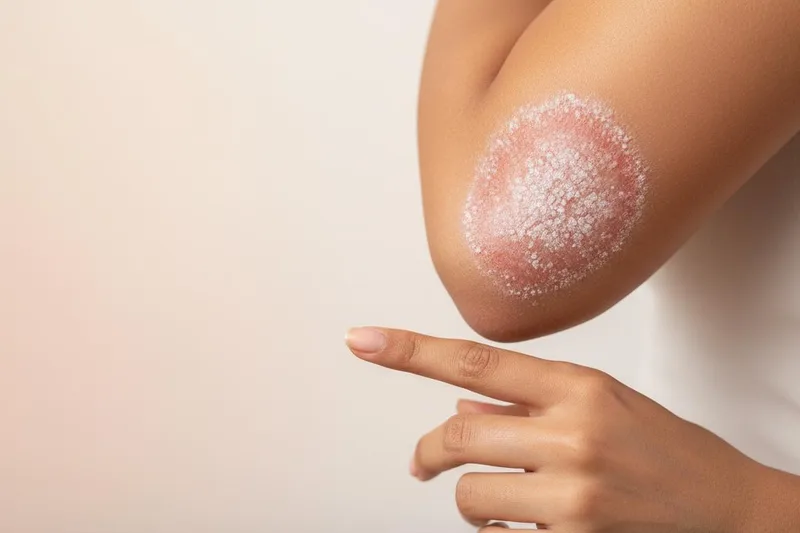
Do you sometimes get red, scaly, slightly thickened patches on your skin, especially on your elbows, knees, or scalp? Some people itch a lot, and sometimes they hurt and burn. This condition is what we call 'Plaque Psoriasis' . Don't worry, it's not contagious. Let's talk about it in detail.
What is 'Plaque Psoriasis'?
Simply put, 'Plaque Psoriasis' is a long-term skin disease. It is caused by a change in our body's immune system, or an 'autoimmune' condition . What happens in this is that our skin cells divide much faster than normal, producing new cells. These rapidly growing new cells combine with old cells, resulting in the thickening, scaly patches, or what we call 'plaques', that I mentioned earlier, on the surface of the skin. These are often seen:
- Your elbow is fine.
- On the back
- In the knees
- On the scalp (where the hair is)
However, for some people, if the condition progresses significantly, these 'plaques' can appear all over the body . This means:
- On the face
- In both hands
- In the legs
- They can even be seen in genital areas (for example, around the vagina and vulva in women, and around the penis in men).
Who is more likely to develop plaque psoriasis?
Plaque psoriasis can affect anyone. However, some people are more likely to develop it. See if these facts apply to you:
- For white people (this may not be very relevant to Sri Lanka, but it is a common saying)
- For those who drink alcohol
- For those suffering from severe stress or depression
- If someone in your family has had psoriasis before (meaning it can be hereditary)
- For those with obesity
- For those who smoke or use tobacco products
- For those who do not take their prescribed medications on time (especially certain medications taken for other medical conditions)
How common is plaque psoriasis?
Plaque psoriasis is actually the most common type of psoriasis. Millions of adults around the world have this condition. Between 80% and 90% of people with psoriasis have plaque psoriasis. So, if you have these symptoms, know that you are not alone.
How does plaque psoriasis affect my body?
Plaque psoriasis causes your skin to become thick, rough, scaly, and discolored plaques or patches . These patches can sometimes be very itchy or painful. Some people feel like their skin is burning or pricking. This can sometimes make it difficult to do everyday tasks.
What are the symptoms of plaque psoriasis?
The main symptoms of plaque psoriasis are:
- Raised, discolored spots (which can be red, brown, gray, or purple) that have a white or silvery crust on their surface.
- Sometimes these spots can become fissures.
- May bleed (especially when bitten).
- Severe itching may occur.
- You may feel a burning sensation or pain in the skin .
What causes plaque psoriasis?
Plaque psoriasis is a problem with our immune system. Simply put, our body's defense system becomes overactive, causing inflammation that causes skin cells to grow rapidly.
Think about it, it usually takes about 28 to 30 days for new skin cells to form and reach the surface of the skin. But in someone with plaque psoriasis, these new cells form and reach the surface in a short period of time, about 3-4 days. This is because new cells accumulate before the old cells can be shed, which is why those plaques form.
This is something that runs in families, meaning there may be a genetic link. It is possible for children to inherit this condition from their parents.
Are there any things that can trigger flare-ups of plaque psoriasis?
People with plaque psoriasis experience flare-ups, which can vary from person to person. The exact cause of these flare-ups is not yet known. However, there are a few things that are thought to trigger these flare-ups:
- Certain foods or drinks (we'll talk about this later).
- Certain medications (for example, medications for mental illness such as lithium, and medications for high blood pressure such as beta-blockers).
- The skin is dry.
- Severe mental stress.
- Skin injuries (cuts, scratches, surgical site).
- Sunburn.
Have you ever noticed that these spots increase when you are under a lot of stress, or when you are just sleeping? Some people do. So it is important to be careful about things like this.
Is plaque psoriasis contagious?
This is a question that many people ask. Plaque Psoriasis is not a contagious disease at all. This disease cannot be spread to another person by touching or having sex. So, don't be afraid of it.
How does a doctor accurately diagnose 'plaque psoriasis'?
When you see a doctor, he/she will examine the affected areas of your skin and look for any common symptoms of plaque psoriasis. He/she will also ask you:
- Details about your symptoms.
- Does anyone in your family have a similar situation?
- Before these spots appeared, did you start using any new products (like soaps or creams) or start or stop taking any medications?
Sometimes, these symptoms can be caused by other skin conditions (e.g., eczema or dermatitis), so the doctor may need to do some more tests . We call this a 'differential diagnosis.' These tests may include:
- Allergy test.
- A biopsy is a small piece of skin taken for examination.
- Blood tests to see if these spots are caused by another cause, unrelated to plaque psoriasis.
Can plaque psoriasis be completely cured?
To be honest, there is no cure for this condition called 'Plaque Psoriasis'. It can come and go throughout life (flare-ups), and sometimes it can go without symptoms (remission) . However, there are good treatments. With these treatments, you can control your symptoms and get relief.
If I have plaque psoriasis, should I avoid certain foods and drinks?
This is a problem for many people. Yes, certain foods and drinks can contribute to plaque psoriasis flare-ups. So, if you have this condition, it's a good idea to keep a food journal. By keeping a record of what you eat and drink, you and your doctor can figure out what might be causing your flare-ups.
Following an anti-inflammatory diet may help reduce your plaque psoriasis flare-ups. Foods that have anti-inflammatory properties include:
- Oily fish (e.g. salmon, mackerel, sardines)
- Green vegetables (e.g. spinach, kale)
- Olive oil
There are also foods and drinks that are thought to cause 'flare-ups':
- Alcohol
- Milk and dairy products (cow's milk, eggs)
- Citrus fruits (limes, lemons, oranges)
- Gluten ( a protein found in many foods, especially those made from wheat flour)
- Nightshade vegetables (e.g., peppers, potatoes, tomatoes)
But remember, not all of these foods work for everyone. It varies from person to person. That's why a food journal is important.
What are the treatments for plaque psoriasis?
If your plaque psoriasis is not too severe, your doctor may prescribe a cream, lotion, or gel like this:
- Anthralin
- Coal tar
- Corticosteroids (these are a type of medicine that reduces inflammation)
- Salicylic acid (this removes dead cells from the surface of the skin)
If you have plaques on your scalp, you can use shampoos that contain salicylic acid .
However, if the plaque psoriasis is severe or has spread to many areas of the body, the doctor may prescribe treatments such as:
- Medicine injections: Your doctor may use a thin needle to inject medicine into your skin or into a vein in your arm. Examples of these medicines include adalimumab, etanercept, or ustekinumab . These are medicines that alter the way your immune system works.
- Oral medicines: These are medicines that are given as tablets or capsules to be taken with water. Examples include acitretin, cyclosporine, or methotrexate .
- Phototherapy: This involves treating the skin with ultraviolet light, usually UVB, from special lamps. The ultraviolet rays from sunlight can also help with some skin conditions, such as plaque psoriasis.
Are there any home remedies for plaque psoriasis symptoms?
Yes, there are a few things you can do at home to help manage your plaque psoriasis symptoms. While these are safe for most people, it's wise to talk to your doctor before trying them, as you may be allergic to some ingredients.
- If there is severe itching, take an over-the-counter (OTC) antihistamine pill from the pharmacy .
- When bathing or washing , do not use hot water, use lukewarm water . Limit the time you stay in the water to no more than 15 minutes .
- Use gentle soaps or other products that are free of fragrances, dyes, or alcohol . Look for products labeled “fragrance-free” or “for sensitive skin.”
- Apply a moisturizer cream or ointment to your skin several times a day, especially after bathing . Coconut oil can also help keep your skin moisturized and reduce pain.
- Put Dead Sea salt in a basin of lukewarm water (about 35 degrees Celsius - 95 Fahrenheit) and soak the affected areas for at least 10 minutes. You may need to do this several times a week.
- Wear loose clothing so that the wind can blow on the affected areas.
- Some studies suggest that herbal remedies like aloe vera may provide some relief.
Is there a way to prevent plaque psoriasis?
There is no specific way to prevent plaque psoriasis. If you have the condition, it can flare up and sometimes subside throughout your life. However, treatment can help reduce symptoms. This is true even for people with severe plaque psoriasis.
What should I expect if I have plaque psoriasis?
Plaque psoriasis can flare up and go into remission throughout your life. However, it can usually be managed well with treatment. So don't worry.
Can I have sex when I have plaque psoriasis in my genital area?
Yes, you can have sex even if you have a 'flare-up' of plaque psoriasis in your genital areas, i.e., the groin area, the intergluteal cleft , or the skin above your genitals (pubis) .
Plaque psoriasis is not a sexually transmitted infection (STI). However, it can sometimes look like an STI. So, if you have a flare-up, it's a good idea to tell your partner the truth about it. If they have any concerns, encourage them to talk to a doctor before having sex.
You may experience some discomfort or pain during sex when you have a flare-up of plaque psoriasis in your genital area. Using sexual lubricants (lubes) and condoms can help reduce this discomfort, pain, or itching.
After sex, carefully clean and dry your genital area, and reapply the medication for plaque psoriasis.
How do I take care of myself?
If you have plaque psoriasis, these are the best ways to take care of yourself:
- Use the medicine exactly as prescribed by the doctor.
- Apply moisturizer regularly, especially after bathing.
- Avoid using harsh soaps that are harmful to the skin.
Also, do these things to stay as healthy as possible:
- Talk to your doctor about how to reduce your risk of developing other diseases (e.g., heart disease, depression, diabetes mellitus ) that may be associated with this condition.
- Reduce your stress by meditating, exercising, or seeing a mental health professional .
When should I see a doctor?
See your doctor if:
- If you develop new symptoms .
- If your symptoms do not improve after treatment.
- If your plaques look infected (meaning the skin is red, purple, gray, or white; there is inflammation and swelling).
What questions should I ask my doctor?
When you go to see the doctor, you can ask these questions:
- How can you tell I have 'Plaque Psoriasis'?
- If I don't have plaque psoriasis, what other skin disease could I have?
- How can I prevent these flare-ups and manage my symptoms?
- What medicine do you recommend?
- Are there any side effects to those medications?
- What home treatments do you recommend?
- Are there any side effects to those home treatments?
- What else should I do to relieve my symptoms?
- Is there a cream or ointment you can prescribe?
- Should I see a dermatologist or another specialist?
What is the difference between 'Guttate Psoriasis' and 'Plaque Psoriasis'?
Guttate psoriasis and plaque psoriasis are different in appearance. Guttate psoriasis is characterized by small, water-drop-like, discolored, scaly patches. It is most commonly seen in children and young adults . It often develops after a sore throat caused by a streptococcal infection. It can go away on its own in a few weeks without treatment.
What is the difference between 'Eczema' and 'Plaque Psoriasis'?
Eczema and plaque psoriasis look and feel different. Eczema is intensely itchy . Plaque psoriasis can also be itchy, but it can also be accompanied by a burning or stinging sensation .
Eczema can cause the skin to become inflamed and discolored, and may develop rough, raised, and dark patches . Plaque psoriasis often has white or silvery scales that are raised above the skin . Plaque psoriasis is also thicker than eczema.
The most important thing to remember
Plaque psoriasis is a condition in which thick, scaly patches of skin develop due to an imbalance in our immune system. It can be embarrassing and embarrassing, especially when it itches or hurts. However, remember that it is not contagious. There are good treatments for it, and the symptoms can be managed.
The most important thing is to take care of your skin. As soon as you notice these spots on your skin, see a doctor for advice. The sooner you start treatment, the more likely you are to get relief. Don't worry, you are not alone, and you can live successfully with this condition.
` Plaque psoriasis, skin diseases, immune system, skin spots, itching, skin treatment, inflammation


💬 Comments (0)
No comments yet. Be the first to share your thoughts here.
Add Your Comment