

You've probably seen a beautiful, unfamiliar plant in your garden, on the side of a road, or while walking in the woods. Sometimes you might even want to pick its flowers because they're so pretty. However, we all need to know that some plants, while they may look pretty on the outside, can actually be very dangerous and deadly poisonous . Today we're going to talk about one such plant, which may seem innocent at first glance, but is actually very dangerous. It's "Poison Hemlock". You may be surprised to hear this name, but knowing about it is very important for your safety and that of your family.
What is Poison Hemlock? Why is it so dangerous?
Simply put, poison hemlock (Conium maculatum) is a very poisonous plant . It belongs to the carrot family. Imagine, even though it comes from the same family as the carrots and parsley we eat, it contains a deadly poison. People often confuse this plant with wild carrot, wild parsnip, or wild parsley. If you confuse it and eat it without knowing, the biggest danger is ``(ingestion)``.
The danger of this is that every part of the hemlock plant is poisonous . That is, the seeds, roots, stems, leaves, and fruits are all poisonous. If ingested, that is, if eaten, death can even occur. History also mentions this. You may have heard that in ancient Greece, this poison hemlock was used to execute criminals. A good example of this is that the famous philosopher Socrates was killed by giving him the extract of this poison hemlock plant.
Poison hemlock looks very similar to the flower "Queen Anne's lace". In the past, this beautiful plant was brought from Europe to decorate gardens in other countries. Today, it has spread to almost all parts of countries like America. It can be found along fences, roadsides, along ditches, in swamps, meadows, and other low-lying areas. If you eat this poisonous plant, call 911 immediately or go to the emergency room of the nearest hospital. Because hemlock poisoning can start to cause serious symptoms within as little as 15 minutes.
How do you identify this poison hemlock plant?
Poison hemlock can be a little difficult to identify, as it looks very similar to some other plants.
- The root of this plant is white .
- The stem is hollow inside , and you can see purple spots on it. This is one of the main identification features.
- The hemlock plant grows from 2 feet to about 10 feet tall.
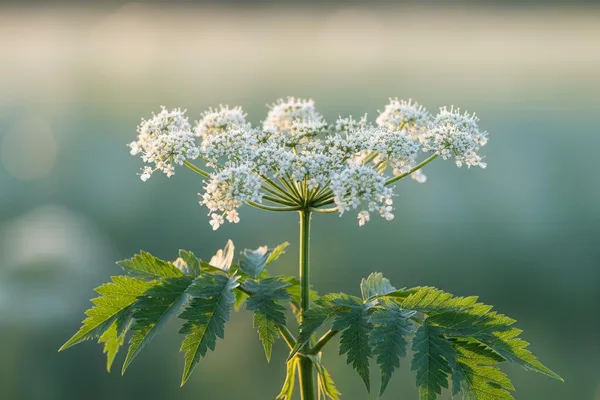
- It has small, white flowers that grow in clusters, shaped like an umbrella .
- Each flower develops into a green, striped fruit, inside which are the seeds. These fruits turn gray-brown when fully ripe.
- This plant has delicate leaves that look like parsley leaves .
Keeping these characteristics in mind, if you have any doubts about an unfamiliar plant, do not touch, break, or eat it.
Is it poisonous if you touch hemlock?
This is a question that many people ask. Poison hemlock is not a plant like poison ivy, poison oak, or poison sumac that is itchy and painful to touch. It usually does not cause a rash when touched. Most of the time, hemlock is only poisonous if ingested.
However, you need to be very careful when handling poison hemlock. Some people have very sensitive skin. People who do can develop a skin allergy (dermatitis) when they touch it. Very rarely, that is, with a very low probability, poison hemlock can enter the body. Do you know how? The poison can enter the bloodstream through something like a wound or cut on your skin, or through the mucous membranes of your eyes and nose. Therefore, it is wise to use protective equipment such as gloves if you handle this plant.
What are the symptoms of hemlock poisoning?
After eating a poison hemlock plant, symptoms can appear very quickly . They can start within 15-30 minutes. Here are some of the symptoms:
- Sweating
- Vomiting
- Dilation of the pupil of the eye (mydriasis)
- Increased salivation
- Dry mouth (xerostomia)
- Rapid heartbeat (tachycardia)
- High blood pressure (hypertension)
- Restlessness or confusion
- Muscle weakness and jerking (myoclonus)
- Tremors and seizures
These are the first symptoms to appear. However, if the condition becomes more severe, further complications may occur later. These are called "delayed complications."
- Slow heartbeat (bradycardia)
- Low blood pressure (hypotension)
- Muscle paralysis (similar to paralysis)
- Muscle breakdown and death (rhabdomyolysis)
- Renal failure
- Central nervous system depression - This can lead to loss of consciousness and even coma.
Imagine how dangerous it would be to be unaware of a plant that can cause such severe symptoms!
Why is hemlock poisonous? What causes this?
Hemlock is poisonous, even if you eat a very small amount of it. This plant contains several toxic chemical compounds called "alkaloids." These alkaloids are the root of all the trouble.
These alkaloids work by poisoning the "neuromuscular junctions" that are the places where messages are sent from our nervous system to our muscles. Due to this poisoning, the muscles that help us breathe gradually stop working. When this happens, we cannot breathe, which can lead to a condition called "respiratory failure" and even death . This is the main fatal outcome of hemlock poisoning. In addition, this poison can also affect our digestive system, nervous system, and cardiovascular system.
How do you recognize hemlock poisoning?
There is no specific test to diagnose hemlock poisoning. Your doctor will examine you and determine if you have hemlock poisoning based on your medical history and the symptoms you are experiencing. However, if you have a sample of the suspected plant, showing it to your doctor can help confirm the diagnosis.
What is the treatment for hemlock poisoning?
If you think you may have accidentally eaten poison hemlock, you should see your doctor immediately, or go to the emergency room at your nearest hospital. There's no point wasting time.
Unfortunately, there is no specific antidote for hemlock poisoning. That is, there is no specific medicine that can neutralize the poison. Therefore, treatment is a bit complicated. Doctors will treat you based on your symptoms and the severity of your condition. These treatments may include:
- If breathing is difficult, breathing is provided with the help of a machine (mechanical ventilation).
- Administer antiseizure medication to control seizures.
- If the kidneys fail, hemodialysis is performed.
- Cleanse the digestive system and remove toxins from the body.
- Administer intravenous fluids (IV fluids) to prevent dehydration and provide necessary nutrition.
How to protect yourself from hemlock poisoning?
The best way to protect yourself from hemlock poisoning is to remove the plant from your environment . If you see one in your garden, you should carefully remove it.
- In areas where there are small plants, they should be removed by uprooting them . If the roots remain, they can sprout again.
- Herbicides can be used before plants bloom, in late fall or early spring. However, applying herbicides after flowering is not as effective.
- Do not cut, mow, or burn poison hemlock plants. Doing so can cause the seeds to sprout again, and the smoke from the fire can be toxic.
- When removing these plants, place them in plastic garbage bags, tie them tightly, and throw them in the trash .
- When handling or removing poison hemlock, be sure to wear a face mask, long-sleeved clothing, and gloves .
If you work in the woods, camp, or spend a lot of time outdoors, it's important to be aware of the different types of poisonous plants . Don't touch or eat any unfamiliar or unfamiliar plants.
What happens if I get hemlock poisoning? Will I recover?
Your prognosis for hemlock poisoning, that is, whether you will recover or not, depends on several factors:
- How much hemlock you ate .
- How poisonous the plant was when you ate it.
- The severity of your condition .
- What was your health status before you were poisoned?
If you experience any symptoms of hemlock poisoning, you should seek immediate medical attention . The sooner you get treatment, the more likely you are to survive. Even after the poison has been eliminated from your body, symptoms such as seizures may persist for several days. Other symptoms, such as muscle twitching and restlessness, may persist for several months.
Poison hemlock is a plant that looks very similar to other plants in the carrot family, and can sometimes be confused with wild parsnip, wild carrot, or wild parsley. However, if you accidentally eat it, it can be fatal. Severe symptoms can begin in as little as 15 minutes. Unfortunately, there is no antidote. Therefore, as with poison hemlock, be very careful when handling or eating any plant you are not familiar with. If you develop any symptoms after handling or eating a plant, seek medical attention immediately. The sooner you seek treatment, the better your chances of survival.
The most important things to remember (Take-Home Message)
Okay, so I hope you can remember some of the most important points from what we've talked about.
- Poison Hemlock is a very dangerous and deadly poisonous plant.
- It can be confused with plants we eat, such as carrots and parsley, because they look similar . Be especially careful of the purple spots on the stem.
- All parts of the plant are poisonous , especially if eaten.
- Severe symptoms can appear quickly after poisoning.
- There is no specific antidote for this. Treatment is symptomatic.
- Prevention is the best option. Don't touch or eat unfamiliar plants. If you have any in your garden, carefully remove them.
- If in doubt, if symptoms appear, go to a hospital immediately . Quick treatment can save lives.
I hope this information is useful to you. Always be careful!
` Poison Hemlock, Poison Hemlock, Poisonous Plants, Plant Poisoning, Symptoms, First Aid, Prevention




💬 Comments (0)
No comments yet. Be the first to share your thoughts here.
Add Your Comment