

Have you ever heard of this condition called `(Portal Hypertension)`? You may find the name a bit strange and difficult to understand. But this is a condition that can occur in our liver, requires some care, and can also be serious. Let's talk about this today simply, in a way that you can understand, as if someone close to you were explaining it to you, okay?
What is portal hypertension?
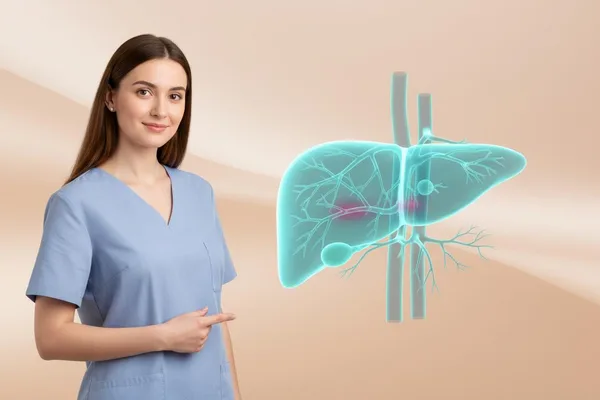
Simply put, ``Portal Hypertension`` is when the blood pressure in the main blood vessel (`portal vein`) connected to your liver and the system of small veins (`portal venous system`) that branch off from it increases above the normal level. Imagine that there is a large vein in your abdomen that collects dirty blood from organs like your stomach, intestines, pancreas, and spleen and brings it to your liver. That is what we call the ``portal vein`` or the portal vein. The system formed by many small veins connected to this main vein is called the ``portal venous system`` or the portal venous system.
Our liver is a very important organ. It is the liver that cleans the collected blood, separates the necessary nutrients, and sends it back to the heart to distribute it throughout the body.
Now, if for some reason the flow of blood to the liver through this `(portal vein)` is blocked, or if that journey is slow, the pressure in that entire venous system gradually increases. Just like when a water pipe is blocked in the middle, the pressure of the water inside the pipe increases. That is what we call `(Portal Hypertension)` when the pressure increases.
Then our body tries to cope with this increased pressure. So, it starts sending blood to other, usually smaller veins, where less blood flows, as if to bypass the blocked main road. But when that extra blood goes in, those small veins can't handle it and stretch, get bigger, and their walls can become very weak. Sometimes these weakened veins can `leak` fluid into the abdomen, or the veins can burst and bleed suddenly. This is the most dangerous thing.
Who is more likely to develop ``Portal Hypertension''?
In Western countries, the main cause of this condition is often a disease called cirrhosis of the liver. Cirrhosis is a condition in which the liver is damaged over time, and healthy liver cells are replaced by scar tissue (hard, fibrous tissue). This scarring causes a major obstruction to the flow of blood through the liver through the portal vein. It's like a stone blocking a road.
In other parts of the world, for example in some African and Asian countries, it is also common due to a parasitic infection called ``schistosomiasis.`` This parasite damages the blood vessels in the liver. According to the World Health Organization, more than 230 million people worldwide have this infection.
How serious is this situation?
Complications caused by ``Portal Hypertension`` can sometimes be life-threatening , especially internal bleeding. Not everyone gets these complications, but the risk increases as the pressure in the vein system increases. The higher the pressure, the more the vein becomes enlarged, weakened, and more likely to burst.
In fact, portal hypertension and its complications are the leading cause of hospitalization and, in some cases, death for people with cirrhosis of the liver.
What are the 5 main symptoms of `(Portal Hypertension)`?
One problem with this is that, in many cases, there may be no outward symptoms until complications arise. Consider that about 90% of people with cirrhosis have portal hypertension developing inside their bodies before they show symptoms. Also, about 40% may already have enlarged veins called varices, without any warning.
The first symptoms that appear are usually related to the new, enlarged, leaking, and bleeding veins. They are:
- Vomiting blood (maybe even coffee grounds-like color).
- Blood in the stool (often dark black, tarry, or sometimes red).
- The stomach suddenly becomes larger and feels full, along with rapid weight gain. (This is due to the stomach filling with water).
- Swelling of the legs, especially the ankles (edema) .
- Feeling a bit confused, having a loss of consciousness, sometimes forgetting who you are and where you are (mental confusion) .
What are the possible complications of `(Portal Hypertension)`?
This condition can lead to various complications. Let's look at them one by one:
- ``Ascites``: `` Ascites`` is the accumulation of water-like fluid in the abdomen from enlarged, weakened veins, which leaks into the abdominal cavity (``peritoneal cavity``). This can cause the abdomen to swell and feel bloated, and can cause loss of appetite and difficulty in digestion. In some severe cases, this fluid can also move up to the chest, making it difficult to breathe. It also increases the risk of developing an infection inside the abdomen (``peritonitis``).
- Gastrointestinal bleeding: Enlarged veins in the digestive tract (oesophagus, stomach, intestines) (varices) can burst and bleed. The most common of these are esophageal varices . These are the veins closest to the skin and have very thin walls, so they can burst easily. The veins in the walls of the stomach can also swell (this is called portal hypertensive gastropathy) and, in severe cases, they can bleed. If this bleeding continues , anemia , or a lack of blood in the body, can occur.
- Hypersplenism: When blood flow through the spleen is reduced, the spleen swells with excess blood and grows new blood vessels to accommodate this blood. The enlarged spleen becomes overactive and begins to remove more important cells from the body's blood (for example, platelets , which help blood clot, and white blood cells, which are important for immunity). This can lead to decreased blood clotting (easier bleeding), and a weakened immune system (easier getting sick).
- Low blood oxygen: In some people, this ``Portal Hypertension`` causes the blood vessels in the lungs to become abnormally wide. Then the lungs are unable to properly transfer oxygen to the blood. The result is low blood oxygen levels ``(hypoxemia)`` . This specific condition is also called ``(hepatopulmonary syndrome)`` .
- Kidney failure: The dilated blood vessels caused by portal hypertension can narrow blood vessels elsewhere in the body (especially those supplying blood to the kidneys). If this happens in the kidneys, the blood supply to the kidneys is reduced, causing kidney failure . This is a rare but very serious complication, also known as hepatorenal syndrome .
- Mild cognitive impairment: As our bodies try to adapt to portal hypertension, they create new blood vessels (shunts) that bypass the liver. But when blood bypasses the liver and goes directly into the circulation, the toxins that the liver should be cleaning out are not cleaned. These toxins then accumulate in the blood and gradually affect brain function. You may experience temporary symptoms such as confusion, slurred speech, and loss of consciousness. This is called hepatic encephalopathy .
What are the main causes of Portal Hypertension?
As we talked about a little bit earlier, there are a few main reasons:
- Cirrhosis of the liver: This is the most common cause. Cirrhosis is usually the last stage of long-term liver disease. It is most commonly caused by viral infections such as viral hepatitis C, alcohol-induced hepatitis , and nonalcoholic fatty liver disease . This scar tissue blocks the flow of blood through the liver.
- Granulomas of the liver: Granulomas are collections of inflammatory cells that occur with various infections (e.g. schistosomiasis) and inflammatory diseases. They look like small tumors that can block the portal venous system. They are often a precursor to the later development of liver fibrosis.
- Blood clots (Thrombosis): If a blood clot (thrombosis) forms anywhere in the portal venous system, it can block blood flow to the liver, through the liver, or out of the liver. This can have many causes, including some inherited blood disorders.
How do you know if you have `(Portal Hypertension)`?
To know for sure if this is the case, you need to measure the pressure in the veins of the liver. This involves inserting a small tube (catheter) into the vein. However, this is a somewhat difficult and complicated test, and it is not usually done easily, and not everyone needs it.
Fortunately, doctors can diagnose this condition (Portal Hypertension) based on clinical signs and symptoms. That is, what you say and what they see when they examine you. Scans and blood tests can confirm this suspicion.
What signs would a doctor suspect of Portal Hypertension?
- Enlarged veins (varices) (especially if seen during endoscopy).
- An enlarged spleen (either on palpation or on a scan).
- Evidence of blood passing through the digestive tract.
- Having fluid in the abdomen (ascites).
- Signs of a slight decrease in brain function (as mentioned earlier, signs of `hepatic encephalopathy`).
- If a blood test shows that the number of certain types of cells in the blood (e.g. platelets, white blood cells) is low.
- Signs include easy bruising and excessive bleeding.
What tests are done to confirm this condition?
- Blood tests: Blood tests can tell you a lot about what's going on in your organs, especially your liver and kidneys. A comprehensive metabolic panel can check for any problems with your kidneys and liver. A complete blood count (CBC) can check for any overactive spleen that's removing too many white blood cells or platelets. It can also check for certain blood disorders that can cause portal hypertension, or anemia caused by internal bleeding.
- Imaging tests: Ultrasound scans and CT scans can help determine whether there is cirrhosis, ascites, enlarged organs like the spleen, enlarged veins in the portal venous system, and new veins. In particular , Doppler ultrasound can take pictures of blood flowing through the veins. It can clearly show blockages in the blood flow and whether the veins are abnormally wide or narrow.
- Endoscopy: If you have signs of bleeding from your digestive tract (blood in your vomit, blood in your stool), your doctor will likely need to do an endoscopy. An upper endoscopy involves inserting a long, thin tube (endoscope) with a camera through your mouth to examine your esophagus, stomach, and the first part of your small intestine (duodenum). The doctor will look for enlarged veins called varices, whether they are bleeding, and whether there are any nearby bleeding areas. The best part is that if you see bleeding, they can often insert special instruments through the endoscope to stop the bleeding.
What are the treatments for `(Portal Hypertension)`?
Whether or not Portal Hypertension can be completely cured depends on the underlying cause. For example, if an infection or a blood clot is the cause, your doctor may be able to treat the underlying cause with medication, and your Portal Hypertension will gradually improve, and sometimes even go away completely.
However, if there is extensive scarring of the liver, such as cirrhosis, it usually does not go away. This means that the scarring does not go away. Therefore, portal hypertension may persist. In most cases, treatment is aimed at controlling the dangerous complications of portal hypertension and minimizing the damage they cause. Doctors first try to control the acute conditions (e.g. bleeding) and then move on to long-term solutions.
First-line treatment to stop bleeding from the digestive tract:
- Endoscopic therapy: The doctor treats sudden bleeding through endoscopy. These methods include sclerotherapy (injecting a special medicine into the bleeding veins to cause them to shrink and control the bleeding) and banding ( tying off the bleeding veins with small rubber bands to stop the bleeding).
- Medication: Your doctor may prescribe medications, either along with or separately from endoscopic therapy, to reduce the pressure in your varicose veins and reduce the risk of bleeding again. Medications called beta-blockers can help reduce portal pressure, while vasoconstrictors can help narrow the enlarged veins and reduce bleeding.
First-line treatment for other complications:
- If there is `(hepatopulmonary syndrome)` (lack of oxygen in the blood), oxygen is given `(Oxygen therapy)` .
- Dialysis if there is hepatorenal syndrome (kidney failure).
- If you have hepatic encephalopathy (brain function problems), there are medications that can help.
- Paracentesis is the removal of excess fluid from the abdomen due to ascites (fluid accumulation in the abdomen) and a sample of that fluid is taken to check for peritonitis (infection of the abdomen).
Second-line treatment (if bleeding or other complications persist):
Sometimes, if the bleeding cannot be stopped or other complications persist, doctors will resort to second-line treatments. Two of the main methods are ``shunt`` surgeries. These are used to change the path of blood flow in the ``portal venous system`` and reduce pressure.
- Transjugular intrahepatic portosystemic shunt (TIPS): This is a non-surgical procedure. Using X-ray images, an interventional radiologist places a stent (a small mesh tube) inside your liver. They use a needle to create a tunnel through the liver and connect the portal vein directly to a vein in the liver (the hepatic vein). This allows blood to flow through the tunnel, reducing pressure. The stent is placed to keep the tunnel open. This is a very effective procedure, but over time, the stent can become blocked, and you may need to have it repaired again (a repeat procedure).
- Distal splenorenal shunt (DSRS): This is a surgical procedure. For some people, it may be a better option than TIPS. However, you need to be healthy enough to undergo the surgery and recovery period. However, it may be more effective in controlling the disease in the long term. This procedure involves removing your splenic vein from your liver and connecting it to the left kidney vein. This selectively reduces blood flow and pressure to both the liver and spleen.
Finally, for those with very severe liver disease that cannot be controlled with other treatments, a liver transplant may be considered.
What kind of follow-up care will I need?
After all these treatments , it is essential to continue to be under medical supervision. You need to be attentive to your condition. You will need to see your doctor regularly for the first year after treatment to see if the treatment is still working and if any new complications have arisen. After that, you will need to see your doctor at least twice a year to have a liver scan and blood tests to check your liver function. This is like having a car serviced, you need to keep taking care of it.
What can I expect with this situation?
How you will fare and whether you will recover depends on how severe your portal hypertension is, whether you have bleeding varices, and whether you have other complications. In fact, the risk of death from a first bleed can be as high as 40%. If you bleed again after treatment, the risk of death is closer to 30%. The risk is higher if your cirrhosis is severe. However, if liver disease is still manageable in its early stages, early treatment can reduce the risk.
How can I prevent `(Portal Hypertension)`?
The best way to prevent this ``(Portal Hypertension)`` is to try to stop the development of long-term liver disease if possible. You can't control all causes, but some of the most common causes can be controlled if detected early.
- Liver disease caused by alcohol use, or liver disease caused by metabolic disease (e.g., nonalcoholic fatty liver disease), can often be improved with diet and healthy lifestyle changes (such as exercise).
- Hepatitis C is completely curable with new antiviral medications. Therefore, it is very important to get tested for hepatitis C at least once in your life.
How do I take care of myself while living with `(Portal Hypertension)`?
This may be a difficult journey, but you are not alone.
- Stay in touch with your medical team, including your doctors and nurses. Listen carefully to and follow what they say.
- Go for checkups on time, take your medications exactly as the doctor tells you, at the time they tell you. Don't miss a single day.
- Always consult your doctor before taking any new medication (whether for another illness or a vitamin).
- Stop drinking alcohol completely, or reduce it as much as possible. This is one of the biggest benefits to the liver.
- You may need to follow a low-sodium diet , especially if you have a lot of water in your stomach. Or you may need to follow a diet plan that is specifically designed for you. It is a good idea to consult a nutritionist.
- You may have other related conditions (e.g., diabetes, high cholesterol). Help control them with diet and lifestyle changes.
Because this condition, called ``Portal Hypertension,'' affects so many organs, treating it can feel like putting out a fire that's burning in different places. You may be surprised, even scared, to learn that liver disease can affect the veins in your stomach, esophagus, lungs, and kidneys. This can be a big shock, especially if you've never had any symptoms of liver disease. But the most important thing is that if you recognize it early and get it treated properly, you'll have a great advantage in controlling ``Portal Hypertension,'' and its complications. So don't be afraid, and if you have any doubts, see a doctor for advice.
Final Take-Home Message
Okay, so from what we've discussed, I hope you've gained a better understanding of `(Portal Hypertension)`. Here are the main things to remember:
- Portal hypertension is an increase in pressure in the veins that connect to the liver. This can be a serious condition .
- The most common cause is cirrhosis of the liver. Therefore, protecting the liver is very important.
- Often, symptoms may not appear in the early stages. Therefore, if you have risk factors (e.g., chronic liver disease, hepatitis), get regular medical checkups.
- If you experience symptoms such as vomiting blood, black stools, or a distended abdomen , see a doctor immediately.
- There are treatments, but it is best to recognize it early and start treatment.
- Follow your doctor's instructions exactly, take your medication correctly, and make the necessary lifestyle changes.
If you have any further questions about this, don't hesitate to talk to your doctor. Stay healthy!
` Portal Hypertension, Liver, Portal Vein Pressure, Cirrhosis, Hematemesis, Ascites, Liver Disease, (Cirrhosis), (Varices), (Ascites)




💬 Comments (0)
No comments yet. Be the first to share your thoughts here.
Add Your Comment