
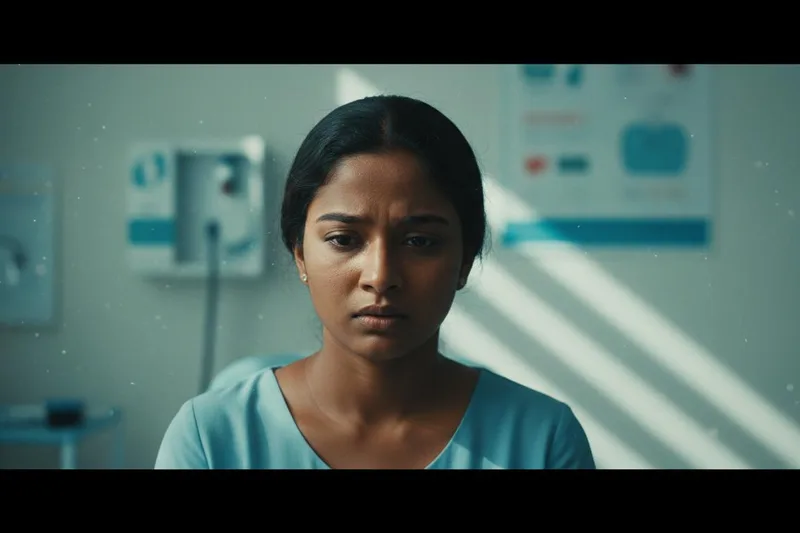
Imagine that you had unprotected sex, or that you have a slight suspicion that you may have contracted the HIV virus in some other way. It is very normal to feel a lot of fear and anxiety at a time like this. But don't panic. There is a special treatment that can prevent HIV infection in such an emergency. We are talking about that today.
Simply put, what is PEP?
The full meaning of PEP is Post-Exposure Prophylaxis . In Sinhala, it means preventive treatment taken after exposure to a pathogen. This is very important when it comes to the HIV virus.
Simply put, PEP is a course of medication given to prevent the infection from becoming established in the body if there is a suspicion that you may have been exposed to the HIV virus. This is a combination of one or more medications. This treatment must be taken daily for 28 days .
The most important thing is that for this treatment to be effective, you must start taking this medication within 72 hours (three days) of when you think you were exposed to the HIV virus. The sooner you start, the better the results.
Exposure to HIV is a medical emergency . Therefore, if you think you may have been exposed to HIV through sexual intercourse, sexual assault, sharing needles for injecting drugs, or a needlestick injury at work, go to the nearest hospital emergency department (ETU) immediately.
But remember one thing. PEP is for emergency use only. It cannot be used as long-term protection for someone who is at high risk of being exposed to HIV. If you are at high risk, talk to your doctor about a long-term protection method called PrEP (Pre-Exposure Prophylaxis).
What happens before PEP starts?
Before or as soon as you start PEP treatment, your doctor will decide to do some tests on your body. For this, samples such as blood and urine may be taken. These tests are done to determine the exact type and dosage of medication you need to be given.
Typically, things like this are checked:
- Get tested to see if you are already infected with HIV.
- Are there any hepatitis B and hepatitis C virus infections?
- Confirm whether you are pregnant.
- Check if your kidneys and liver are functioning well.
Based on the results of these tests, your doctor will prescribe the most suitable and safest PEP medication for you.
Do you also test for other sexually transmitted diseases?
Yes. Because even one sexual encounter can transmit multiple STIs at the same time. So depending on how you were exposed, your doctor may also test or treat you for other STIs. For example:
- Gonorrhea
- Chlamydia
- Trichomoniasis
How does PEP treatment work?
The drugs used in PEP treatment are called antiretroviral drugs . These are the same drugs used to treat HIV. What these drugs do is very simple. They stop the HIV virus from making copies of itself, dividing, and spreading inside your body.
Think of it like a thief. That thief comes into your house called your body and tries to create many more thieves like him. PEP drugs work by closing doors and putting up barriers so that the thief can't create more thieves.
Different types of drugs work in different ways to break down these barriers. So when you combine several types of drugs, the chance of the virus surviving is greatly reduced. The treatment is more successful.
If we start taking these antiviral drugs early , we can stop the HIV virus from becoming a permanent infection in your body (chronic infection). Once the infection is established, drugs cannot completely eliminate it, they can only control it. The goal of PEP is to stop the virus before it gets to that point.
What medications are used for PEP?
Doctors prescribe a combination of antiviral drugs for PEP. These are taken as pills. The most common combinations are listed in the table below.
| Base Combination | Additional Drug |
|---|---|
Emtricitabine and Tenofovir disoproxil fumarate (FTC/TDF) - (Truvada®) Or Emtricitabine and Tenofovir alafenamide (FTC/TAF) - (Descovy®) | Raltegravir/RAL (Isentress®) |
| Dolutegravir/DTG (Tivicay™) | |
| Combination of Darunavir/DRV (Prezista®) and Ritonavir/RTV (Norvir®) or Cobicistat/COBI |
Depending on the type of medication, you may need to take it once or twice a day. Therefore, before starting PEP, be sure to ask your doctor about the timing and method of taking the medication. Your doctor may also change the type or dosage of these medications depending on other medical conditions you have.
How effective is PEP treatment? Why can it fail?
Studies have shown that PEP treatment, when taken correctly, can reduce the risk of HIV infection by more than 80% . That's a huge success.
However, sometimes this treatment may not be as successful as expected. There are several reasons for this. Let's see what they are.
| Reason for failure | Simply explained |
|---|---|
| Delay in starting treatment | If it starts 72 hours after exposure, the virus may already have begun to stabilize in the body. |
| Skipping medication doses | If you don't take the medicine at the correct time every day, the concentration of the medicine in the body decreases, giving the virus a chance to become active again. |
| Not completing 28 days | If you don't finish the entire course, the virus may not be completely controlled and may resurface. |
| Re-exposure | If you are exposed to HIV again unprotected while taking PEP, the success of the treatment will be reduced. |
| A drug-resistant virus | Very rarely, the strain of HIV you have been exposed to may be resistant to the medications given for PEP. |
Are there any side effects of PEP treatment?
PEP is not a treatment that usually causes major side effects. However, some people may experience some minor discomfort. These usually subside within a few days.
The most common side effects are:
- Feeling tired (Fatigue)
- Nausea
- Vomiting
- Diarrhea
- Headaches
If you experience any of these symptoms, talk to your doctor. Often, these can be relieved with simple medications. Do not take any medication without consulting your doctor.
Where should I go if I need PEP?
This is the most important part. Being exposed to HIV is a medical emergency. So don't waste time and seek medical advice immediately. There are several places you can go.
1. Emergency Treatment Unit (ETU) at the nearest hospital: This is the best and quickest option. Go to the ETU of any government hospital and explain your situation, where you can get the basic treatment and advice you need.
2. Sexual Health Clinic: There are sexually transmitted disease clinics located in major hospitals in Sri Lanka. You can get the advice and treatment you need from these clinics while maintaining the utmost confidentiality.
3. Your Family Doctor: Your family doctor can also tell you about this. However, sometimes if he doesn't have much experience in this, he may refer you to an ETU or a specialist.
Wherever you go, clearly state , "I suspect I may have been exposed to HIV, and I want to know about PEP treatment." Also state that it is an emergency.
What happens after PEP treatment?
After you finish your 28 days of PEP treatment, your work isn't over. You'll need to take several more HIV tests to be completely sure you haven't been infected with HIV.
Usually,
- Within 4-6 weeks of exposure
- At 12 weeks (in 3 months)
- At 24 weeks (in 6 months)
The doctor advises you to get tested again at regular intervals. It is very important to do all these tests to make sure you do not have an infection.
Take-Home Message
- PEP is an emergency treatment given to prevent infection after exposure to the HIV virus.
- For a successful outcome, this treatment must be started within 72 hours (3 days) of exposure.
- This is a 28-day course of medication, which must be completed as scheduled, without skipping a single day.
- If you suspect that you have been exposed to the HIV virus, do not be ashamed or afraid, but immediately go to the nearest hospital Emergency Department (ETU) or see a doctor.
- PEP is not a substitute for protective methods like condoms. It is for emergencies only.


💬 Comments (0)
No comments yet. Be the first to share your thoughts here.
Add Your Comment