
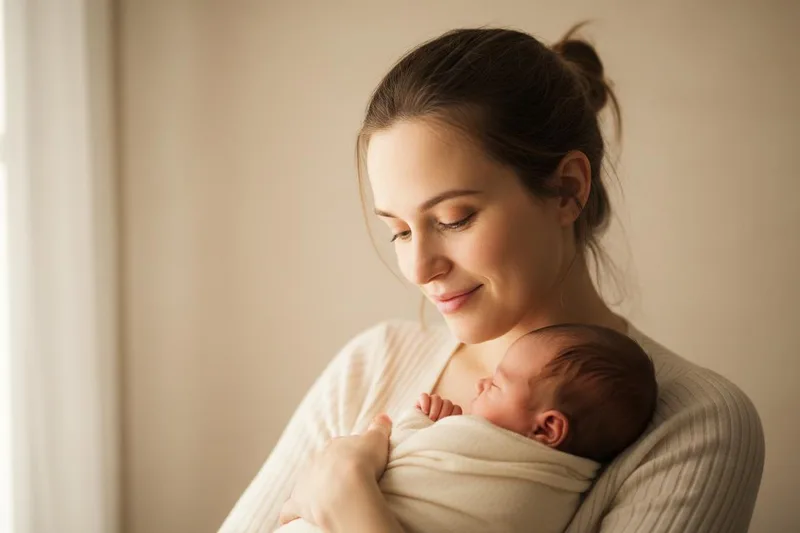
The joy that comes with bringing home a baby is hard to describe, right? Everyone's attention is on the new baby. But in the midst of all this, how are you feeling as a new mom? Your body has changed a lot over the past nine months, and you've also faced the challenges of giving birth. So, this time after having a baby, the 'Postpartum' period, is very important for your recovery and recovery. Today, we'll talk about this time, what you might be feeling, and how you should take care of yourself.
What is the postpartum period?
Simply put, postpartum is the period after giving birth. It is often considered the first six to eight weeks. That is, the time it takes for your body to return to the way it was before pregnancy. However, the symptoms and changes that occur during this period can actually last longer than eight weeks.
Think about how many changes your body and life will go through at once during this time. Some of the changes are physical. For example, your breasts will swell with milk and your vagina will start to bleed. Others are related to the dramatic changes in your hormone levels. In short, having a baby is a huge challenge, both physically and mentally. It can also be exhausting to take care of a newborn and adjust to a new life during this time.
So, be very careful about how you feel after having a baby. If you feel like something is not right, don't hesitate to tell your doctor. Just because you have a baby doesn't mean your health isn't important. You definitely need to think about your rest and health as well as taking care of the baby.
Your doctor will give you postpartum checkups after you have your baby. Be sure to go to them. This is where your healing process and recovery will be monitored. Any complications can be identified. This is also a great time to ask any questions you may have and talk honestly about how you are feeling.
What is the recovery time frame like?
Just like your pregnancy, your recovery time is unique to you. There is no one-size-fits-all timeframe. However, there are some general things you can expect.
In the first few hours and days after your baby is born, you may experience:
- Uterine contractions: Your uterus should shrink back to its normal size. This can cause cramping and vaginal bleeding. Sometimes your doctor may massage your uterus on your belly to help it contract more quickly.
- Changing hormone levels: This can cause things like hot flashes, mood swings, and headaches.
- Breast engorgement: Your breasts are producing milk. Even if you are not breastfeeding, your breasts may become swollen and painful.
- Perineal soreness: If you have had a vaginal birth, it is normal to feel some pain in the area between the vagina and anus (the perineum). About 70% of women experience some tearing in this area during childbirth. For those who have had a cesarean section (C-section), you may experience severe pain around the incision for a few days.
- Swelling due to extra fluid: This is usually a result of the extra fluid that builds up during pregnancy. This swelling should go down within a week. However, if the swelling is accompanied by chest pain or difficulty breathing, it could be a sign of something more serious.
- Fatigue: Labor, delivery, and caring for a newborn can leave you feeling tired like you've never felt before. It's normal to feel tired for days or weeks after having a baby. You can find relief by trying to get as much rest as possible.
The three stages of postpartum period
Doctors divide this period into three main stages. To understand this clearly, see the table below.
| Phase | Duration | Important points and risks |
|---|---|---|
| Acute phase | The first 6 - 12 hours after birth | During this time , you are at the highest risk of developing emergency conditions such as eclampsia and postpartum hemorrhage . Your blood pressure, heart rate, and blood volume will be checked regularly at the hospital. |
| Subacute phase | From 24 hours after delivery to 2 - 6 weeks | Changes in the body are still happening, but the risk of emergencies is lower. During this time, doctors are focusing on things like cardiomyopathy (weakening of the heart muscle), postpartum depression , and urinary incontinence. |
| Delayed phase | 6 weeks to 6 months | Changes occur slowly during this time. The main thing is that the muscles and tissues return to their pre-pregnancy state. Conditions such as pelvic floor dysfunction, pain during intercourse, and uterine prolapse may need to be treated during this time. |
What are the common physical symptoms?
Your body goes through a lot of changes during the postpartum period. Many of these are natural changes caused by hormonal changes.
- Perineal pain and soreness: This area is stretched during childbirth, so it can be swollen and sore for a few weeks. Sitting on a pillow, washing with lukewarm water after using the toilet, and using a cooled sanitary pad can help reduce this discomfort.
- Vaginal discharge: After giving birth (even by cesarean section), you will experience vaginal bleeding. This is medically known as lochia . It starts out as dark red, then gradually turns brown, and finally stops as a light brown discharge. This entire process can take about six weeks. Remember, during this time, use only sanitary pads instead of tampons.
- Uterus involution: The pain in the lower abdomen that occurs during this period is also called "afterbirth pains." Although the pain usually subsides after the first few days, it may be more severe when breastfeeding.
- Breast Swelling and Nipple Pain: Expect swollen, painful breasts for at least a few days. Nursing mothers may need the help of a lactation consultant to help with painful conditions like cracked nipples.
- Sweating: Hormone levels change dramatically after you have a baby. This is why it's normal to sweat a lot, especially at night. This should subside in a week or two.
- Constipation: It is common to have difficulty passing stools after having a baby. If you were given an epidural for pain relief, it can slow down your bowel movements and make it difficult to pass stools. Sometimes constipation can also be caused by fear of having to push. Your doctor may recommend taking stool softeners to help with this. Hemorrhoids are also common during this time.
- Healing after a cesarean section: If you have stitches from a C-section, it will take about 10 days for the skin to heal. Internal stitches can take about 12 weeks to fully heal. If there is pus-like discharge from the incision or a fever, this could be a sign of infection. Be aware of this.
- Hair loss: Hair loss is also very common during this time due to hormonal changes.
Changes felt mentally and emotionally
In the weeks and months after having a baby, there can be many emotional changes that affect your mind, stress, and the way you feel about your body.
- Baby blues: The baby blues are a common symptom of postpartum depression and the tendency to cry over small things. While these new feelings may come as a surprise, they usually go away within a few weeks.
- Postpartum depression: This is a depressive state that causes feelings of extreme sadness and hopelessness that last for weeks and months after having a baby. Unlike the baby blues, this does not go away on its own. It may require medication or behavioral therapy.
- Postpartum anxiety: This is the feeling of extreme worry and anxiety that occurs after the birth of a baby. It can also be accompanied by physical symptoms such as insomnia and a racing heart. Postpartum depression and anxiety can both occur together.
- Weight loss and body image: Your body went through a lot of changes during pregnancy and childbirth. It's normal to be concerned about sagging skin, stretch marks, and extra weight around your hips or belly.
Your body did an amazing thing. Give it time to recover. You will have lost about 10-20 pounds (4.5-9 kg) by the time you get home from the hospital. Focus on eating nutritious foods and taking good care of yourself.
Complications that may occur during this time
Some health conditions can develop after you have your baby. At the hospital, the medical team will monitor you for these serious conditions. While some symptoms are normal, others could be a sign of a problem.
Some of the most serious conditions that can occur during the postpartum period are:
- Postpartum hemorrhage
- Postpartum preeclampsia
- Deep vein thrombosis (DVT)
- Pulmonary embolism
- Mental conditions such as postpartum rage or postpartum psychosis
- Sepsis - a severe infection that spreads throughout the body
The best thing you can do for your health after having a baby is to listen to your body. If something doesn't feel right, please talk to your doctor. You don't have to wait until your next clinic appointment to ask your questions. Your recovery and overall health are very important to them, too.
How do you take care of yourself after having a baby?
The most important thing you can do is give yourself time to rest and heal. This may not be as easy as it sounds. But resting gives your body and mind the time it needs to recover. Ask for help when you need it. It could be limiting the number of visitors you have, asking for help with babysitting, or asking for help with household chores or cooking.
In addition to rest, here are some other ways to take care of yourself:
- Nutrition: Drink plenty of water. Try to eat healthy foods like lean proteins, fruits, vegetables, and whole grains. Drinking plenty of water can also help relieve constipation.
- Caring for the perineum: If you have a normal delivery, you will likely experience some pain for a few weeks. Your doctor will likely give you instructions on how to care for this area at home. Things like washing with lukewarm water (using a peri bottle) after using the toilet can help.
- Limiting physical activity: While you may want to get back to your pre-pregnancy size quickly, don't rush into exercising. Your doctor will tell you when it's safe to exercise. You can usually start light exercise, such as walking, within a few days after your baby is born. Those who have had a cesarean section may need to wait a little longer. Once you are able to exercise, start slowly.
- Mental health support: Don't be afraid to ask for help. Be patient with your feelings. The postpartum period can be challenging. If you're feeling sad, stressed, or anxious, talk to a friend, your partner, or your doctor. There are many resources to help you.
When do you need to talk to the doctor?
Some symptoms can be a sign of a serious problem. Don't ignore your symptoms or be embarrassed to talk about them. Be especially aware of the following symptoms. If you have one or more of these, talk to your doctor right away.
| Symptoms to watch out for | Description |
|---|---|
| Heavy vaginal bleeding | If a sanitary napkin becomes completely wet within an hour, or if the amount of bleeding increases instead of decreasing day by day. |
| Passing large blood clots | If you pass several blood clots larger than the size of a coin (one or two is normal). |
| Fever | If the body temperature is higher than 101 Fahrenheit (38 Celsius). |
| New or worsening pain | If the pain gets worse instead of decreasing over time. |
| Foul-smelling vaginal discharge | If the vaginal discharge has a bad odor. |
| Pain and swelling in the legs or ankles | Especially if there is pain along with swelling. |
| Pus or bleeding from the C-section incision | The cut may be a sign of infection. |
| Dizziness or vision changes | Blurred vision or seeing double. |
| Severe and persistent headache | Severe headache that does not respond to even a simple painkiller. |
| Chest pain or difficulty breathing | This is a very serious emergency. Go to a hospital immediately. |
Very important: If you have thoughts of harming yourself or your baby, please go to the nearest hospital Emergency Department (ETU) or talk to a trusted family member or friend immediately. Do not struggle with these feelings alone.
The postpartum period is a time of adjustment and transition. You may feel alone or unprepared because you don't get the same attention as you did during pregnancy. Remember, you are not alone! You are going through a lot of physical and emotional changes as you adjust to life with a newborn.
Some symptoms are normal, but others could be a sign of another problem. Be kind to yourself, take care of your well-being as much as possible, and ask for help if you need it. Even if you feel well, it is very important to attend all the clinic appointments that your doctor gives you.
Take-Home Message
- Postpartum recovery is a journey, not a race. Give yourself time.
- Both physical and emotional changes are very normal during this time. Don't be ashamed of this.
- Rest is essential. Don't hesitate to ask for help with babysitting and household chores.
- Listen to your body. Never ignore warning signs.
- Even if you feel well, attend all postpartum checkups provided by your doctor.




💬 Comments (0)
No comments yet. Be the first to share your thoughts here.
Add Your Comment