
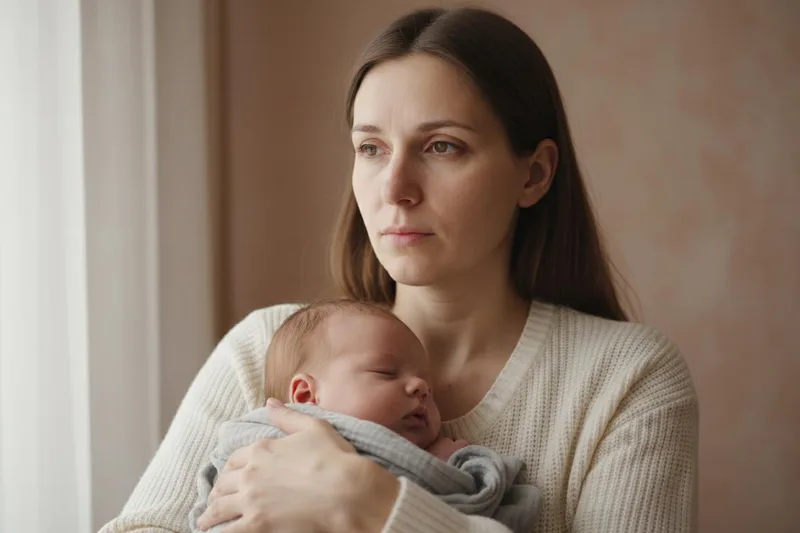
Having a baby is a big change in your life. Although becoming a mother or father is a wonderful experience, it can also be overwhelming and overwhelming at times. It's normal to have some fears and doubts, especially if it's your first time. But if you're constantly feeling overwhelmed, lonely, angry, or crying for no reason, you may be suffering from postpartum depression.
What is PPD (Postpartum Depression)? Let's understand it very simply.
Simply put, postpartum depression, or PPD as we call it, is a state of depression that occurs after the birth of a baby. This can affect not only the mother who gave birth to the baby, but also the adoptive parents. After having a baby, our body undergoes major changes in hormones, as well as many changes physically, mentally, economically, and in social relationships. All of these can lead to PPD.
If you have PPD, don't worry, you're not alone . It's not your fault. The important thing is, there is help available. Your doctor can help you manage your symptoms and get you back on track.
Are there different types of this condition?
Yes, there are three main types of postpartum depression:
1. Baby Blues
This is the first thing that happens to many mothers after having a baby. Between 50% and 75% of mothers experience the baby blues . If you have this, you may experience crying, sadness, and even anxiety over small things. It usually starts within the first week (days one to four) of having a baby. Although this experience is a bit uncomfortable, it usually subsides without treatment after about two weeks . The best thing you can do at this time is to ask for help from your husband, family, and friends.
2. Postpartum Depression (PPD)
This is a more serious condition than the baby blues. About 1 in 7 new mothers will develop PPD. If you have had PPD before, your risk increases by about 30% with your next pregnancy. You may feel suddenly happy, then suddenly sad, cry a lot, get angry easily, and feel tired. You may also feel disappointed in yourself, be unnecessarily afraid of everything, and feel like you can't take care of your baby or yourself. Some people may have mild symptoms, while others may have them all the time. These symptoms may appear within a week of having a baby, or they may appear gradually, up to a year later. Even if symptoms last for several months, they can be successfully treated with psychotherapy or antidepressants .
3. Postpartum Psychosis
This is the most severe of the three conditions and requires emergency medical treatment . However, it is very rare. About one in 1,000 mothers who have given birth develop this condition (Postpartum Psychosis). Symptoms usually appear soon after giving birth, and they are very severe. These symptoms can last from a few weeks to a few months. Symptoms include extreme restlessness, confusion, hopelessness, shame, insomnia, paranoia, seeing/hearing things that are not real (Delusions or Hallucinations), hyperactivity, rapid speech, and mania. This condition requires immediate medical attention. Because there is a high risk of harming yourself or your baby . Treatment usually includes hospitalization, psychotherapy, and medication.
Who is most affected by this situation?
PPD is not as uncommon as you might think. About 75% of mothers experience the baby blues after having a baby. About 15% of these women can develop PPD. The worst condition I mentioned earlier, postpartum psychosis, only affects about 1 in 1,000 mothers.
How do I know for sure if I have baby blues or PPD?
It's common to experience the baby blues after having a baby. The symptoms of baby blues and PPD are somewhat similar. However, the symptoms of baby blues tend to subside after about 10 days, and are not as severe . In PPD, the symptoms can last for weeks or months, and are more severe.
If you have these things, it could be the baby blues:
- Crying for no reason.
- Everything feels heavy.
- I have an appetite.
- I can't sleep properly.
- Suddenly, you lose your joy and feel sad and angry (mood changes).
But remember, it doesn't hurt to talk to your doctor about your symptoms. He or she can then decide whether you need treatment or not.
How long can PPD last?
PPD can last up to a year after your baby is born . However, that doesn't mean you should feel "cured" in a year. Talk to your doctor about your symptoms and treatment. Be honest about how you're feeling. Think about how you're feeling now compared to when you first started having these symptoms. That way, they can continue to treat your symptoms as best they can.
What are the risk factors for developing PPD?
Some factors may increase the risk of developing PPD:
- If you or someone in your family has ever had depression, PPD, or premenstrual dysphoric disorder (PMDD).
- Limited social support.
- If there are problems in your marriage or relationship (Marital or relationship conflict).
- If you had ambivalence or reluctance about the pregnancy.
- If you had any pregnancy complications such as health problems, difficulty in childbirth, or premature birth.
- If you are under 20 years old, or if you are a single mother.
- If you have a baby with special needs, or if you have a baby who cries all the time.
What are the symptoms of PPD?
You may feel ashamed of your symptoms, or you may think, "I'm a bad mother" because you feel these things. But PPD is a very common condition . You're not alone in feeling these feelings, and it doesn't mean you're a bad person.
If you have several of the following symptoms, it may be PPD:
- You feel sadness, a sense of worthlessness, a sense of hopelessness, a sense of guilt.
- I feel unnecessarily anxious about everything, and my heart is always racing.
- I have lost all interest in the things and hobbies I used to enjoy.
- Change in appetite, not eating properly.
- It feels like my body has no energy, I don't feel like doing anything.
- I can't sleep properly, or I feel like sleeping all day.
- Crying for no reason, or excessively.
- It's hard to think and concentrate.
- I have thought about ending my life, or I have thought, "I wish I were dead."
- There is no interest in the baby, and I feel scared and uncomfortable when I am around the baby.
- Feelings like hurting the baby, or "I don't want this baby" arise.
If you think you have PPD, see your doctor (obstetrician, primary care provider or mental health provider) right away . Your baby's pediatrician can also help you.
What causes PPD?
The link between the sudden drop in hormone levels after childbirth and depression is still being researched. During pregnancy, levels of the hormones estrogen and progesterone increase by about tenfold, but these levels drop sharply after childbirth. Three days after childbirth, these hormone levels return to pre-pregnancy levels.
In addition to these chemical changes, the social and psychological changes that come with having a baby can also increase your risk of developing PPD. For example, changes in your body, lack of sleep, worrying about how to raise your baby, and changes in your relationships with family.
If you have any of these symptoms, please tell a doctor immediately:
- You feel like harming yourself, or you feel like harming the baby.
- Constantly thinking about death or committing suicide.
- Like the last two weeks, I feel sad most of the day.
- Feelings of fear, guilt, despair, anxiety, and helplessness.
- Difficulty thinking, concentrating, making decisions, and performing daily tasks.
- Like the last two weeks, I have no interest in anything I used to enjoy doing most of the day.
Can PPD affect my baby?
Yes, absolutely. PPD can affect your baby as well . That's why it's important to get treatment for both you and your baby.
Research has found that PPD can have the following effects on the baby:
- You are having a hard time forming a good bond with your baby.
- Your child may have behavioral or learning problems.
- You may miss your child's pediatrician appointments.
- Your child may have problems eating and sleeping.
- Your child is at increased risk of obesity or developmental disorders.
- You may neglect your child's care, or you may not recognize when your child is sick.
- Your baby's social skills may decrease.
How do doctors diagnose PPD?
There is no specific test to diagnose PPD. Your doctor will examine you during your postpartum visit. This may include a review of your health history, how you felt after having your baby, a physical exam, a pelvic exam, and lab tests. Many doctors will schedule a separate visit two to three weeks after giving birth to screen for depression. This will help you get the help you need as soon as possible.
They may do a depression screening, or ask you a series of questions to assess whether you have PPD. They will ask you questions about how you are feeling and how your baby is doing. Tell your doctor honestly about your feelings and thoughts . They can then determine if your feelings are normal or if they are symptoms of PPD.
Sometimes the doctor may also do a blood test, as the symptoms of some thyroid conditions can be similar to those of PPD.
Remember, your doctor is there to help you, to make sure you are healthy. So don't hide anything, tell everything honestly. No one is judging you, and you are not alone with these feelings.
Many doctors use a questionnaire called the Edinburgh Postnatal Depression Scale to diagnose PPD. It has 10 questions about depressive symptoms, such as feeling sad, scared, and guilty. You have to choose the answer that best describes how you have felt over the past seven days. The higher the score, the more likely you are to have PPD.
What are the treatments for PPD?
Treatment for PPD depends on the type and severity of your symptoms. Treatment options include anti-anxiety or antidepressant medications, psychotherapy (talk therapy or cognitive behavioral therapy), and participation in support groups.
The most severe condition I mentioned earlier (Postpartum Psychosis) is treated with medications that are used to treat depression, anxiety, and psychosis. You may also be admitted to a treatment center for a few days until your condition stabilizes. If these treatments do not help, electroconvulsive therapy (ECT) may be effective.
If you're breastfeeding, don't assume you can't take medication for depression, anxiety, or a mood disorder . Talk to your doctor about your options.
Types of medications that can be taken for PPD
Your doctor may prescribe antidepressants to help manage the symptoms of PPD. These medications help balance the chemicals in your brain that affect your mood.
If you are breastfeeding, talk to your doctor about the pros and cons of taking an antidepressant. Medications can pass into your breast milk. However, the amount that does pass is usually very small, and most antidepressants are considered safe. Your doctor can help you choose the right medication for you based on your symptoms and whether you are breastfeeding.
Some of the most commonly used antidepressants for PPD are:
- Selective Serotonin Reuptake Inhibitors (SSRIs) such as Sertraline (Zoloft®) and Fluoxetine (Prozac®)
- Serotonin and Norepinephrine Reuptake Inhibitors (SNRIs), such as Duloxetine (Cymbalta®) and Desvenlafaxine (Pristiq®)
- Bupropion (Bupropion - Wellbutrin® or Zyban®)
- Tricyclic Antidepressants (TCAs) such as Amitriptyline (Elavil®) or Imipramine (Tofranil®)
Keep in mind that it takes at least three to four weeks for antidepressants to start working. Talk to your doctor before stopping the medication. Stopping the medication suddenly can cause your symptoms to return. Many doctors recommend gradually reducing the dose before stopping completely.
If your doctor diagnoses PPD while you're in the hospital, they may prescribe an IV medication containing brexanolone.
What can help you live successfully with PPD?
It's normal to feel overwhelmed by everything. Becoming a parent is both a joy and a pain, and raising a baby isn't easy. If you have depression, you're not alone. Your doctor can help you find the right treatment for you.
Here are some things you can do to live successfully with PPD:
- Find someone to talk to — it could be a therapist, a friend, a family member, or someone who will listen and help you.
- Join a support group for new parents.
- Try to eat healthy foods and find time to exercise.
- Give yourself a priority to rest.
- Go out with friends, or call them on the phone.
- Do things you enjoy (reading books, other hobbies), and find time for yourself (self-care).
- Ask for help with household chores and daily tasks.
What happens if PPD is left untreated?
Untreated PPD is dangerous for you, your baby, and your loved ones . It can cause things like:
- I feel like I have no energy.
- There is always restlessness and anger in my heart.
- You feel like you can't take care of the baby.
- Unable to concentrate and make decisions.
- You feel like harming yourself.
Can PPD be completely cured?
With professional help, almost everyone who experiences PPD can overcome their symptoms.
Can PPD be prevented?
It's not possible to completely prevent PPD. However, it can be helpful to be aware of the warning signs and risk factors for the condition. Here are some tips that can help you avoid PPD:
- Be realistic about what is expected of you and your baby.
- Limit the number of visitors you have in the first few days after you return home.
- Ask for help — tell others how they can help.
- When the baby sleeps, you sleep too, or rest.
- Exercise — go for a walk, get out of the house for a break.
- Stay connected with your family and friends — don't be alone.
- Maintain a healthy relationship with your partner — make time for each other.
- Expect that some days will be good, some days will be bad.
When is it necessary to seek medical advice?
You should definitely seek medical advice in cases like these:
- If symptoms last more than two weeks.
- If you feel like you can't function normally or cope with everyday things.
- If you feel like harming yourself or your baby.
- If you feel extremely scared, anxious, and unable to do anything most of the day.
If you need emergency help, or if you feel like harming yourself or someone else, go to the nearest hospital or see a doctor immediately. You can also call the National Mental Health Helpline at 1926 for mental health help in Sri Lanka.
Do fathers get PPD too?
Yes, both moms and dads can experience symptoms of PPD. It's important to seek medical help if you and your partner both experience symptoms of depression or anxiety after bringing your baby home. It's been found that about 4% of fathers experience depression within the first year of having a baby.
How do we help someone with PPD?
People with PPD need a lot of support. Here are some ways you can help:
- Be aware of the signs of depression and anxiety, and urge your friend or partner to seek medical help.
- Be a good listener. Make them feel like you're listening to what they have to say and that you're there to help.
- Offer to help with household chores and daily tasks.
- Offer to help take care of the baby while they sleep and rest.
- Encourage them to seek help from a therapist or other mental health counselor .
- Help them make a doctor's appointment, or offer to go with them for support.
The most important thing we need to remember is
PPD is a common mental health condition that affects about 1 in 7 mothers after having a baby. It's not your fault, and you didn't do anything to cause it . It doesn't make you a bad parent or a bad person. The biological, physical, and chemical factors that cause PPD are beyond your control. Feelings of sadness or worthlessness, loss of interest in things you used to enjoy, excessive crying, and sudden mood swings can be symptoms of PPD. If you think you have PPD, talk to your doctor. They can help you find the best way to manage your symptoms. Counseling, medication, or joining a support group can help. Remember, you are not alone, there is help.
` Postpartum depression, PPD, baby blues, mental health, maternal grief, postpartum, stress




💬 Comments (0)
No comments yet. Be the first to share your thoughts here.
Add Your Comment