
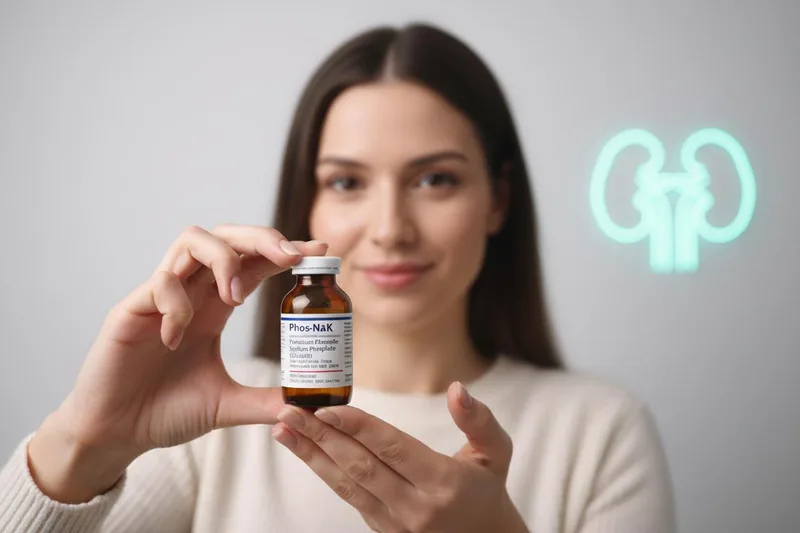
Has your doctor prescribed you a medicine to stop kidney stones from forming or to help you maintain your phosphorus levels? If the name on the medicine packet is Potassium Phosphate; Sodium Phosphate, then this article is very important for you. Sometimes it may also be called Phos-NaK as the brand name. Let's talk about this medicine, how to use it, and everything you need to know in a simple, friendly way.
What is this medicine? Why is it being given?
Simply put, this is a medicine that addresses several key issues.
1. Prevents the formation of kidney stones: When the calcium level in our body increases, the excess calcium can accumulate and form kidney stones. This medicine makes your urine slightly acidic . This stops the calcium from being deposited and reduces the risk of stone formation.
2. Balance the body's phosphorus levels: Phosphorus is an essential mineral for our body. It is essential for the healthy functioning of our bones, muscles, digestive system, and nervous system. If the body's phosphorus levels are low, this medicine is also given to increase it.
3. As an aid to antibiotics for urinary tract infections (UTIs): This medicine also helps some antibiotics for urinary tract infections work better.
Your doctor may also prescribe this for other medical reasons. If you have any questions about it, ask your doctor.
What are the things I need to tell the doctor before taking this medicine?
Before starting this medication, it is important to inform your doctor if you have any of the following medical conditions. This information will help determine whether this medication is right for you and the dosage you should take.
| Illness or condition | Notify your doctor. |
|---|---|
| Addison's disease | Yes |
| Dehydration | Yes |
| Heart disease | Yes |
| If the levels of phosphate, potassium, or sodium in the blood are elevated | Yes |
| Kidney disease or stones | Yes |
| If you are following a low sodium diet | Yes |
| If you are pregnant or trying to conceive a child | Yes |
| If you are a breastfeeding mother | Yes |
| If you have an allergy to any other medicine, food, or dye | Yes |
How should I use the medicine?
You should use this medicine exactly as your doctor tells you.
- This is an oral medication. It usually comes in a packet.
- Try to take it at the same time every day.
- Dissolve one packet thoroughly in about 75 milliliters (75 mL) of water . You can also dissolve it in a fruit drink instead of water.
- Stir well and drink immediately after dissolving. Do not store dissolved.
- Continue using this medicine until your doctor tells you to stop.
What if the dosage of the medicine increases (overdose)?
If you think you have taken more medicine than you think, immediately call the National Poisons Information Centre at the Colombo National Hospital. Or go to the Emergency Treatment Unit (ETU) of the nearest hospital.
What if I miss a dose of medication?
If you forget to take a dose, take it as soon as you remember. However, if it is almost time for your next dose, skip the missed dose and take your next dose at the scheduled time. Never take two doses at once.
Are there any other medications that should not be taken with this medicine, or that I should be careful with?
Yes, this is very important. Tell your doctor about all the medications you are taking, including vitamins and herbal products. Some medications can interact with this medicine.
| Medicines that should never be taken with this medicine | |
|---|---|
| |
| Other medications that should be used with caution and may interact | |
|
Things to be careful about when taking medicine
- Medical tests: Attend your doctor's appointments as scheduled. He or she may ask you to have blood tests to check your mineral levels.
- Kidney stone passing: After starting this medication, it is possible for a kidney stone to pass through the urine. If you experience pain or other unusual symptoms during this time, tell your doctor.
- A balanced diet: Even while taking this medication, it is also very important to follow a healthy, balanced diet.
What are the possible side effects?
Like any medication, this one can have side effects. Some of them are serious, some of them are common.
| Side effects that should be reported to your doctor immediately | |
|---|---|
| Allergic reactions | Skin rash, itching, swelling of the face, lips, tongue or throat. |
| Symptoms of high phosphorus levels | Muscle or joint pain, twitching, numbness around the mouth. |
| Symptoms of high potassium levels | Muscle weakness, fast or irregular heartbeat. |
| Symptoms of high sodium levels | Confusion, excessive thirst, muscle weakness, unusual tiredness, muscle twitching. |
| Side effects that are usually not serious, but should be reported to the doctor if they persist | |
| Diarrhea | Nausea and vomiting |
| Dizziness | Stomach pain |
| Fatigue | Headache |
How should I store the medicine?
- Keep it safely out of the reach of children and pets .
- Store at room temperature (between 15 and 30 degrees Celsius).
- Do not place in places where direct light falls.
- Throw away expired medicine.
Take-Home Message
- This medicine should only be taken exactly as prescribed by your doctor. Do not increase or decrease the dose.
- Always dissolve the medicine packet well in water or a fruit drink and drink it immediately.
- Tell your doctor about all other medications, vitamins, and supplements you are taking.
- If you experience any serious side effects, such as numbness around the mouth, changes in heart rate, or excessive fatigue, see a doctor immediately.
- This medicine is for you only. Do not give this medicine to anyone else for any reason.


💬 Comments (0)
No comments yet. Be the first to share your thoughts here.
Add Your Comment