
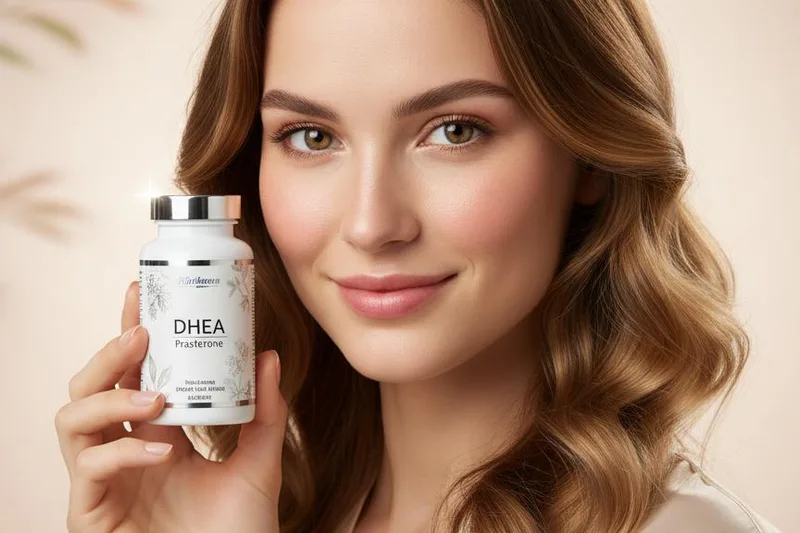
You've probably heard the name DHEA. Maybe from a friend, at the gym, or online. Some people say that it gives you energy, improves your mood, increases sexual stamina, and controls aging. So what's the truth in all this talk? What exactly is DHEA, or Prasterone? Is it a drug? Or a dietary supplement? Is it really safe to use? Let's talk about all of this clearly today.
What exactly is DHEA (Prasterone)?
Simply put, DHEA is a hormone that is naturally produced in our bodies. Its full name is Dehydroepiandrosterone. It is produced by the adrenal glands. This hormone, DHEA, helps our bodies produce testosterone and estrogen, the male and female hormones.
When we are young, our body has the highest levels of DHEA. But as we age, around the age of 30, these levels begin to decline. So some people think that supplementing with DHEA can help restore these declining levels. Many people use it to improve sexual function, boost energy, and improve mood.
But the important thing here is that DHEA is not a prescription drug. It is a dietary supplement. It is not rigorously tested for quality, safety, or efficacy by agencies like the U.S. Food and Drug Administration (FDA) like prescription drugs. That means you can't be 100% sure that what's on the bottle is what it says on the label.
Things you should tell your doctor before taking this supplement
If you're considering taking DHEA, it's important to talk to your doctor before making a decision on your own. It's especially important to let them know if you have any of the following health conditions:
| If you have these conditions, inform your doctor. |
|---|
| Having a history of hormone-sensitive cancer, such as breast, uterine, liver, or prostate cancer. |
| If you have diabetes. |
| Genetic conditions such as G6PD deficiency. |
| If you have irregular vaginal bleeding for no known reason. |
| Immune system problems. |
| Liver disease. |
| A mental health problem (e.g. depression, bipolar disorder). |
| If you have an allergic reaction to Prasterone (DHEA), soy, other medications, foods, or dyes. |
| If you are pregnant or trying to get pregnant (this is very important). |
| If you are a breastfeeding mother. |
How should DHEA be used?
It usually comes in capsules or tablets. If you use it, follow the directions on the bottle label exactly. You can take it with or without food. However, if you experience stomach upset, it is best to take it with food. Never take more than the dosage stated on the label.
What if there is an accident?
If you have any suspicion that you have taken too much of this, call the National Poisons Information Centre at the Colombo National Hospital immediately. Or go to the Emergency Treatment Unit (ETU) of the nearest hospital. This is for your own use only, so never share it with others.
Other medications that may interact with DHEA
Because DHEA is a hormone, it can interact with other medications you are taking. Therefore, it is important to tell your doctor about all medications you are taking. Below are some medications that may interact with DHEA.
| Drug category | Some examples |
|---|---|
| Blood thinners | Warfarin, Clopidogrel, Apixaban, Aspirin |
| Types of hormones and hormone therapy | Estrogen, Testosterone, Birth Control Pills |
| Fertility treatments | Clomiphene |
| Some medications for diabetes | Glipizide, Glyburide |
| Medication for mental health problems | Alprazolam, Diazepam (Benzodiazepines) |
| Painkillers (NSAIDs) | Ibuprofen, Naproxen |
This list is not complete. So tell your doctor about all the medications, herbs, vitamins, and supplements you take. Also tell your doctor if you smoke or drink alcohol.
What are the possible side effects?
Like anything, DHEA can cause side effects. Some are serious, while others are common. The table below provides a clear picture of these.
| Side effect | Description |
|---|---|
| Side effects that you should report to your doctor immediately | |
| Allergic reactions | Skin rash, itching, swelling of the face, lips, tongue or throat. |
| Liver injury | Pain in the upper right side of the stomach, loss of appetite, nausea, light-colored stools, dark yellow or brown urine, yellowing of the eyes or skin, unusual tiredness. |
| Mood swings | Sudden mood swings, irritability, and anger. |
| Side effects that should be reported to the doctor if they persist or are bothersome | |
| Acne | Acne, especially on the face and back. |
| Breast pain or tightness | It can occur in both women and men. |
| Headache | Minor or moderate headache. |
| Irregular menstruation in women | Changes in menstrual cycle or spotting. |
| Unwanted hair growth | Hair growth on the face or other parts of the body in women. |
| Weight gain | Weight gain without a change in diet. |
If you experience any other side effects not listed on this list, please inform your doctor.
Take-Home Message
- Although DHEA (Prasterone) is a hormone that occurs naturally in our bodies, supplements taken externally are not regulated as a drug. Their quality and purity can vary.
- Before using this supplement, be sure to talk to your doctor. Inform him about any other medical conditions you have and any other medications you are taking.
- Do not use DHEA for any reason if you are pregnant, trying to become pregnant, or breastfeeding. It may cause serious harm to an unborn baby.
- Seek immediate medical attention if you experience serious side effects such as liver damage, allergic reactions, or severe mood changes.
- Don't make decisions based on what you hear on the internet or from friends. Only your doctor can give you the best advice about your health.


💬 Comments (0)
No comments yet. Be the first to share your thoughts here.
Add Your Comment