
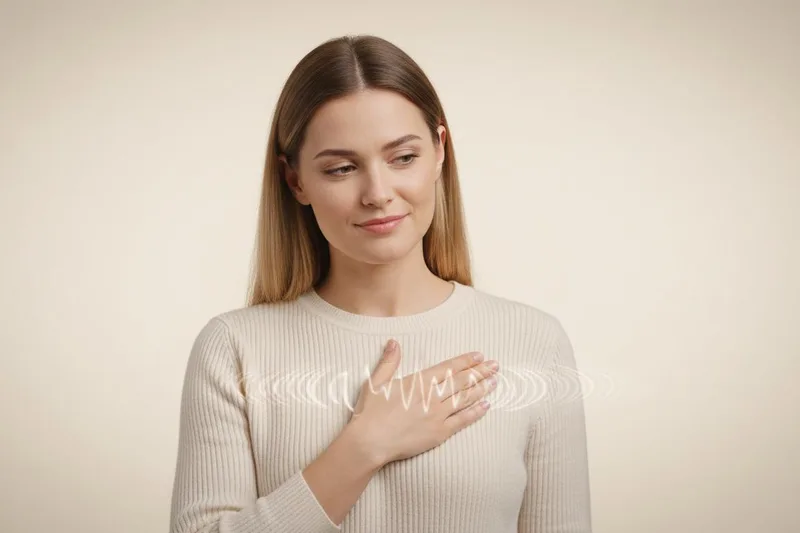
Do you sometimes feel like your heart skips a beat? Or does it feel like a bird is flapping its wings inside your chest, or your heart is pounding so hard that it's jumping up and down? Many people have experienced this. Most of the time, it's nothing to worry about. In medical terms, this condition is called Premature Ventricular Contractions, or PVCs for short. So today, let's talk about what these PVCs are, why they happen, and what we need to know about them.
Simply put, what are these PVCs?
Okay, to understand this, let's first take a look at how our heart works. Imagine that our heart is like a house with a small electrical system. Only when this house receives electricity at the right time can the lights and fans work properly. Our heart also has a similar electrical system.
Normally, in the right atrium at the top of the heart, there is a small cluster of cells called the sinoatrial node or SA node. This is the 'master switch' of our heart. The first electrical signal that tells the heart to beat starts here. This signal then travels throughout the heart and goes to the two main chambers at the bottom of the heart, the ventricles. When this signal is received, the heart muscle contracts properly and pumps blood to the body. This is the normal process.
But in a PVC, something is a little different. Instead of the electrical signal that starts the heart beating from the 'main switch' (SA node), it suddenly starts from the lower chamber of the heart `(ventricle). It's like turning on a light in a different room instead of the main switch in a house. This causes the heart's rhythm to be a little messed up. Because of this extra beat, the next normal heartbeat is a little late. That's when we feel like we've 'missed a heartbeat'. The next beat may feel a little stronger.
Most of the time, PVCs are not serious. About 75% of healthy people have experienced them at some point in their lives. But if they happen frequently, it's important to talk to a doctor.
Doctors may also use other names for this condition, so keep these names in mind:
- Premature ventricular complexes
- Ventricular extrasystoles
- Ventricular premature beats
Who is at higher risk of developing PVCs?
Although anyone can get PVCs, some people are at higher risk. Specifically:
- For older people.
- For those with heart disease.
- For those with high blood pressure (Hypertension).
- For those who have previously had a heart attack.
- For those with heart failure.
- For people with hypertrophic cardiomyopathy.
What are the symptoms of PVCs? What do we feel?
The amazing thing is that many people have PVCs and don't experience any symptoms. It may be an accident when your doctor does an EKG for something else. But if there are symptoms, they usually look like this:
| Symptom | How it feels |
|---|---|
| Heart Palpitations | The heart beats strangely inside the chest. It feels like the heart is 'jumping', 'rolling', 'leaping'. |
| Chest fluttering (fluttering) | You may feel like a bird is flapping its wings inside your chest. |
| Pounding in the neck | Some people may feel the extra heartbeat strongly through the veins in their neck. |
| Dizziness/Lightheadedness | If many PVCs occur in a row, you may feel like you are losing consciousness or feeling dizzy due to a slight decrease in blood flow to the brain. |
| Shortness of breath | This is most often seen when PVCs occur in someone who already has another heart condition. |
Is this feeling the same for everyone?
No. Some people may have hundreds of PVCs a day and not feel anything. Others may have one or two a day and feel it a lot. It varies from person to person.
Why do we get PVCs? What are the causes?
There are times when a specific cause for PVCs cannot be found. However, these things can cause or increase PVCs.
- Stress and Anxiety: When we are stressed or scared, our body produces a hormone called adrenaline. This can stimulate the heart's electrical signaling system and cause PVCs.
- Caffeine and Alcohol: Caffeine and alcohol, found in things like coffee, tea, chocolate, and some soft drinks, can cause irregular heartbeats.
- Electrolyte Imbalances: Potassium and magnesium are important minerals for the proper functioning of electrical signals in our body. Low levels of these can lead to PVCs.
- Heart disease: As mentioned earlier, PVCs can be caused by conditions such as heart attack, high blood pressure, and coronary artery disease.
- Other medical conditions: These can also be caused by conditions such as hyperthyroidism and anemia.
- Certain medications: Some medications taken for conditions like asthma can also cause PVCs.
How do you find this, Doctor?
If you have these symptoms, your doctor will first ask you about your symptoms and family medical history. Then they will listen to your heart with a stethoscope. In addition, they may do these tests.
- Electrocardiogram (EKG/ECG): This is the most basic test. Small sticker-like sensors are placed on your chest, arms, and legs and record the electrical activity of your heart for several minutes. This can clearly show any PVCs that are present.
- Holter Monitor: Sometimes PVCs don't come all the time. If they only come a few times a day, a regular EKG may not pick them up. In such cases, your doctor will have you wear a small machine for 24 or 48 hours. This will continuously record your heart rhythm. It's like keeping a diary of your heart.
- Cardiac Stress Testing: An EKG is done while you walk on a treadmill. This helps to see if PVCs increase or decrease during exercise.
- Echocardiogram: This is an ultrasound scan of the heart. It can look at many things, such as the structure of the heart, the size of the chambers, how the valves work, and how well it pumps blood. This is very important to find out if there is another heart condition underlying the PVCs.
- Blood Tests: Blood tests can be done to check the body's potassium and magnesium levels, thyroid hormone levels, and whether there is anemia.
Do PVCs need treatment?
This is the most important thing. If a healthy person with no other heart disease has PVCs infrequently, no treatment is usually needed. Your doctor will tell you to make some small lifestyle changes.
However, treatment may be necessary in cases like these:
- If your symptoms are interfering with your daily life.
- If the number of PVCs per day is very high (for example, more than 15% of all heart beats are PVCs).
- If the heart's ability to pump blood (ejection fraction) is reduced due to PVCs.
- If there is another serious heart condition underlying the PVCs.
The following can be used as treatments:
| Treatment method | Description |
|---|---|
| Lifestyle changes | Quitting caffeine, alcohol, and smoking. Managing stress (meditation, yoga, etc.). Getting enough sleep. |
| Medications | Medications such as beta-blockers or calcium channel blockers can control the heart rate. Sometimes anti-arrhythmic medications may also be given. |
| Catheter Ablation | This treatment is used if you have a high number of PVCs that cannot be controlled with medication. In this, a small tube (catheter) is passed through a vein in your groin to your heart, the specific cells that are causing the PVCs are identified, and radiofrequency is used to destroy those cells. This is a very effective treatment. |
Should I be worried about PVCs? When do I need emergency treatment?
Usually, PVCs alone are not an emergency. However, if you have PVCs and these symptoms together, go to a hospital's emergency department (ETU) immediately.
- Severe chest pain
- Severe difficulty breathing
- Severe dizziness or fainting (syncope)
- Delirium
These symptoms indicate that something more serious than PVCs could be going on. So don't wait too long.
Remember, PVCs are a very common condition. They rarely cause long-term damage to a person with a healthy heart. However, if they persist or become severe, they can lead to a condition called cardiomyopathy, which is a weakening of the heart muscle. This is why it is important to seek medical advice if you have symptoms.
Take-Home Message
- Premature Ventricular Contractions (PVCs) are a common condition in which the heart's rhythm changes slightly. Most of the time, this is not serious.
- Feelings like 'heart palpitations' and 'chest fluttering' are the most common symptoms. However, many people do not experience any symptoms.
- Things like stress, caffeine, and alcohol can increase PVCs. Avoiding these can help.
- If you experience these symptoms frequently, or if you are concerned about them, be sure to see your doctor.
- If symptoms such as severe chest pain or loss of consciousness accompany PVCs, it is an emergency. Go to the hospital immediately.
- People with healthy hearts rarely need treatment. If necessary, there are very effective treatments available.




💬 Comments (0)
No comments yet. Be the first to share your thoughts here.
Add Your Comment