

Has your monthly period suddenly become irregular? Or has it suddenly stopped and never seems to start again? Maybe you are starting to experience symptoms of menopause before you turn 40? Things like this can make you feel very scared and anxious. But don't worry. Today we are going to talk about one possible reason for this situation. That is primary ovarian insufficiency, or as we call it for short , POI (Primary Ovarian Insufficiency) .
What is Primary Ovarian Insufficiency (POI)?
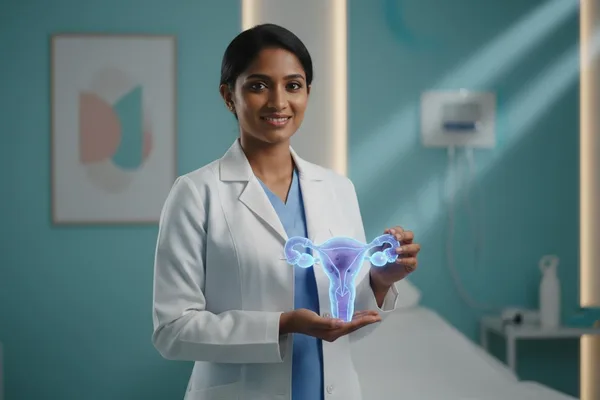
Simply put, POI (Primary Ovarian Insufficiency) is when your ovaries stop working properly before the normal age, that is, before the age of 40. As you know, a girl's ovaries are two small glands located on either side of the uterus. These are the organs that release an egg every month, which we call ovulation. In addition, these ovaries also produce hormones that are necessary for many important things like menstruation and pregnancy.
Typically, a woman's ovulation stops, or menopause, around the age of 51. However, some people with POI suddenly stop having periods. For others, POI is diagnosed after months or even years of irregular periods.
This condition used to be called "Premature Ovarian Failure." But now doctors prefer to use the word "Insufficiency." This is because research has found that women with POI sometimes have ovaries that work, meaning they can ovulate at odd times. This means that even someone with POI can still sometimes release an egg and get pregnant! In fact, between 5% and 10% of people with POI get pregnant on their own without any infertility treatment. That's why POI is also called "Decreased Ovarian Reserve."
How common is this condition?
POI is actually a relatively rare condition . It affects about 1% of women between the ages of 15 and 44. It can affect both those who have had children and those who have never had children. However, it is more common in women over the age of 30.
How does POI affect your body?
Primary Ovarian Insufficiency causes your body to have low levels of the hormone estrogen . When estrogen levels drop, you may experience symptoms similar to those of menopause. For example, you may experience hot flashes, decreased sex drive, and mood changes. It can also increase your risk of developing other conditions, such as osteoporosis and heart disease.
Many women with POI have difficulty conceiving, which is called infertility . However, your doctor may be able to help you conceive. There are treatments for this, such as donor eggs , in vitro fertilization (IVF) , or fertility medications.
What are the causes of POI?
In most cases, doctors don't know the exact cause of POI . This is called idiopathic POI . However, research has shown that in about a third of cases, there may be a genetic link.
Some other possible causes of POI are:
- Autoimmune disorders: For example, Addison's disease, rheumatoid arthritis, or thyroid disease. In these diseases, our own immune system attacks our own organs. This can damage the ovaries.
- Cancer treatments: Treatments like chemotherapy and radiation can damage the ovaries.
- Genetic disorders: For example, Turner syndrome – which is caused by an abnormality in one of a woman's two X chromosomes. And Fragile X syndrome – which is caused by changes in a gene called FMR1.
- Hysterectomy: Sometimes, when the uterus is removed, the blood supply to the ovaries can be cut off, which can reduce their function. However, if only the uterus is removed and the ovaries are left intact, POI usually does not occur.
- Infections: Infections like mumps and HIV can also damage the ovaries. This is thought to be because antibodies produced against the infection attack the ovaries.
- Long-term exposure to toxic chemicals: Long-term exposure to pesticides, cigarette smoke, and other toxins can also be a cause.
What are the symptoms of POI?
The most common symptom of POI is irregular or complete cessation of menstrual periods . However, some women may not experience any major symptoms even if they have POI.
Other symptoms may include:
- Irregular or stopped menstrual periods.
- Trouble getting pregnant.
- Decreased sex drive.
- Difficulty concentrating.
- Frequent anger and irritability.
- Dry eyes.
- Hot flashes and night sweats.
- Vaginal dryness.
- Painful sex due to vaginal dryness.
Imagine, you have a friend who hasn't had her period in months. She can't sleep at night, she sweats, and she gets angry over the smallest things. She might dismiss these things, saying, "It must be stress." But these could also be symptoms of POI.
How to identify POI?
If you have these symptoms, you should see a doctor. The doctor will do a physical exam , a pelvic exam, and a medical history. Your doctor will also ask about your menstrual cycle, whether you have been pregnant before, and whether you are using birth control. This can help your doctor diagnose POI.
Next, your doctor will likely order a few blood tests to measure the levels of certain hormones in your body. These include checking your levels of the hormones Follicle Stimulating Hormone (FSH) , Estrogen, and Prolactin .
Other tests the doctor may use include:
- Karyotype testing is a blood test to check for genetic diseases.
- A pelvic ultrasound is a test to look at the ovaries and uterus.
- Pregnancy test .
- Antibody tests to check for autoimmune diseases.
Doctors diagnose POI if you are under 40 years old and:
- If you are not having your monthly period or if your periods are irregular.
- Blood tests show that your hormone levels are at the level of a woman who has gone through menopause.
How is POI treated?
There are several ways to treat POI. It depends on your age, symptoms, and whether you want to have children . Treatments for primary ovarian insufficiency include:
- Providing your body with hormones that your ovaries are no longer producing.
- Treating symptoms of POI (e.g., night sweats, vaginal dryness).
- Reducing the risk of other diseases that can be caused by POI.
- Treating underlying medical conditions that worsen POI symptoms.
Hormone Replacement Therapy (HRT)
Hormone replacement therapy (HRT) replaces the hormones your ovaries are not producing. This can include estrogen alone or both estrogen and progesterone . Hormone therapy can help reduce symptoms of POI, such as night sweats and vaginal dryness. It can also reduce your risk of osteoporosis and other diseases that can be caused by POI. Your doctor can give you hormone therapy in a variety of ways, including pills, creams, gels, patches, or vaginal rings.
If you start HRT, you will need to take treatment until the age at which natural menopause usually occurs (ages 51-52). You should discuss the pros and cons of HRT with your doctor and decide if it is right for you.
In addition to HRT, other treatments include:
- Taking calcium and vitamin D tablets to reduce the risk of bone thinning.
- Engage in regular physical exercise , lift weights (for the health of your bones), and maintain a healthy weight.
- If you are hoping to start a family and have children, it is important to explore fertility treatment options .
If you are not planning to get pregnant, don't forget to talk to your doctor about birth control methods.
Can this be reversed? Will the ovaries start working again?
No, Primary Ovarian Insufficiency cannot be reversed. Doctors can treat the symptoms, side effects, and associated conditions, but it cannot be cured completely.
About 25% of women with POI are able to ovulate at least once after diagnosis . However, there is currently no treatment that can make your ovaries start working again. Treatment for POI focuses on controlling symptoms and reducing the risk of other health problems that can occur due to POI.
Can POI be prevented?
Primary Ovarian Insufficiency usually cannot be prevented. However, women who are at high risk of developing POI may want to consider fertility preservation if they are planning to have children. If you are concerned about POI, talk to your doctor.
Who is most at risk for this?
The following people are at higher risk of developing Primary Ovarian Insufficiency:
- For those over 35 years old.
- Biological parents for those with POI.
- For those with autoimmune disorders or certain genetic conditions.
- Those who have undergone pelvic surgery, chemotherapy, or radiation therapy.
What will life be like with POI? (Prognosis)
Primary Ovarian Insufficiency is usually a permanent condition . Many women with this condition need to take hormone therapy long-term to control symptoms and reduce the risk of complications.
POI often leaves you feeling sad, lonely, and like you've lost something. This feeling can be especially intense if you're still trying to get pregnant. There are support groups and counseling services to help you through this time. With this help, you can manage your emotions and find ways to cope with the condition.
What other health problems can be caused by POI?
Women with POI have low estrogen levels. When estrogen levels are low, you are also at risk for other health problems. Some of these problems include:
- Osteoporosis
- Heart disease
- Hypothyroidism (Underactive thyroid)
- Infertility
- Anxiety and Depression
When should you see a doctor?
If you haven't had your period for three months, see a doctor right away. There are many reasons why your period might have stopped, including pregnancy, stress, or hormonal changes. Your doctor can help you figure out exactly what's causing your period to stop.
What should you ask the doctor?
If you have Primary Ovarian Insufficiency, you may want to ask your doctor questions like these:
- How does Primary Ovarian Insufficiency affect my overall health?
- Will I need hormone replacement therapy (HRT)? For how long?
- Will I need birth control?
- Where can I get psychological help and counseling?
- What is my best option for adopting a child?
What is the difference between POI and Premature Ovarian Failure / Premature Menopause?
Doctors may use these terms interchangeably to describe menopause before the age of 40. Premature Menopause is when menstruation stops before the age of 40 and you can't get pregnant again. In POI, the ovaries can sometimes temporarily stop working, so it's a little different.
Can you get pregnant with POI?
Yes, there is a chance that a woman with POI can get pregnant. If you have POI and are trying to get pregnant, your fertility doctor can advise you on your options. Also, if you are not trying to get pregnant, talk to your doctor about ways to prevent pregnancy.
Finally, what to remember
Primary Ovarian Insufficiency (POI) is a condition in which your ovaries stop working before the age of 40. This can cause uncomfortable symptoms and increase your risk of health conditions like osteoporosis or heart disease.
It's normal to feel sad and anxious when you find out you have POI. Especially if you were hoping to have a baby. But with the right treatment and support, you can continue to live a healthy life. Talk to your doctor about your concerns. Get the support of your partner, family, and friends to help you cope. Remember, you are not alone.
Ovarian dysfunction, primary ovarian insufficiency, POI, early menopause, women's health, hormonal imbalance, infertility




💬 Comments (0)
No comments yet. Be the first to share your thoughts here.
Add Your Comment